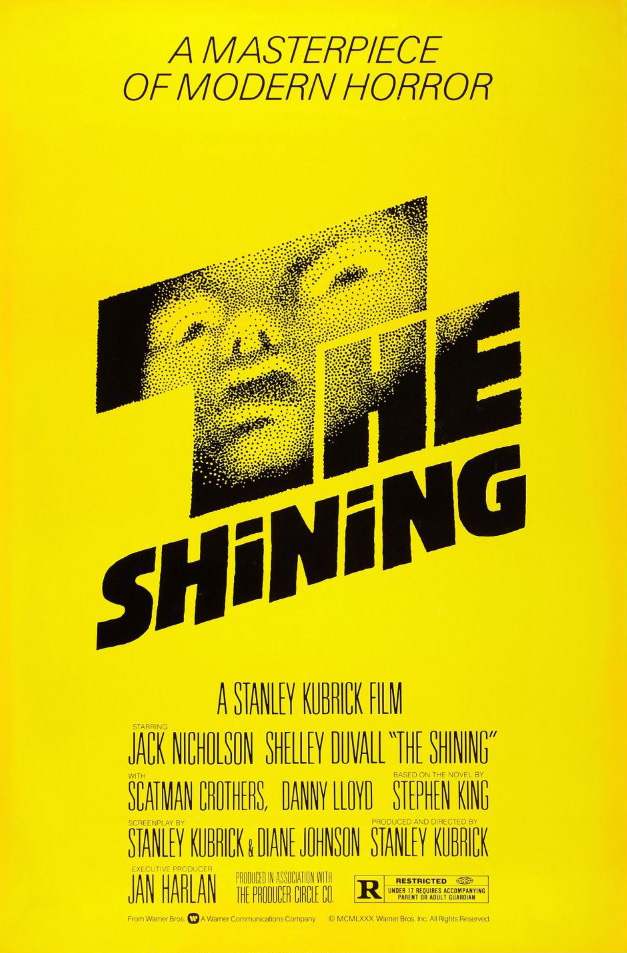
THE SHINING
The Shining (1980) is extraordinarily impressive visually: it was made with a Steadicam when the Steadicam was brand new technology, and Stanley Kubrick, the greatest of directors and once a professional photographer, is like a kid with a new toy, using the new possibilities to the fullest – the camera movement hypnotises, revolutionary at the time and setting the templates for imitation (alongside Halloween), as the camera sweepingly follows the child at the centre of the story on his play tricycle as he rides along hotel corridors, or it creeps over long distances into rooms and around corners as though a person, often becoming the characters’ viewpoint, etc, in a way that was not possible before the Steadicam – The Shining is also brilliant in terms of genre-bending: it plays with the Gothic (esp. in its contrary use of white and bright colours rather than the usual gloomy darkness of the genre) and Freud’s psychiatric notions of the uncanny, and takes the Gothic genre beyond the big empty house and ghosts to somewhere darker (metaphorically) and deeper – reportedly, Stephen King (on whose book it is based) was not happy with what was done to his text by the finished film, but Kubrick created something greater and with more depth than the simple Gothic formula of King (and, no doubt, King is now reconciled to the heaps of money and notoriety it has made him) – Kubrick never made a film without allegorical and/or thematic purpose and The Shining surpasses the standard Gothic horror imagery, with depths of meaning about the rapacious heart of mankind and numerous tales told about the hotel to create the hotel as a symbol of the violent history of humanity (see Room 237, a documentary about it for more) – the key to the subtext is to understand who the Caretaker is in Kubrick’s vision (as an image, we all are beneath our civilised surface) – and then there is the theme of a dysfunctional family unit, a tale of domestic abuse, with Jack Nicholson (also called Jack in the film) emitting sinisterly aggressive signals as the father, making you uneasy about him from the outset, teetering into surface aggression as the film progresses, his central performance reaching the extremes necessary to sell the more outré elements of the script, so hammy it verges on genius, as he loses his mind – and the film is full of symbols and quickly intercut images: the elevators let flow blood (what is it with elevators as a sign of demonic activity?) with rapid cuts to Danny (the family child) in terror with spittle hanging from his mouth; a maze and its model reflect the complex-yet-unravelling mind of the lead protagonist; Room 237 is the evil heart of the hotel; etc – there is also a fantastic soundtrack with original music provided by Wendy Carlos, the great pioneer of synthesiser music – and the locations and décor are picturesque yet with a hard-to-put-your-finger-on-why they are unsettling, very subtly feeling wrong and right at the same time – even the usually drab and uninteresting Shelley Duvall is astutely cast as the whimpering, mousy wife – and it is blackly humorous, e.g. a shaggy dog secondary narrative featuring Scatman Crothers that raises a snigger – the sucker punch to the gut, despite the thematic depth and nuance that Kubrick layers, is that the abiding memory is emotive not intellectual, of the fantastic sound design of the child’s tricycle rumbling on hard floor then weirdly going to semi-silent pedals being pumped as he hits carpet, as the camera pursues him and the music drones to create a sense of impending dread.
BLACK NARCISSUS
Black Narcissus (1947) is a tale of sexual repression in a remote convent in an exotic location, which is the risqué hook, a salacious surface (as far as the times would allow) to pull in the punters; however, despite the vague whiff of an exploitation film in its premise, it is nothing of the kind, but rather deep-thinking and cinematically beautiful (with a 1940s sexy twist) – underpinning Black Narcissus are two major themes: a questioning of religion, and attitudes towards foreign cultures – Sister Clodagh (the luminous Deborah Kerr, who was anything but a nun in real life) leads a mission to open up an Anglican convent in the Himalayas when the local ruler allows the religious Order to use an empty building on a windswept mountainside (literal and symbolic) along with opening a school and hospital for the locals; but no one has mentioned that the building used to be a seraglio (a harem) – the local Englishman / colonialist / representative (David Farrar) greets the nuns, exposing his thighs in shorts and acting with little regard for religion, there is a holy man on the hillside who just sits there and posits another religious take on life, the locals are puzzled by the nuns strange vocation that is so different from their reality, and the ‘young general’ (Sabu) becomes infatuated with a local girl who is deposited in their midst to look after (Jean Simmons) and who is unruly and sexual, earthy as opposed to spiritual – the nuns slowly break down in the face of these challenges to their way of thinking: Sister Clodagh starts to reminisce about a failed romance in her past, Sister Philippa (Flora Robson) stops gardening and stares wistfully at the view remarking on how the air is different where they are, and Sister Ruth (Kathleen Byron) goes off the deep end into bad girl territory – the bad girl gets her comeuppance, but the magnificent Powell and Pressburger who directed, produced and wrote the screenplay (based on a novel) are clearly using this as a smokescreen to mask their sympathies pulling in the opposite direction, tearing at the righteous self-validity of the Western and Christian values of the nuns – it won Oscars in a time when non-American films didn’t win; but it also suffered cuts in the US, which indicates how it trod the line of decency and played with the attitudes of its day – most impressively, it was entirely shot on a stage in England and the backdrops are all exquisitely painted (long before CGI) to create a heightened imaginary Himalayan country to match the febrile themes, for which Alfred Junge (the art director) deserves the highest praise – and it was shot by Jack Cardiff, a fine cameraman who went on to direct himself – gorgeous to look at and profound in its themes, Black Narcissus is at the peak (pun intended) of the many wonderful Powell and Pressburger films: simply extraordinary and magical.

YOJIMBO
Yojimbo (1961) is a seminal film of mercurial pleasure: one of many samurai pictures by the great Japanese director, Akira Kurasowa, it can be argued that it marks the birth of modern action films in general (remade several times in different settings) and is the inspiration for gritty westerns (unofficially remade as A Fistful Of Dollars, the first spaghetti western) although it is swords rather than guns – a ronin (a samurai without master) walks, by chance, just wandering as a ronin does, into a town with two competing gangs, and starts a bidding war for his martial services: much violence and nefarious plots ensue – why is it so revolutionary in terms of the history of cinema? because it introduces us to various ideas and gimmicks as a unified plot, a template that has since become common in action films – the ronin (Toshiro Mifune) sits in the middle of town while the gangs inhabit either end, and he plays them against each other (e.g. Miller’s Crossing) – the town is run-down and muddy (e.g. Unforgiven) – the blood count is high, introduced at the start by a dog running past the ronin with a severed hand in its mouth, escalating to sword fights and so on (every action film now has a bloody and high body count) – the central character is an anti-hero, doing right by doing wrong, violent but on the side of the small man, full of twitches and anti-social behaviour (e.g. John McClane in Die Hard) – the ronin is also the original ‘man with no name’ as he looks out of the window and says what he sees when asked his name; and when the ronin is called to act, his killing is swift and smooth, just like Clint Eastwood except with a sword – it is not that these ideas did not have predecessors nor came out of nowhere, there are earlier examples and progenitors, but Kurasowa gives them a modern twist and meshes disparate strands of idea together into a format that has been copied ever since – it is interesting that Kurasowa said his key influence was film noir, and Yojimbo shares that seedy vision of low-life and places it in an action setting, borrowing blood from the relaxation of censorship in the era – it could be said that the subtext is about local corruption, but it is really just an action adventure with a brilliantly envisaged scenario: at the end, the town is peaceful because everyone is dead not because political issues are resolved – it is shot beautifully in a wide-screen by Kazuo Miyagawa; with a score by Masaru Sato that anticipates (in a Japanese way) the use of music as a commentary on the action that Morricone would make his own – Yojimbo is masterful and influential.
THE CONVERSATION
The Conversation (1974) was directed by Francis Ford Coppola at the peak of his critical and popular acclaim, winning the Palme d’Or at Cannes (in the same year, The Godfather Part II, also directed by Coppola, won Best Picture at the Oscars) – The Conversation is a lesson to all modern film-makers as it focuses on gradual revelations, inwardly on small details, not on expansive action or explosions, while retaining a broad cinematic ambience: it is mesmeric as a result – a surveillance expert (Gene Hackman) has been hired to watch a man and woman, possibly cheating lovers, with the woman the wife of a rich man who leads a big business: Hackman bugs the lover-conspirators as they have a conversation in a noisy public place; and then he struggles to put the conversation together afterwards, as snatches of conversation wander into electronic burble as the targets go out of range of one microphone and into another or their voices are drowned-out by other noises – the scene he has surveilled is repeated throughout the film, from different viewpoints and ear-wigging posts, or with alternate visuals of the ‘lovers’ meeting, as their conversation becomes clearer in snatches as the expert works on it with his technologically advanced recording devices; but each bit of clarity changes the import of the conversation – the scene of the conversation is repeatedly intercut with a linear narrative of the expert interacting with his employer and the ‘lovers’ at their business offices, and his private life (e.g. of Hackman listening to the tapes of the conversation in his deserted workspace, a space which reflects his deserted inner life), a narrative which also becomes more relevant as the conversation is unpicked and things are revealed – it thus becomes a study of perspective and knowledge as disjointed fragments inform and slowly build up, creating a subtle mystery and crypto-detective story that reaches a despairing resolution – but it digs deeper philosophically, into the solipsistic nature of being, with the communications ‘expert’ hearing but not listening or understanding, he sees but does not perceive, unable to grasp the bigger picture as he is locked inside his own personal hang-ups and concerns: he has a withdrawn insular nature, refusing to talk about himself and wary of interaction with others, which means he has no understanding of others (and life in general) and is taken advantage of as a result, despite his paranoid caution (surveillance paranoia is very 1970s, taken to its nth degree here) – Hackman’s understanding of communication is thus mechanical, repetitive not receptive or interpretive; and the film is full of thematic commentary on the limitations of the fixed individual vs an unfathomable broader context, on mis/interpretation, perspective, mis/communication, misunderstood motive (etc) that goes beyond the narrative to being a general thematic meditation on the separated nature of each human being – further, it is one of a very small group of films where the sound design is something to enthuse about, with much credit going to Walter Murch (who also did a chunk of the edit), as the sound of the conversation is brought into focus and pieced together via the best and subtlest sound effects of the time – a fantastic cast and crew is the cherry on top of a profound and very clever film about perception versus reality.

THE PRINCESS BRIDE
The Princess Bride (1987) was directed by Rob Reiner in the middle of his hot streak of fine comedic and/or feel-good films, during the 1980s and early 1990s, between Stand By Me and When Harry Met Sally – if you are looking for depth of meaning then look elsewhere, for the aim here is just mischievous silly fun, delivered in joyous spades; a parody of swashbuckling fantasy adventure films, with any subtext the standard underpinning of every romantic-nobody-vs-evil-ruler fairy tale (parodied) – however, there is more to it: the genius of the film lies in its self-reflexive mirroring of itself and the genre it inhabits, i.e. the genre it parodies is close to self-parody itself (e.g. several Errol Flynn films) and The Princess Bride simply over-eggs what is already the tongue-in-cheek of the genre – thus we get something taking the piss out of something that is already taking the piss out of itself, and the film nearly ends up being a straight take on the genre (but not quite), flipping right round to where it starts from (with more gags and an extra touch of absurdity) – to add to this post-modern take on genre, the whole story is filtered through a framing device, an unreliable narrator, with grandad telling his grandson the story, complete with interruptions of the narrative by the grandson, removing the viewer from the mythical world of the story with inserts of ironic ‘real-world’ questions about the probability of the tale – there are also a large number of jokes and catchphrases to get into, something no cult comedy can do without, which fans of the film are fond of shouting at the actors (ask Wallace Shawn about being told everything is ‘inconceivable’) – the screenplay is by the celebrated writer William Goldman, based on his own novel; and the soundtrack is by Mark Knopfler, restraining his more rocky inclinations and making the electric guitar sound almost medieval; and the cast includes numerous famous faces popping up in cameos to enjoy, such as Billy Crystal or Peter Cook – critically well-received, it had a ho-hum box office; but it became a cult film with video and DVD releases, and has become a favourite film of many people, never topping but regularly on best-of lists – self-satirical comedy and jaunty adventure, the film is enjoyable on different levels, so that both adults and children will be engrossed – worthy of the adoration it inspires in some.
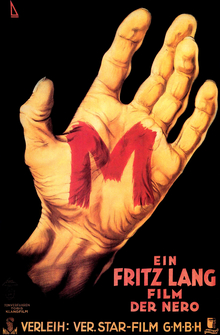
M
M (1937) was cited as the favourite of his own films by the great director, Fritz Lang; and it is considered one of the best films in the history of cinema by critics and fans alike – it is remarkable on two fronts: its technical and narrative innovation, and its thematic social commentary – a German expressionist film made during Nazi rule, it had a tricky way to screen: some of the real-life criminals used in minor roles were arrested during the shoot; and then the censor delayed its release, which Lang feared was the censor thinking that the film was a criticism of the Nazis (which it kind-of is) until Lang showed those barring the way the script and found that their objection was limited and on the surface, a reaction to the original title (Murderer Among Us) – however, if his thoughts were close to the script for M, which he co-wrote with his wife (Thea von Harbou), it is no surprise that Lang fled pre-war Germany to Hollywood; and his subsequent, and final, German film’s subtextual critique in The Testament Of Dr Mabuse (also recommended) would be an even more open-veiled attack on the Nazis – M is daring thematically: ostensibly about a ‘child murderer’, obviously a person we would call a paedophile nowadays although Lang avoids any sexual content, the focus is really on how others respond to the murders: the police investigation into the killings, which has been imitated to convention in numerous other serial killer movies and provides the narrative thrust, political pressure on the investigation which both helps and hinders, and vigilante action and mob fear as people are whipped-up into a frenzy of finger-pointing – but what makes it thematically astounding is its balanced judgement of the murderer’s actions: he pleads his case of uncontrollable urges (Lang met actual killers for research) before a kangaroo court of criminals, who have captured him not out of social conscience but because he is bad for business, some of them being murderers themselves (though not of children) without the excuse of being mentally unbalanced – thus, the film argues that the offender should be locked-up and treated not summarily executed, and we should not be led by mob fear and brutal self-interest (the Nazi references) – it ends with ambiguous dialogue from one of the bereaved mothers, accepting the fate of a confused situation yet advocating vigilance of children: the fatalism of this ending is something that permeates much of Lang’s work, the inevitable and chaotic forces of existence crushing individuals – but it is so much more than themes, it is also a technical marvel – his first film in sound, there is a merging of sequences that could be silent with (predominantly) sequences that could be from much much later films, with natural-ish acting, nicely framed camerawork with innovative tracking shots and angles, and fantastic set design – in particular, the use of sound was his first film using the new technology and is astoundingly experimental for its day: although the sound technology was primitive and limited (e.g. no soundtrack punctuating the action due to lack of tracks), Lang has background and overlapping noise to create a whole world of real sound, unlike its more stilted contemporary films; and then he has the murderer whistle a tune from Grieg’s Peer Gynt as a leitmotif that announces who he is, a trick that has since become common in films (i.e. a character is identified by the music) – in addition, the murderer is played by the bug-eyed Peter Lorre, announcing his creepy talents to the world – M had a mixed reaction on its first release, although successful (as Lang was a name that sold), and was then cut by twenty minutes for release in the 1960s, a version that became ubiquitous; but it has since been restored to its original form (or as close to it as is possible) and this is the version that should be sought out to fully appreciate this masterwork … but what is the significance of the symbolic ‘M’?
NIGHT OF THE LIVING DEAD
Night of the Living Dead (1968) is the ground zero of modern horror films, introducing a whole new level of gruesome following the relaxation of censorship during the 1960s – in 1968, when it was released, horror films tended to involve rubber masks in unreal settings, tame fare that was even shown at matinees to teenagers (and younger): imagine the shock caused by this film when it was shown at matinees! there was moral outrage – but time changes perspectives and it is now lauded by the mainstream, in ‘halls of fame’ etc, which has much to do with the financial success it achieved (yep, cynicism): made independently, it grossed 250 times its small budget and set the template for the future methodology and cheap financing of gory horror films, copied to death (yep, pun) – a small group are trapped in a building in the middle of nowhere, thus reducing costs on locations, sets and actors; the small cast of characters are killed in increments, in violent ways (as per many other low-budget horror films since); it was shot quickly on cheap film; lead actors double-up as zombies and other actors were part of the production crew; inexpensive stock music was used and fed through an electronic mangle to make it eerie; and the special effects were cheap and improvised (e.g. chocolate sauce for blood, which looks right in black and white) – and then it is the film that created the modern zombie mythology, although they are referred to as ‘ghouls’ in the film and no one uses the z-word (George A. Romero, creator and director, didn’t even consider them zombies at the time): there were zombies before this, of course, but they were the tame spirits of Caribbean origin, as in I Walked With A Zombie, whereas this film gave us flesh-eating threat and disease – it was the first of many zombie films using the flesh-eating template (and law suits over the rights) – but it is more than seminal and lucrative, it is a highly intelligent film too: the ropiness of the low budget is used to add to the sleazy horror feel, with the photography sometimes overexposed or the soundtrack distorting like a buckled vinyl record, giving it a gritty realism that the narrative belies – there are also subversive themes, much in keeping with the cultural revolutions of the time: the lead role is played by a black man (Duane Jones) who is shot by a red-neck, those in power and the media do not know what is happening as social order disintegrates, the taboos of polite society are broken down in the name of survival, it can be read as an allegory for Vietnam, the zombies can be read as a satirical side-swipe at the ‘silent majority’ of Nixon, etc – however, in the end, it’s about being human and how people respond to crisis (we are all socially conditioned flesh-eaters) – it cannot be described as a b-movie, although it has the tone of one, including schlock riffs on 1950s sci-fi (e.g. it’s all due to radiation from a space probe to Venus), it is far too deep and enjoyable for that, with the action snowballing to a cynical conclusion – “They’re coming to get you, Barbara!”

THERE WILL BE BLOOD
There Will Be Blood (2007) is the finest film directed by Paul Thomas Anderson (to date) who has been described as a modern auteur as he makes unconventional films that have the topics and style that are near-impossible to get made in the mainstream Hollywood studio system, but he manages to get his irregularities made with relatively large budgets, a good critical reception, and commercial success (nb. he should not to be confused with his namesake and contemporary, Paul Anderson, a director of deliberately trashy action movies) – Daniel Plainview (Daniel Day-Lewis) begins the film prospecting for oil and finds the mother-load during a nearly silent opening sequence (no dialogue, bravely, for a substantially long time); then the bulk of the film is spent with Plainview trying to convince the locals to sell their land, with the aim of ripping them off so he can be inordinately rich; with a shocking coda at the end – it is a deceptively simple narrative that hides a depth of meaning, a thematic assault on Individualism and Capitalism – firstly, on the surface, it is a tale of rapacious avarice, greed leading to social isolation, of both Plainview and his local nemesis, the preacher at the local church, who uses the religious sway he has over the local population to become rich himself, i.e. as a consequence of Plainview’s laser-like and bitter focus on wealth, he struggles when he has to rely on interpersonal skills to negotiate with those who will not simply take his money, his adopted son leaves him on bad terms, and he has no friends, ending up alone in his mansion, bought with the wealth he makes, with his servants (and the preacher’s tale is a distorted mirror of this; but it is primarily Plainview’s story, of a greedy and ruthless man who treats others with contempt, whose bottom line is the acquisition of more and more to the cost of his private life) – secondly, it tackles the often selfish nature of social relationships with everyone after their own ends, not just Plainview and the preacher but also the locals who the preacher urges to hold out for their homes, land and more (so he can up the price for himself) in an attempt to advance themselves (being deceived by the more selfish); forcing Plainview into interacting with the small town life he despises in a decidedly two-faced, selfish way – thirdly, it is a devastating critique of the US national psyche: at the heart of the film is a conflict between Capitalism and the Church, which are the twin pillars of the US, with the nasty Capitalist winning a pyrrhic victory in the long-run, but neither side coming out looking good, with the religious lead being intractable at first and finally revealed as a hypocrite; which detail-by-detail builds up as an allegory to address the dark sides of the American dream on which the nation has been built, its values and history: the rich exploiting the poor, violence, evangelical religion, community vs enterprise, power in interpersonal relationships, etc (the critique of the US runs very deep) – further, There Will Be Blood is gently stunning, visually and aurally: the film frequently deals in montages of finely shot imagery (by Robert Elswit) to a subtly melodic soundtrack by Jonny Greenwood (from the band Radiohead) in a classic example of the storytelling dictum of ‘show not tell’ (reminiscent of the way Sergio Leone narrates primarily with image and music in his Spaghetti Westerns, creating visuals to go with Morricone’s striking music) – there is a fine cast, with Daniel Day-Lewis giving a monster performance – and the narrative technique is particularly pleasing as it sprawls with loose ends, the focus on scenes that are not connected fully, giving it a real life / realistic feel – a film, already lauded, that will last and grow as large as Day-Lewis’ performance in reputation.

WEEKEND
Weekend (1967) is a film by Jean-Luc Godard; which is an immediate red flag for anyone who expects a conventional film, but it is an exceptional and brilliant film that is significant in various ways – firstly, it marks a transition in Godard’s own film-making, marking the point when he stopped making ‘stories’ and became fully avant garde: he retains a sort-of narrative via a murderous road movie and his love of noir, but takes it off on surreal vignettes (worthy of the great surrealist film-maker, Bunuel); with the whole being almost incoherent, if it were not for the contemporary social satire of the themes acting as glue – secondly, it is historically fascinating: made in 1967 with the student riots of the 1960s close-approaching, it is a piece of agit-prop that squarely aims its critique at ‘normal’ society, with the bourgeois representatives of Capitalism being so violent and rapacious that a [youthful] revolution is underway (the whole film is against a backdrop of burning cars as a bourgeois couple go on a weekend car ride in order to kill the wife’s mother, in order to get the inheritance) to the point at which, by the end, the revolutionaries are eating the rich, rather than the usual ‘eat the poor’ of anti-Capitalist slogans; meanwhile it goes on numerous other satirical side-swipes at society, like colonialism in a brilliant section where one refuse collector (refuse is symbolic here) speaks about Algeria while another is in visual, staring at camera in a technically daring sequence, or it satirises hippies via an Alice in Wonderland skit, or it subverts French history via a man in Napoleonic uniform expounding-ranting from a book, etc – thirdly, it is at the cutting edge of post-modernism, with a deconstruction of cinematic narrative to come up with something completely alternative, a self-reflexive nature that calls attention to the fact that it is a film, and ending with a closing caption of ‘The End of Cinema’ (as we know it, traditionally) – fourthly, it is technically outrageous, e.g. a traffic jam that goes on forever to a soundtrack of horns as the protagonists work their way past an array of stuck humanity, or an endless 360 degree pan that does 360 more than once as someone plays Mozart and stops occasionally to explain Mozart’s life, or a car crash that is done by simulating the film going wrong in the projector, or random intertitles that are part-absurd and part-disordering, or the soundtrack music suddenly swelling louder so it drowns out what a character is saying then disappearing to let the speech continue, etc – to cap it all, it is shot handsomely by the great cinematographer Raoul Coutard – there is an issue with Godard’s treatment of women, which is very much of its 1960s time and problematic: his films do have strong female leads but he also often treats them as sexual objects, especially a disturbingly casual ‘comedic’ scene about rape here (which can be seen as a shock tactic to reveal the callousness of the rich, but it is very uncomfortable) – overall, however, this is a landmark film that defines a moment in history and explodes conventional art – is it watchable without a coherent conventional narrative and absurdist touches? unbelievably so – cinema would never be the same again.

THE GRAND BUDAPEST HOTEL
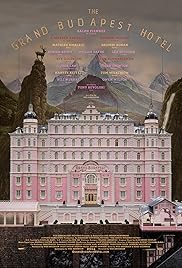
The Grand Budapest Hotel (2014) is the high watermark of director Wes Anderson’s career: always worth watching, his idiosyncratic films have a hyper-real feel to them in a style he has made his own – The Grand Budapest Hotel moves at a break-neck pace, merging his work with live action and his work with animation into one product, seamlessly moving from one to the other, creating a cartoon-like ‘real’ world (which recalls the films of Frank Tashlin and the Coen Bros at their most zany) – it is also a comedy that makes you snigger frequently with occasional laugh-out-loud moments – the film is usually talked about in terms of its technical accomplishments: the merging of live action and animation, with the animation sometimes deliberately obvious to obscure the brilliantly imperceptible use of miniatures etc that create the grandeur of the hotel and sweeping landscapes, rushed past by the furious narrative; the width of the screen (beautiful camerawork by Robert Yeoman) altering to reflect the different time periods of the story, as a signifier of the date as the narrative hops back and forth between decades; it has a cleverly subtle gaudy design and colour scheme that heightens emotion; and an entire fictional world of inter-world-war mittel-Europe is created, recognisable as historically accurate while being non-historical – and then there is the sheer fun of watching a stellar cast, the best of contemporary acting talent (showing a high regard for Anderson in the film industry), acting like children in a madcap narrative with numerous twists and turns that never lose you – yet underneath the humour is a darkness that will pass most by, and it is like a comedic version of The Shining in some aspects: both films have a hotel in the mountains symbolically representing the history of mankind and atrocities perpetrated, and there are numerous shots of hotel corridors and symmetry of visuals that the two films have in common (the past leading to and recurring in the present) – as such, hidden behind the fun surface is a poignant thematic core of depth, a tale of ongoing persecution, of an effeminate man and his immigrant sidekick pursued by Nazis and, one of them, eventually executed by the Soviets: in fact, everyone ends up dead, except one character who manages to hold onto the eponymous hotel from his wealth once the autocratic States have taken their bite, and continues to sleep in his monastic cell-like room despite being the owner, a melancholic person detached from all else, a shadow of a man beaten down by bad actors and the State – but the main theme is about romanticisation of the past, of memory: the tale is narrated through a series of distancing devices, with the story told at third-hand at best, allowing for the amiable distorted comic book style but also enabling a commentary on how we sanitise and change the past to fit our own vision and prejudices (dreams from an impoverished later state), e.g. the bad people of the inter-war period become slapstick fools rather than the sinister people they really are, filtered through nostalgia for a significant time of friendship and romance and selective memory – and the above summary just begins to dig into the technical and thematic complexity of this exceptional film, which deserves to be seen more than once.
PANDORA AND THE FLYING DUTCHMAN
Pandora And The Flying Dutchman (1951) is a cult masterpiece by Albert Lewin – a director, producer and screenwriter that is not well-known, Lewin was a Hollywood auteur when the studio system was stamping out such bright sparks: the reason he was able to follow his star is that he was an industry insider with the ear of those in power, so he was initially given a degree of freedom to experiment as a favoured employee; and then his films made money, so he was given more latitude; and, as such, given the lack of restriction by studio formulae, the small number of films that Lewin made are generally worth seeking out for their unusual nature – Lewin had ‘educated’ pretensions (except his films are not pretentious because they achieve their aims) and Pandora And The Flying Dutchman is the most rich of his films in ‘high art’ allusions, allowing it to be read in the same way as a novel, with a tapestry of themes and subtexts about eternal love, obsession, the supernatural, etc – set in a small and aptly-named Spanish village by the coast, Pandora (Ava Gardner) is a woman that her suitors will do anything to prove their love for, in macho ways (racing cars, bull fighting, suicide): she is kind to her suitors, but distant and uninterested, until a mysterious and enigmatically attractive stranger (James Mason) anchors his boat in the bay – the story is told in flashback by Pandora’s friend and admirer, Geoffrey, who breaks the fourth wall to directly address the audience early on, and then proceeds to narrate things the character could not possibly know of (heavy-handedly overdoing his ‘foreboding’; but the over-emphasis works, in sympathy with the fatalistic hyperbole of the whole film, raising a smile from the viewer) – Geoffrey is engaged in finding ancient artefacts and metonymically represents the whole film: like him, the film is digging up ancient myth, classical and literary allusions crunched into a melange of references from separate sources (e.g. the title: Pandora references the woman who opened a box to release the evils of the world, and the Flying Dutchman references the ghost ship that is doomed to sail the world as a harbinger of disaster) – the thematic allusions are often mismatched and from different cultures, but Lewin is quite deliberate in this and knows what he is doing metaphorically and thematically: with little regard for fidelity to original myth, he plays with the classical imagery in a coherent way to rise above any possible mess of mismatched references, creating something magical with suspension of disbelief at its heart – the glue for all the references and the motor of the film is a Freudian subtext (very 1950s cinema), i.e. Pandora is symbolic of desire, the macho actions of her suitors are what people will do to achieve their desire; but, as Freud will tell you, desire is unattainable, as once you achieve your aim then you are replete and desire is no longer, or you never reach it; so, the desired true and eternal love is a myth (the Flying Dutchman) and his arrival inevitably leads to the death of the object of desire (chew on that!) – romantic ‘eternal love’ is a myth, undercut by Freud (yet the film remains terribly romantic at the same time) – the stately editing and sometimes stilted acting enhance magical themes, as the narrative winds and digresses in a satisfying way, and there is a fine supporting cast – the soundtrack is notable, with Gardner, the woman of every man’s desire, often overdubbed to give her a breathy-unearthly ear-caress voice, even when on a beach – and, most wonderfully, it is all shot at subtle angles and with flowing camera movement in that dayglo colour of the late 1940s / early 1950s by Jack Cardiff, which gives it a vibrant and beautiful look; with sets and back-projections adding to the unworldly visuals – absolutely brilliant.

PAN’S LABYRINTH
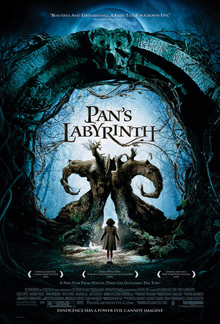
Pan’s Labyrinth (2006) was acclaimed by critics and audiences alike, making the director (Guillermo del Toro) a ‘name’ in the way Scorsese or Hitchcock are, sending viewers back to reevaluate his earlier films and eagerly await his next film – del Toro is a playful filmmaker, wandering between more intelligent fare to directly over-the-top entertainment, leaning more heavily one way or the other but never giving way to one inclination alone, always a mix of thought and entertainment: his for-the-money films have hidden depths (even Blade II) and his ‘serious’ work has fantastical elements – Pan’s Labyrinth is a perfect modulated balance of del Toro’s two leanings, harking back to the magical realist themes of his earlier film, The Devil’s Backbone, in that it portrays a nation (Spain under Franco) through realist microcosm and magical fantasy – a Mexico-Spain co-production (del Toro is Mexican), the film is set in 1944 during the early years of Franco’s fascist rule over Spain: a young girl and her pregnant mother arrive in a region where her ‘new’ father is the brutal fascist captain fighting rebels holed-up in the wooded mountains, and the girl meets a faun in a cave-like labyrinth near the fascist compound to discover she is a reborn princess from the Underworld (or does she? it is never clarified whether the fantasy is real or in the escaping mind of a young girl) – so, febrile fantasy mixes with harsh reality as the girl goes on a quest to reclaim her place in the Underworld while civil war continues around her – in national allegory, there is the savage fascist captain (a terrifically sinister performance by Sergi Lopez), the sick mother who submits to fascist rule out of necessity, an escape into fantasy to evade the horror by the young girl (who is eventually crushed), the subterfuge of resistance, and an eventual return to the King of the Underworld: in essence, the history of Francoist Spain via metonymy – and the fantasy elements are wonderful, never seeming out-of-place being dark ideas (e.g. the monster with eyes in his hands) to match the darkness of the torture (sometimes literal) of the real world – the fantasy has deep currents too, on top of the national allegory, with del Toro feeding off the Greek and Roman myths of fauns (not Pan really) who are creatures of countryside and mountain, slightly untrustworthy but generally beneficial, linked to labyrinths and fertility – and then there is the personal, the good and bad of individuals, deeply affecting, raising a tear in the eye at the end – a labyrinth of the mind and interpersonal relations, a labyrinth of national society, a labyrinth of myth and meaning – add to this some masterful technical skill: in particular, the way the beautiful camerawork (nod to Guillermo Navarro) is constantly gliding sideways, never zooming nor too fast: the prowling of shy magical creatures as well as the prowling of the humans at war; with the constant sideways camera movement allowing for well-disguised screen wipes as trees pass cameras with the characters walking in different directions on the other side of the tree, suggesting time passing yet not passing, both magical and real – generally regarded as one of the best, if not the best, film of its year and director.
UNFORGIVEN / THE QUICK AND THE DEAD
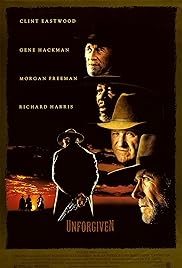
A modern Western double-bill; with both films playing with the genre, but taking the genre in opposite directions in updating it – Unforgiven (1992) was a huge success and garnered several Oscars for Clint Eastwood, including Best Picture, which is likely due to a sentimental vote for Eastwood’s status as elder of the Western coming back in fine form – it is a ‘revisionist’ Western, ‘gritty’ is the word for it: moral ambiguity permeates everything as the protagonist is as bad as the outlaw turned lawman (Gene Hackman), gunfights are messy and upsetting, the environment is dirty and barely holding back the elements, etc – it is a broader film too: viewer memories likely focus on the splashy showdown finale, but it also contains many passages of travelling or hard living in the harsh but beautiful countryside, and drills down into the theme of companionship – a highly enjoyable film, ignoring a few inconsistencies in the script (if you think about them) and its treatment of women leaving a lot to be desired (the writer, David Webb Peoples, has been over-praised): it is reactionary with a faint nod to a liberal conscience, but don’t let politics get in the way of viewing this entertaining film – but is it ‘revisionist’? with gunfights, revenge, a bad lawman, etc: all the clichés of the genre – what Eastwood does is give the Western a serious surface veneer, dirt and messiness, stately photography and pace: a surface impression of realism while still maintaining tried and tested tropes of the genre – this is clearly revealed viewed back-to-back with The Quick And The Dead (1995), which was a flop at the box office yet is one of director Sam Raimi’s best films – it subversively makes the ‘gritty’ modern Western very comic-strip (cartoon-like action is a Raimi trope); with holes appearing through the bodies of shot people, wacky camera tricks, and parodies of the Spaghetti Western form (incidental characters show their bad teeth, the soundtrack often mimics the great Morricone scores, etc) – credit to the writer, Simon Moore, in that he reduces the Spaghetti Western to the big moments of gunfight, with a series of showdowns taking place as part of a deadly competition – there is a fine cast of gunfighters (Russell Crowe, Leonardo DiCaprio, etc), with the bad Marshall, Gene Hackman (again), dominating proceedings; and, subversively, the main protagonist is female (Sharon Stone, who also produced) – it is huge fun, as though the great cartoon-maker Tex Avery had made a Western – in terms of the genre, it is like a slapstick riposte to Unforgiven, reducing the narrative down to the underpinning Western motifs and perversely making it quick and slick – both films have the same essence, but, in its way, The Quick and the Dead is more honest as it does not hide the truth behind realism – an enlightening comparison in terms of the genre, and both are entertaining viewing.

SOLARIS
Solaris (1972) has the 1960s ‘space race’ between the USA and USSR as its background, with the Soviet authorities wanting a film that showed Soviet superiority in response to 2001: A Space Odyssey, and Solaris is frequently described as the ‘Soviet 2001’ (evidencing the primary influence of Kubrick’s vision, despite Soviet protestations to the contrary) – the director, the great Andrei Tarkovsky, stated his aim was to bring new depth to the science fiction genre, describing 2001 as “a lifeless schema with only pretensions to truth” (ironic, given his own pretensions): his comments deliberately misunderstand 2001, which was an exercise in the physical mechanics of external space, revolutionising SFX in its quest for realism (with a bit of philosophising tacked-on); whereas Solaris is the yin to the 2001-yang, an exploration of inner space, a metaphysical quest into the nature of man and being throughout (with space exploration tacked-on) – films with different focuses, different beasts, much like the east / west binary opposition of the time: the two films changed the face of sci-fi film-making between them, in their own ways – the production of Solaris was fractious, but Tarkovsky was at his best when struggling with collaborators and censors as this remedied his tendency to pretension and over-talkativeness in his films: he disagreed with the celebrated original author (Stanislaw Lem) and his cameraman (the talented Vadim Yusov), the Soviet gateway-keepers for film production forced him to rewrite the script to move more of the film into space (a good move as it is in space that the film really gels), and he needed to make various cuts, particularly to play down the allusions to religion, in the frequently played game of film-makers making fewer changes than requested by the censors to see what they can get away with – still, Tarkovsky needed a success as his previous film had not been released by the Soviet authorities, who had found it untenable politically, so he chose a relatively accessible story and gave way on certain production issues: the result is a film that is both engaging and deeply thoughtful – but he did not compromise fully: ‘meditation’ is the word that most aptly sums up Solaris, which has a zen-like quality to it, with a leisurely pace, reflective (unlike the inferior US remake that turns it into a standard drama in space by quickening the dialogue and edits, naturalising to its detriment) while still being a space epic to satisfy others – a psychologist is sent to the Solaris space station in order to evaluate the reports of a deteriorating situation, only to encounter the same mysterious phenomena as others on the station: the planet that the station orbits is covered by a sea that acts as a giant sentience, sending ‘messengers’ to the station that look like people that have been telepathically grabbed from the humans’ brains, with accompanying memories of the past, wishes and fears; but these messengers are imperfect copies of humans, and do not understand what is happening as much as the humans – it thus becomes a study of the intractable difficulty of understanding the alien, something beyond our frame of reference and comprehension: in fact, the sentient sea is studying and learning about us, not vice versa, with its brain the size of a planet (we are playthings of the universe, not the universe our plaything) – the sea below foams and swirls with bright colours (like something from Barbarella, a comparison that would make Tarkovsky foam) as it ‘thinks’; an occasional glimpse of someone unknown running out of the corner of the eye hints at the horror genre, but it is just unsettling here, suggesting something more beyond our understanding: we meditate on this, as does the film – the external existential collision between aliens, sea-planet and human, is the leaping off point for a meditation on humanity: as one character notes, space travel is not about exploring space but expanding Earth (“We don’t need other worlds, we need mirrors”): humans are navel-gazing and solipsistic, variously each wrapped in their personalised individuality even as part of a common whole, and that common whole of humankind has a group solipsism: the scientists on the space station represent different types of human (and strands of scientific thought) but tell the sentient sea’s embodiment of the psychologist’s dead wife, ‘We are all human’ (reducing complex difference into a simplistic unity) – the film then gives us deeper meditation, the internal existential conflicts inside each man, concentrating on the feelings of the psychologist / lead protagonist: his dead wife who committed suicide, his parents, the place where he grew up, memories, regrets, family, childhood … and love: as described by the film, you are unable to explain but able to experience love (like the sentient sea) – so, perception and (un)reality are filtered by illusion and delusion into non-touchable factual truth and feelings, that may or may not exist; and we are left with the final image of the individual on his island of reality amid the sentient sea of further intelligence swimming around him (a person in society, life for the atomic creature, metaphorically) – to complement the themes visually, the film alters between monochrome and colour, suggesting different states of consciousness or perspective (making a virtue of probable budget restrictions); and the camera is always gently roving with slow zooms, panning and tracking, meditatively, always drifting off the focus of the activity, reflecting the impossibility of keeping your eye holistically on even a small part of life, exemplified when the visuals go into extreme close-up on an ear while the characters talk (this inquisitive camerawork keeps you interested even when the characters waffle) – the design is terrific, giving us a space station that is falling apart with wires hanging out (anticipating the later work of Ridley Scott to add grime to sci-fi) – and the soundtrack is particularly noteworthy: apart from a beautiful use of Bach, most of the soundtrack is electronic (in 1972, no less) and uses ambient bleeps and bloops to create an alien atmosphere (Leonid Roizman take a bow) – a masterpiece that dates yet retains its power, a temporal trick which most artists would give their arms for the secret to achieving.

THE THIRD MAN
The Third Man (1949) was directed by the gifted Carol Reed, with the help of a very able assistant director, Guy Hamilton (who later directed some of the better early Bond films); it was executive produced by two of the biggest hitters in film, David O Selznick (providing American stars) and Alexander Korda, with London Films (the Korda production company) adding their usual skill of delivering interesting films; and, most importantly, it was written by the great Graham Greene, who wrote the story specifically for the screen as he thought Carol Reed had talent as a director (Greene was a newspaper film critic at the time and had seen Reed’s earlier films) – the film sees Holly Martins (Joseph Cotton) arrive in post-WW2 Vienna on the death of his friend, Harry Lime (Orson Welles), to discover that Lime was involved in nefarious dealings on the post-war black market, with Martins’ view of Lime disillusioned and his danger increasing as he probes into the criminal underbelly to find out the truth about Lime’s death; which is played out across a politically divided Vienna, between communist East and democratic West, with wartime allies trying to accommodate each other while still pursuing their own agenda (a comment on Berlin too) – the result is one of the great thrillers, with paranoia and atmosphere created by terrific camerawork, shot beautifully at extremely giddy angles in highly defined black and white by Robert Krasker (take a bow), against a backdrop of a defeated and ruined city (chases take place over bombed-out buildings, the narrative revolves around black market penicillin, etc), alongside a story that moves with pace into the depths of what people will do to survive and the opportunism of criminality, with the narrative moving quickly and lightly, unpredictably complex but never a chore to figure out – what makes the film tick though, the heartbeat of the film, is one of friendship and love wrestling with the awareness of shady dealings in a post-WW2 Vienna that is struggling and cynical (even the ‘good guys’ are not averse to a bit of blackmail to get what they want): a tale of conflicted and murky morality – but what seems to most interest Reed are the paranoias of an alien environment (from the perspective of the visitor, Cotton / Martin): Lime’s sidekicks are wonderfully creepy and ‘foreign’, there is a riff on the Fritz Lang’s M when the faces of a crowd turn ugly as they mistakenly think Cotton responsible for a murder, he is taken on a scary car ride that turns out to be innocent, there are shots of locals watching from windows and street corners (everyone is watching!) etc – however, it is most notable for being considered an Orson Welles film, when he is mainly an absent figure and annoyed everyone during production, as his Harry Lime steals the show: the iconic reveal when he is first seen is a landmark movie moment but brief, and then there is the famous Ferris wheel scene and a finale chase in the sewers: that’s the limited time Welles spends on screen, but he makes an indelible mark (the radio and theatre spin-offs all focused on his character, Harry Lime) – in particular, the only dialogue Welles has is the Ferris wheel scene (who is driving it? the fairground is deserted) when he acts the socks off everyone else in the film, giving Lime a mercurial inner life as he flits easily between sociability and death threats: you are drawn to him, despite his despicable nature – the female lead is definitely drawn to him, being open in the film about sleeping with Lime in a way that would have been censor-baiting, and she ignores and walks past the Joseph Cotton character (technically the lead) in a perfect end, despite Lime being awful and Martins helping with her predicament – and then there is the famous zither music, which is a pleasant ear worm that is unforgettable: no one would know what a zither is if not for this film, and the title music was an international hit – an unusual and exciting film noir in a post-war setting; and a hugely popular success, but not in Austria for some reason.

DUCK SOUP
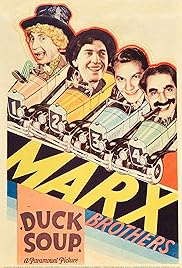
Duck Soup (1933) is the Marx brothers’ best film and a huge influence on later comedians, particularly its anarchic action, fast pace and slightly surreal aspects – significantly, it was directed by Leo McCarey, who worked with a lot of the early comedy greats and has a wonderful disregard for sense when he wants to make a gag, including sudden edits that would not be included in ‘serious’ films, making him a key reference point on how to approach gag-laden comedies since – combined, the stars, the writers (Bert Kalmar and Harry Ruby) and the director, make this film huge fun in a slap-in-the-face way, jolting you to pay attention through sheer energy and idiocy – Rufus T. Firefly (Groucho) is the new leader of the country Freedonia, appointed at the request of the wealthy Gloria Teasdale (Margaret Dumont, the romantic foil and butt of jokes for Groucho in several films) in return for her money to support the poor nation; while Chicolini (Chico) and Pinky (Harpo) arrive as spies for dastardly neighbouring nation Sylvania: of course, chaos ensues and nothing goes to plan, with the three Marx brothers resolutely uncommitted to anything but themselves, leading to war between Freedonia and Sylvania – the result, irrespective of the creators’ intent (they said it was just a simple comedy), is a remarkable satire of politics and war, with recent memories of WW1 and the rise of fascists equally fair game: Mussolini was so offended it was banned in Italy – there are flaws, including a couple of minor racist jokes that would have felt natural in the 1930s, the treatment of women (esp. by Harpo), and no attempt to create a coherent narrative as it speeds from comedy set-piece to set-piece, making the film disjointed; but, outweighing these flaws massively, there are great verbal gags from Groucho, whose speed and delivery is the main joy of any Marx brothers’ film and in overdrive here, there is mercifully brief musical content (hurrah! no Chico and Harpo indulging themselves on their instruments), and there is the famous mirror scene of one character pretending to be the reflection of another (not created by them, but this is the one that is imitated) – of note, it is the last film of Zeppo Marx, who has a side role that does not light up the screen, and the Marx brothers’ last film for Paramount, with whom they were in contract dispute and dissatisfied with – there is a line that can be drawn on Marx brothers’ films: their two most well-known films (ref. Queen album titles) mark the point when they moved from Paramount to Universal and got a bigger budget, which had the impact of watering down the anarchy of their earlier films with higher production values, more musical numbers and plot; and the Hays Code was introduced, which would temper their more risky gags afterwards (Duck Soup includes a pot-shot at the impending Code when Harpo is seen in bed with a horse while a woman sleeps on the next bed): thus their Universal films are more famous but more tame and less satisfying, whereas Duck Soup was their last free madness at the end of a line of constantly improving madcap films for Paramount – it was not as big a financial success as their previous films (perhaps because the studio did not get behind it, with the contractual dispute going on) although far from a failure, it has become revered as their peak and a masterpiece of comedy genius.
PORTRAIT OF A LADY ON FIRE (Portrait de la Jeune Fille en Feu)
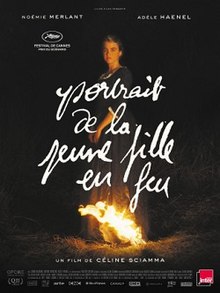
Portrait Of A Lady On Fire (2019) is a masterpiece of feminist art (or should that be mistresspiece?) which has erroneously been viewed as a film about homosexuality as there is a lesbian romance at its heart, whereas the romance is intertwined with brushstrokes that paint a broader picture of the female condition as one of historical social suppression and consequent emotional repression, the main thrust of the film – a female painter goes to an island to paint the portrait of an aristocratic young lady who is to be ‘married off’, and then the film falls into the tradition of artists and models falling for each other under the focused gaze; but here, the talented writer / director, Céline Sciamma, expands the convention to move the ‘gaze’ into a subtext on the female point of view and the inhibiting perspective of her social context, specifically in relation to the 18th century but with themes that can be applied widely to other eras – the only men in the scenario are shadowy figures of report, looming ever-closer to snatch away liberty; and the only physical representation of men is at the start when the painter’s canvasses slip off the row-boat taking her to shore and she has to dive into the sea to collect them herself, after which she is left on a beach to make her way alone, pointed in the right direction: i.e. socially, men see women as inferior and treat them badly, even if their job is to ensure their safe transport, and/or women are quite capable of looking after themselves (or both) – the man of the household being away on ‘business’, the painter’s destination is entirely populated by women: the matriarch who has an air of ‘if it was good enough for me’, the young lady to be painted for her suitor (in secret, as she has proved resistant to being painted for said purposes before), the female artist (masquerading as a companion to veil her secret painting commission), and a female servant – following a failed first attempt to paint the portrait in secret by the artist, the matriarch / mother is called away and the painter comes clean about her commission to the young lady, allowing for a more honest and earnest relationship between the three women who remain (artist, model and servant) – the lady allows herself to be painted to capture her ‘true essence’, which leads to the artist and model having an affair, an affair they know is doomed from the outset: patriarchal society will insist on the lady being married for procreation – the film is also full of swipes at the patriarchy beyond the core narrative: the artist says that she must paint nudes in secret unlike her male counterparts and uses male names to get exhibited, the servant requires an abortion that she seeks with the aid of the other two and abortion-wise local women (not the male who impregnated her), female armpits are less hairy as much as carpeted, etc – essentially jarring, the servant’s abortion subplot is important thematically to give a rounded picture of the suppressed female experience, a male/female rather than a female/female encounter; and the song of the local abortion-women is artificial against the realism that pervades the film otherwise, the only music in the film to provide a heightened atmosphere at a key moment, when the lady literally catches on fire, representing her emotional state (an external symbol of the internal, accentuated by soaring music, beautifully conceptualised) – for a brief period of time, in sorority, while the matriarch is away, the three of them are free of restraint; but only for a brief time, as the suppression of the social order reasserts itself and they separate fatalistically – add to this that the visuals by Claire Mathon are sumptuous and it is deftly edited, and you have a film that is profound and mesmerising despite the slight action: a genuine modern art film classic.
THE THING FROM ANOTHER WORLD
A landmark of the sci-fi genre and, most importantly, a romp – The Thing From Another World (1951) is an example of the kind of independent production that foreshadowed the breakdown of the Hollywood studio system in the 1960s and 1970s – in an era when the major American film studios had a vice-like control of production and distribution, the great director-producer Howard Hawkes established his own independent production company: he was able to start-up independently because he was exceptional and more-or-less guaranteed profit, his name being a brand mark of quality that was recognised by the public; so the key players in Hollywood gave him latitude, careful not to upset a cash cow (the studio still took a healthy cut of his independent films via distribution, financing and so on) – although Hawkes’ name is not on the credits of The Thing apart from the production company label / his brand, the ‘director’ is a cinematographer and Hawkes directed in all but name, his influence evident throughout with all the tropes of a Hawkes film: e.g. the group dynamics of diverse people thrown together, the action setting where they need to rely on each other despite disagreements, the snappy dialogue, the humour, the rapid pace – so, everything is just right without being precious in any way, as a b-movie is turned into something special and memorable – highlights that are easily overlooked in a tightly-timed film: there is a discussion of the alien’s nature that results in it being described as a carrot from space, which you are led to accept and only appreciate its absurdity on reflection; or there is the brilliant moment of sublime choreography when a door is opened to reveal the alien directly on the other side (reveal, duck, slam! alien hand-trap … all in seconds) – and then there is the unusual (for its day) setting of the arctic location, which creates a creepy atmosphere by enabling perpetual night, cleverly contrasted by the white of snow through the black and white photography – so there is the claustrophobia of shut doors to keep out the cold and long shadows, as they fight the hostile elements as well as the creature (the remote location is also a classic low budget solution to prevent expansion of cast and set) – the remake by John Carpenter is more often seen nowadays (he’s a fan of the film, which appears in Halloween too) but this original is more fun, albeit less visceral – the film closes on one of the great end lines, which can be found on that poster in Mulder’s office in the X Files: “Keep watching the skies!”

THE CABINET OF DR CALIGARI
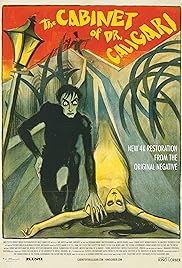
One for buffs particularly, but interesting to the less film-soaked and occasional viewer who would not usually watch a silent film, The Cabinet of Dr Caligari (1920) has been called the first proper horror film, the first cult film, and the first expressionist film – it kicked off the renowned German studio system and ‘German expressionism’ in film, which began to challenge Hollywood until the major talent fled the Nazis and the coming of sound led to English language dominance – there has been much read into it, a lot of it nonsense, so let us unpick it – it has been said that it anticipates the Nazis in its criticisms of authority (Caligari is the head of an institute and uses his position as a defence against charges of murder and manipulating people, a local government official sits on a high chair but doesn’t deign to look down on people and just tells them to wait, etc) but these are simply the small man being at the whim of those with power which is a theme that resonates even nowadays, and the link to Nazism is more hindsight than insight – it is a seminal film in the horror genre, e.g. there is knife murder with a blade similar to the ones used in Psycho and Halloween, Caligari has the power of hypnotism that repeats in films like Dracula, the ‘somnambulist’ (Conrad Veidt) that Caligari influences to commit murder is repeated by Karloff in his portrayal of Frankenstein and the Mummy, etc – but these are things that were popular at the time or well-known in literature, not new: ‘mesmerism’ was a cause celebre of contemporary culture, the penny dreadful literature of the late 19th century was full of horrific conceits and monsters, etc – duality has also been cited as innovative, but this, again, is a staple of horror (Jekyll and Hyde through to The Shining) and the essay by Freud on The Uncanny is essential reading if anyone is interested in the long history and psychological effect of twins, doppelgangers, double lives, etc – and it is a cult film because they struggled to get positive reactions being a German film made so close after WW1, so it took time to take hold – so much for the over-claims that follow the film, not that these do not hold truth in them (just overdone and exaggerated) – what makes the film special is the way it was made and designed (all the creators taking credit for it, so it is hard to specify who actually did it: a team effort) – firstly, it is all done in the studio, unlike other films of the period, and the town where it is set becomes a constantly expanding theatre stage with stage decoration symbolising reality rather than being it – secondly, the town is designed in an expressionistic style, with paintings instead of real walls and streets: there is not a straight line to be seen as the characters enter triangular doors at angles (like the murderer’s knife) or windows have staves that run in different directions, everything distorted and angular, the whole expressionistically representing the deranged minds (a lunatic asylum is part of it) of the protagonists – and the two characters responsible for the evil, Caligari and his hypnotised assassin, are dressed and made-up in extreme ways – so, this is a seminal and influential film in the history of cinema, influencing film noir, horror, the Hollywood studio system, Tim Burton, etc … but, ignore the over-the-top acting style that is common to all silent films and the influence, this is mainly memorable because it is a superbly visual treat.
BADLANDS
Badlands (1973) is a film that is easy to misread as a straightforward on-the-run road movie, merging into the many on-the-run movies that peppered the 1970s; and it has been described as a modern Bonnie and Clyde tale, which conveniently overlooks the fact that no one is robbed (it’s a killing spree) or that the Bonnie of this pair is a passenger not an active participant – the director, Terrence Malick, with his first film, created more than such simplistic readings allow: his subsequent films have revealed his artistic, some would say pretentious, leanings and the thought that goes into his films (e.g. he disappeared from film-making for a decade or two following the flop of his second film, which is less adventure more meditation and therefore not what the public or the money-men were after) – it was only with time and repeats on television that the true class of Badlands became evident, standing apart from its contemporaries, which led to Malick making a comeback as a lauded auteur; but he has never matched this initial effort – Badlands has a flowing narrative, shot beautifully in that trademark natural visual style of the 1970s (with the great Tak Fujimoto as lead cameraman) and we have two fabulous actors in the leads (Martin Sheen and Sissy Spacek) at the start of their illustrious careers – but the genius lies in its indirectness – it is never mentioned in the film, but it is about Vietnam: Sheen is 25, good with a gun, finds it hard to hold down a job, the first hideout they make is built with classic Vietnam traps (from which pursuers are shot), i.e. it is a commentary on the soaring violent crime rate caused by veterans returning from the war, who have been trained to kill at a young age but find returning to ‘normality’ difficult – and then there is the indirectness of perspective, with everyone coming from their own angle and not really understanding the other, with the whole narrated from the naïve 15 year old view of Spacek in a blinkered, child-like way – there is also a self-reflexive commentary on film and fame, as Sheen is compared to James Dean and is treated as a celebrity by his eventual captors, even checking his hair in the car mirror during the final pursuit to make sure he looks good for capture – and the action is handled raggedly and realistically, with shootings and car chases that could actually happen, rather than the over-the-top nonsense of modern action films – subtle, even if it can sometimes appear otherwise during the more violent moments, Badlands is a masterclass in non-explicit subtext and oblique understatement.

THE LOVE WITCH
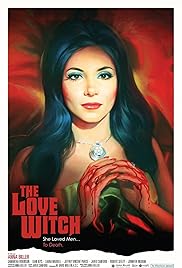
A cult film, The Love Witch (2016) is marmite – some will adore it, some will be less than impressed – it has the potential for someone to think it an inferior film; but, in fact, the film facilitates its own derision and its naff surface is actually superbly crafted skill, i.e. the film’s genius lies in appearing ropey when it is slickly put together in reality, being naff deliberately – it was made in 2016, but it has all the hallmarks of a movie made for the drive-ins of the late 1950s / early 1960s (except the fantastic camerawork) when trash was the order of the day: there is a burlesque bar, dodgy back projection, witchcraft as an unsubtly represented theme (covens were big from the mid-50s to the mid-70s), etc – The Love Witch is a pastiche of this era of trashy movies (rather than a parody, despite making you laugh at times) and ironically plays with the old tropes without being heavy-handed or obvious – the tightrope between awful and fabulous is walked, and the film manages this balancing act beautifully – the acting is stilted but not bad, the narrative is trashy yet intriguing, and the visuals are gaudy and sumptuously gorgeous at the same time – it is also thematically rich, with a commentary on romantic love ideals and images running throughout – overly coiffured and made-up, the lead seeks love through potions and magic, in a metaphorically direct critique of the artifice employed in ‘catching’ someone with feminine wiles: she presents an unreal image of the person underneath and thus fails to find her soulmate – she is desperate for love, lost in the fictions of romantic love found in novels / spell books and social expectations that do not translate to the real world, and she creates problems by following her self-deception: those she bewitches turn into slavering fools, lusting after her in a way she doesn’t want and rejects, killing any suggestion of love as desire impulsively strips them of any agency or sensitivity – and then there are the memories and people from her past that indicate that she has been a sexually used and abused person, yet complicit in creating her own situation, a metaphor for the female in history – and so on … the commentary on romance does not aim for unity of point, but takes it as a theme with numerous digressions on the subject – the film was written, produced and directed by Anna Biller, and she also did the marvellously garish costumes and sets that enhance her peculiar vision, marking her as a talent to watch out for.
THE DISCREET CHARM OF THE BOURGEOISIE
A founding father of surrealism, Luis Bunuel was committed to political and social provocation through the absurd and never made a ‘straight’ film; however, his films can be divided into ones that have a sort-of narrative structure and weird non-narrative ones – The Discreet Charm Of The Bourgeoisie (1972) is the most lauded of his ‘weird’ films, e.g. winning the Oscar for best foreign language film, but that is likely because he said he was not going to make more films after finishing his previous one and people did not want to see such a unique vision leave cinema so were encouraging him to continue into his later career – caveat: describing Bunuel as ‘non-narrative’ and ‘weird’ is slightly misleading as there is always a thread of cause and effect, and he keeps you engrossed in the ‘story’ despite the total disregard for conventional cinema – the main thing that keeps the viewer engaged is the black humour, common to all Bunuel; and some have described Discreet Charm as a black comedy, but that is a tautology and a bit like saying birds have wings – the film is constructed around a series of vignettes and digressions, each strand becoming more outrageous until Bunuel has dug himself into a hole, and then one of the characters wakes up from a dream (at one point, a dream within a dream) and everything re-starts – at the centre is a lynchpin that we come back to, as a group of well-to-do friends constantly try to have a dinner party and are interrupted by escalating ‘unreal’ events – Bunuel was interested in the subconscious effect of repetition here: the dinner party, the dreams, an actor who appears in several different minor roles, etc – underpinning the freewheeling nature of the narrative is a thematic satire of the bourgeoisie, which holds the film together: the dinner party of guests maintain a ‘respectable’ demeanour while being promiscuous, murderous and drug smugglers underneath, and running through each vignette is the fear of each individual being ‘found out’ – there is the swipe at the church (a favourite target of Bunuel) which forgives with one hand and holds a gun in the other, the army has its ‘games’ satirised, there is the neo-colonial politics of being nice to the Ambassador of a South American country of dubious repute, etc – a scathing criticism of the veneer of polite society hiding the atrocities that enable a decently wealthy standard of living, done with a cheeky smile and indirectness to make it palatable – and so the dinner party guests are recurrently shown walking along a road, unrelated to the rest of the film: a road to nowhere – the quality is surprisingly high given Bunuel’s unusual working techniques, including very limited direction to actors (who were cyphers to him) and his habit of editing footage while in-camera, but do not expect a highly polished end-product: messiness is part of the point – anecdote: to give you a flavour of the man, Bunuel did not like awards and refused to attend, but he did have a photograph taken of him receiving his Oscar … wearing a wig and oversized sunglasses.

THE THOMAS CROWN AFFAIR
The Thomas Crown Affair (1968, not the remake) has frequently been called picturesque yet shallow; but this is inaccurate, as it has subtle and profound depths – the surface is glossily shimmering, beautifully shot by Haskell Wexler, with swirling cameras that blur into psychedelic colours at times, idiosyncratic visual coups like the beach house that consists of just a floor and chimney, and the seminal use of multi-dynamic image technique (nod to the inventor, Christopher Chapman) where the screen splits into multiple images in which different strands of action take place at the same time – the leads (Steve McQueen and Faye Dunaway) are impossibly glamorous, dressed to the nines and attractive, playing against a backdrop of supposed-to-be-aspired-to wealth – and there is the metatextual glamour of a Hollywood star performing his own stunts and portraying his image on screen, with McQueen driving a dune buggy or flying a glider or, filthy rich, playing polo – however, this surface distracts from the undercurrent – a millionaire masterminds a bank robbery for the thrill, following which a sexy insurance investigator tracks him down and they start an affair: is it a heist movie or a romance? the word ‘affair’ in the title having double meaning, as does the narrative and symbols – e.g. the famous chess game at the centre of the film is really about sex (compare the working class Tom Jones use of eating as a metaphor, from the same period of necessarily using metaphor rather than the sexual act itself) – but the chess game also represents the chase, tracking and catching a criminal, cat and mouse – thus we arrive at the double meaning of the thrill of the heist and the thrill of sexual conquest, the puzzle, being comparatively the same in terms of the emotional heft they bring – and then it goes further, with the couple aware of the others’ intentions regarding the heist but getting romantically involved anyway, leading to an emotionally messy situation, a commentary on the compromises and imperfection of loving and living more generally, eventually leading to the stark choice of professionalism versus personal fulfilment, with an emotionally frustrated inconclusion – that is, the film digs into the ambiguity and non-definite nature of being, self-gratification versus social expectation, and is thus quite meaty in its subtext – it was the second success for director Norman Jewison in two years (the other being In The Heat Of The Night) and both successes had the hidden hand of master-filmmaker Hal Ashby as editor and associate producer – Jewison has a big reputation, but he was only half the artist once Ashby left to direct his own films and his reputation is based on the impetus he got from Ashby, not that you would have been able to tell at the time (hindsight is a wonderful thing) – it also has a wonderful soundtrack by Michel Legrand, his first US film, including that song, Windmills Of Your Mind (best version by Dusty Springfield, by the way).

Á BOUT DE SOUFFLE
You can spot a great film by the fact it has an inferior remake, and Á Bout De Souffle (1960) has an American one starring Richard Gere that is dubiously slick and focusses on the gangster elements of the film, thus completely missing what makes the original so revolutionary – despite a few alumni from the Cahiers du Cinema (the French critical journal that gave birth to a new way of looking at cinema) having made a few films beforehand, Jean-Luc Goddard’s Á Bout De Souffle is the key film that launched la Nouvelle Vague (the French New Wave) and this is because it rips up the traditional rule book of ‘quality’ cinema while still being an entertaining watch – hip and radical, it was a manifesto for alternative cinema; except it was massively popular and remains so, so how ‘alternative’ that can be is a matter for debate – there is an undercurrent of gangster elements that drives the narrative, but where the remake misses the mark is that the film is playfully toying with the clichés of US cinema, including a recurrent reference to Bogart, which undercuts and renews the form into something quasi-realistic and self-reflexive – and, anyway, the film is dominated by a love story (between Jean Seberg and Jean-Paul Belmondo) that introduces us to the director’s fixation with the impossibility of frictionless love, and a third of the film is taken up by a bedroom scene that anticipates the ‘free love’ attitudes of the 1960s – but what makes the film extraordinary is the way it is made, the (sort-of) technical aspects – Belmondo breaks the fourth wall early on, staring out of the screen, and addresses-cum-insults the audience, after which all restrictions are off – two other leading lights of the Nouvelle Vague, Truffaut and Chabrol, input to the script, but Goddard decided to do away with tight scripting (inc. making the Belmondo character chain-smoking and amoral, rather than tortured as Truffaut had written) and turned up each day without a full idea of where it was going, allowing for improvisation and sometimes going home with nothing shot (not that he didn’t have an idea of the overall story arc) which creates a natural and free-wheeling feel – the film was also shot by the great cinematographer Raoul Coutard, who would go on to making major Hollywood product, on a hand-held camera with natural lighting in real locations, often secretively as they had no permits, which gives the film a gritty realism that submerges you into its world and anticipates the guerrilla film-making of today – the sound is dubbed-on after, given the low-tech approach, but this is done in a subtle way so that it actually adds to the atmosphere, e.g. when the two lovers talk over each other for a few minutes, towards the end when the police are coming, is done in an abstract, realistic-yet-artificial way – and then there are the famous jump cuts, when the shot jumps onto the same shot but later in the conversation or action, several times, which is an accidental product of Goddard needing to cut the running time down in the edit (elsewhere you can see long, flowing takes) and making it a virtue, experimenting with cinematic ‘truth’ and convention – often called Breathless in translation, Out of Breath is a closer translation without being totally precise still; which leads onto an issue with translation throughout the film as slangy language is used and subtleties of dialogue are simplified or swear words are not translated, and it helps to have a smattering of French to fully get things (but it remains head and shoulders above most films even if you don’t understand French) – the themes are big: love, death, and the artificial nature of art – it is hard to stop as there is so much to be said: suffice to say, this is a landmark film that changed the way cinema operated.

COLD WAR
It has been around half a century since Polish film was vibrant with talent, but now we have a new star director in Pawel Pawlikowski (even if most of his work has been based in the UK (thank you, Curzon)) who has won numerous awards for his films – Cold War (2018) is a brilliant piece of art – the story revolves around the ‘true love’ of a couple of musicians, their relationship intermittently broken as they are separated then brought together several times by the politics of the iron curtain; and it works very well as a melancholic romance without digging further for those who don’t want to be taxed – however, there is great depth, something that many critics have felt is there but have been unable to penetrate – a cold war is a conflict that never reaches an aggressive, hot stage; and the title is referencing conflicts of emotions and choice that dampen passion, beyond the cold war we know from history – at its heart is a thematic study of the imperfect, messy nature of life, ideals being a fiction: there is a comparison of the ideologue east versus the hedonistic west, with both being unsatisfactory; the leads are in love but they have different views of the world that leads to their constant separation, with the woman even marrying and having a baby with someone else while they are on different sides of the iron curtain; at the end, there is a subtle critique of religion (and, therefore, Polish national mentality) with the characters not going to heaven or hell but purgatory, the in-between that the film has been gently pointing to; etc – life is imperfect and pretending otherwise is a dream, but human beings can’t help dreaming and idealising, without the satisfaction of achieving their dreams, frustrated – ‘the view is better from over here’ is the last line, but it isn’t really – technically it is impressive too: the screen size is the box-like 3:4 ratio, which is not necessary with modern technology so presents an artistic decision, cramping the characters into the frame as they are thematically cramped; the film is shot in black and white which, along with the screen size, reflects the type of film used at the time the film is set in, creating an old film feel despite it being a contemporary product; the editing can be deliberately brutal, with black screen representing the passing of time (occasionally there are captions, mainly to tell you the new location but also the different years); and the narrative structure is not built-up in classical Acts, but scene-by-scene to create a cumulative effect, expressionistically (without the outlandish symbols that expressionists are fond of, to keep the subtlety alive) – the camerawork of Lukasz Zal is beautiful and intricate, despite the small frame; and the music in the film is wonderfully accurate, with the lead actor actually being able to play piano in very complicated and difficult ways (it is not faked) and some wonderful folk and jazz music – a masterpiece of modern cinema that engrosses the viewer, which is a great trick for a foreign language film shot in an old-fashioned style.
BLADE RUNNER
There are good and bad films made from the books of Philip K Dick: film-makers are often attracted to his ‘trashy’ action, yet sometimes overlook his philosophical leanings and ironic, hip-wry humour that make his writings special – Blade Runner (1992) is the big budget film that captures his vision brilliantly, staying faithful to the twin psychedelic PKD thematic obsessions of technology gone wrong and what it means to be aware, sentient – several androids come to Earth as they approach their time-limited shelf-life, a planet where they are illegal and unwelcome, to find the man who created them, to ascertain the reason for their end, their ‘death’: a thematic quest for ‘god’ and ‘father’ that concludes with an atheistic and oedipal climax … but is there love? – the androids, esp. Rutger Hauer in an iconic performance, are hunted down and terminated by a blade runner (Harrison Ford), a sci-fi version of the bounty hunter or lawman of the Western: the film thus captures the PKD messed-up ‘detective’ of the future in Ford’s character, a character trope common to several of his books, adding the knowing wink of genre to aid suspension of disbelief and create action – and it captures the prescient Earth PKD creates in Do Androids Dream Of Electric Sheep (the book the film is based on): over-industrialised, constantly pouring with chemically-laced rain, everyone moving off-world for a nicer environment – directed by Ridley Scott, who changed the look of sci-fi on film with the popularity of Alien and Blade Runner, the conventionally pristine cinematic image of the future irrevocably evolving into the realistically loose wires and grime of today, with the laurels going to Lawrence G Paull, the Production Designer, and the large Art Department, for the design of a seedy run-down world – it marks the high-watermark of Ridley Scott’s directorial output, and he has returned to it a few times to milk the cash cow: the second version, removing the voice-over and other bits that the studio forced on him against his better judgement, that is the best (the ‘director’s cut’, hence I’ve dated the film as 1992 not 1982) – Blade Runner was not universally acclaimed when it came out, and did poor business – the space-heads loved it though: even during the action set-pieces, the film manages to have a dream-like quality, with leisurely editing, soft swirling muted colours, meditative sections, and a spaced-out soundtrack by Vangelis – it is, in effect, a massively popular cult film – I’ve seen …
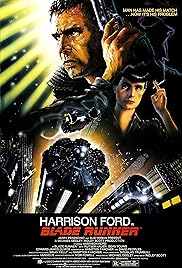
A PIGEON SAT ON A BRANCH REFLECTING ON EXISTENCE
A Pigeon Sat On A Branch Reflecting On Existence (2014) is one of those films that takes you by surprise and sticks in the mind long after you have viewed it; but it is not a film for anyone expecting conventional character and narrative, which it eschews in favour of loosely connected vignettes around thematic and tonal coherence – it is the third film of a trilogy on ‘being human’ by the director, Roy Andersson, but it does not require seeing the previous two films as there is slim connection beyond a meditation on ‘living’ (or ‘reflecting on existence’) – it delves into the workings and history of mankind in disconnected interludes, showing the slave/master dialectic that drives society and analysing how individuals cope with life beyond their grasp – the director has said that the film is about the question, ‘What are we actually doing?’ and the answer appears to be, ‘Who knows?’ – scenes and scenarios drift aimlessly with certain characters wandering from one situation to the other and running gags, satirising different aspects of life (work, class, bars, the military, etc), which gives it the feeling of comedy sketches except for the depth of meditation involved, i.e. the disjointed nature is actually an observation of the random and often purposeless nature of life – the focus is on the outsider, those listening and watching apart from others, observing or trying to interact and failing: numerous people are seen on the phone only saying at the end of the call ‘I’m glad you’re doing well’, occasionally a character tells their story yet no one really wants to listen, etc – all this is done with darkly surreal humour and moments of genuine warmth: it’s as though Bunuel has had a child with Monty Python and named him Ingmar Bergman, morose yet light-hearted, genuinely silly at times – it is a ‘slow’ film, i.e. assigned to a (critically made-up) school of film-making that has long, still takes and no rush of action; but it can be digested in chunks, watching a sketch at a time, if at home and you are an impatient type – and the slow takes make for beautiful images and photography, with characters standing still and heightened acting to emphasise the ‘frame’ – with laugh-out loud moments (even in translation) and a fine grasp of the absurd, this is highly intelligent, profound and entertaining stuff.

THE PASSENGER
A man of many vowels, Michelangelo Antonioni had a unique way of approaching film that places him as one of the true visionaries of the medium, using it as more than entertainment – specifically, his films have a philosophical underpinning that revolves around viewpoint and the unknown / unseen in wider existence impacting on the individual (phew! meaty stuff) – for example, in Blow Up the lead character even looks directly at the key incident and doesn’t see it – this approach is about the massiveness of existence and how we are small and limited in our perception of it; and he constantly reinforces this message with the trope of not looking at the action, attention on something else as is the nature of being human (i.e. we’re usually looking at the thing of unimportance and cannot see the bigger picture) as the camera drifts onto a painting on the wall as the characters have a conversation out-of-shot or we stay outside a door with noises inside – The Passenger (1975) is the central text of his oeuvre – Jack Nicholson assumes the identity of a dead man, which is in itself a philosophical comment on how we pretend to ourselves about who we are, and then becomes embroiled in that man’s arms-dealing, which involves shady people and the police, as his friends try to track him down – this sounds like a thriller plot, but it’s not – the narrative follows the protagonist while the activity pursuing him remains opaque, caught in glimpses and often left unexplained (but connecting to the wider world of wars in Africa at the same time) – the lead character is a passenger of a wider existence, even being a passenger in his own being: he only has a vague notion of what is going on, as do we – it needs to be seen in its original ratio of screen size too, as Antonioni likes to use the full image in a very measured and deliberate way, with characters at the extremes of both sides of the screen and the photography of a washed-out 70s nature that looks awful when panned-and-scanned but beautiful when seen in its entirety – the sound is also of note for its use of ambient background noise that clutters it – and it ends with a tour-de-force 360 degree tracking shot that lasts seven minutes, looking away from the action again, that tells a tale but we’re not totally sure what tale it tells, resolving in ambiguity – artistic genius.

CABARET
Cabaret (1972) is an unintentionally complex film with its presentation of an awful moment in history as entertainment, raising philosophical problems of morality in the aware viewer: it uses the backdrop of the rise of the Nazis as local colour, which is distasteful (esp. as they cut sections about being Jewish from the stage play for the film); and it is clothed in a kind of poor chic whereas the Weimar Republic, in which it is set, was notable for its crashes in currency and extreme desperation of poverty (while certain fat cats lived well and treated the poor as grist to their mill) that led to the rise of the Nazis – in the happy-go-lucky world of Sally Bowles these negative aspects of the contemporary world are only noted in passing, not addressed: Money Makes The World Go Around is a whimsical way to look at starvation poverty (to be polite about it) – however, it is an extremely entertaining film, not least because it avoids the pitfalls of lots of musicals: the songs by Kander and Ebb are exceptional, and they don’t burst into song at the drop of a hat in ridiculous places but all the musical numbers take place on the club stage of the Kit Kat, making them believable – it also provides an interesting insight into the mentality of the time it was made, with its attitudes and narrative more about the USA in 1972 than pre-war Germany, with its sexual permissiveness, including a bisexual element, and its sense of having decadent fun without the strictures of morality – the film was directed by Bob Fosse too, who was an average director but great with choreography, so the musical numbers positively jump off the screen with energy – and then there is the marvellous central performance by Liza Minelli, whose lax and irrepressible Sally Bowles is the defining moment of her career and reminds me of a few women of personal acquaintance – so, despite its flaws, it is a hugely enjoyable watch with nice visuals, performances and music.
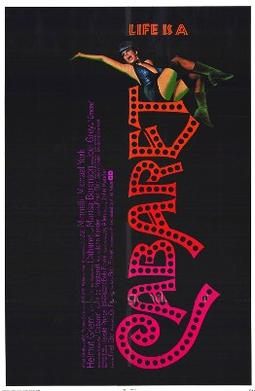
STROMBOLI
Stromboli (1950) is a neo-realist film, which means it has non-actors and real things in it, shot in a ‘guerrilla’ style – Roberto Rossellini is the director that neo-realism is always referred to (there are others): the first and most famous neo-realist film was the same director’s Rome, Open City, which made him famous, as it was a story about the fascists deserting Rome as the allies advanced that was riskily and quickly shot during the actual events of the fascists deserting the city and the allies advancing – Stromboli was his ‘break’ and made with Hollywood money from RKO (a poverty row studio, mind) following the success of his early films: Ingrid Bergman was a fan and wanted to work with him, so helped facilitate Hollywood studio involvement and wanted to star – there are stories about the studio and Rossellini at odds about the final product, with the US release being about 25 minutes shorter than elsewhere (one wonders what the studio thought they would get, as the finished product is exactly as you would expect): the disagreements are exaggerated into legend and only partially true, however, as the real problem with the film was Bergman and Rossellini having an affair during its making, with Isabella born to public scandal, the US public viewing Bergman as a scarlet woman and curtailing her career for some years – however, with time comes a more considered view of the film – Bergman sees a way to escape an internment camp for refugees at the end of World War II by marrying an Italian from the island of Stromboli (between mainland Italy and Sicily); and they move to the island where the inhabitants are moralistic and religious, where there is a struggle to live on a bleak volcanic landscape with fishing the main occupation – unfortunately for the Bergman character, she is used to more and comes from a wealthy background from before the war and has used her sexuality to survive, even thrive by previously being the mistress of a German – thus comes a culture clash, which situates Bergman well as the almost-glamorous alien amid the stoic and harsh life of the island: she tries to fit in, exhibiting a kind-of love for her husband, but finds it too much (they hit each other at different points) – she cannot help being sexual, the volcano being symbolic here, which clashes with the religious values of the islanders, and she cannot stand the poverty of existence and wants the more she is used to – it ends with a frantic and frustrated bid to escape, with Bergman sat on the slopes of the volcano crying at God – Stromboli is thus quite a daring film thematically: strict religious values versus open sexuality, poverty versus wealth, digging into the broader psyche of Italy – however, it is not the narrative that makes Rossellini films, but his use of reality: the thing that recommends this film and is truly spectacular is footage of the islanders fishing – during the film, there is a sequence where a big net is cast across the sea by lots of fishermen and large tuna are seen splashing wildly as the net closes in: it is truly mesmeric to watch, actually exciting even though it is just fishing, with the camera seeming to be among the action (a minor miracle, given the time it was made, the clunkiness of technology then, and the watery setting) and even better as it was the actual fishing practice of the islanders, real-ism.
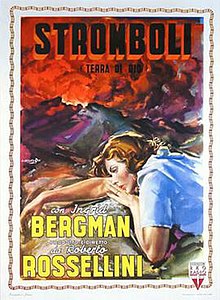
THE MALTESE FALCON
A terrific film, but often critically misread, i.e. it is usually called a film noir, indeed sometimes called the first one; but The Maltese Falcon (1941) is more a staging post towards the genre rather than one of the genre, made in 1941 while noir is generally post-war fare – for example, noir deals with protagonists in deep trouble whereas the lead here is fully in control, the femme fatale is not very fatal as the hero, Sam Spade (Humphrey Bogart), knows she’s lying from the outset, and the camerawork is nicely stylised but not to the extreme noir would go to – however, the stars are the noir-ish criminal element: Peter Lorre is a (coded) gay whose perfume precedes him, Sydney Greenstreet is a gross man of appetites who likes the sound of his own voice, Elisha Cook Jr is the angry young gun that ends up the butt of Bogart’s jokes, and even Mary Astor manages to make her presence felt as the deceitful woman (the peak of her career) – it touches on WW2 subtextually, which was going on at the time, with art being smuggled from Europe by dubious foreigners (read into that the black market, the soaring crime rate during the war, and spies) – but the art being smuggled is a magnificent McGuffin, a pointless chase that is used to reveal the darkness in greedy people, and the naughty people reflect the darkness in us all rather than the ‘enemy’, making it timeless rather than era-specific – it was John Huston’s first time as a director (he wrote the screenplay too) and it made him immediately famous with everyone awaiting his next move – Huston did lots of preparation work and had a shot list with copious notes, nailing scenes with precision and under schedule, which leads to quite brutal but timely edits, making it all shift with pace – and, of course, it has Hammett as a source: unlike Chandler, who would go out of his way to say something clever, Hammett was a spare writer whose dialogue fits the characters on show and Huston lifted great chunks of the original novel’s dialogue for his screenplay (Hammett is the founding father of hard-boiled with its murky noir-ish morality and this is the original at work, although the sex and drinking were cut down to satisfy the censor) – but the best bit of the film is choreography, when Bogart grabs Lorre’s wrist and hits him with his own hand, disarming him in the process – an influential and enjoyable classic: if you haven’t seen it, you really ought to.
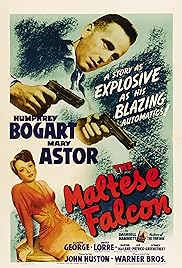
I AM NOT A WITCH
Although it has a meandering narrative that could give the viewer itchy-bum syndrome, this film will nag at your thoughts, with its depths slowly working on your mind and revealing themselves long after viewing is over – I Am Not A Witch (2017) is the feature debut of Zambia-born Welsh director Rungano Nyoni and is internationally co-produced, giving it a wide diversity of influences that are evident on screen; and it was nominated for various awards, a couple of which it won (of the newcomer variety) – it is about a young girl in Zambia who is branded a witch, sent to live with other ‘witches’, and pressured into conforming to the image of the witch that society says she is – although the director spent time in a real-life witches’ camp (yes, they exist) in Zambia as background, this is not about witchcraft but social attitudes – in particular, it drills into the sexist attitudes of the culture (why are there no men witches?) with the only ‘witch’ presented to escape the camp advocating marriage as the way out (yet she is still harangued as a witch at a supermarket by aggressive men) and the ‘witches’ in the camp are resigned to their culturally proscribed fate – the only woman to strongly support the male view of witchcraft is the leader / elder of a tribe, which moves into the complementary theme of traditional belief versus encroaching modernity: the tribal leader clashes with the Government representative, who has been told that the child, the central character who has been branded as witch, should be in school – this does not exonerate the Government, whose representative is responsible for ‘tourism and traditional beliefs’: westerners photograph the ‘witches’ and the young girl is used by the State to cater to the public taste for spells, specifically to make it rain in a pitiable climax that combines mysticism and everyday nature in a damning verdict – even television shows get in on the act, discussing witchcraft on a talk-show – but it is more than a subtextual analysis of the social conditions for witchcraft (and by extension, other social prejudice) – to deal with the odd subject matter and, no doubt, the low budget, the film has lightly surreal and absurdist elements, adding spice to the visuals and creating a complex of symbolic meaning: the ‘witches’ are all symbolically attached to broad lines of ribbon via yokes on their backs, for example – and there is wry humour to leaven the heavy subject matter, particularly at the expense of the State representative – all beautifully shot by David Gallego – a deep film, therefore, that digs into cultural preconceptions and prejudice in a peculiar style, affecting the viewer subconsciously in a way that registers long after the film is over.

AMERICAN GRAFFITI / BLUE VELVET
A double-bill of small-town Americana – American Graffiti (1973) and Blue Velvet (1986) took their directors, George Lucas and David Lynch respectively, into the stratosphere – both films are set in small-town America and have a lot in common in terms of the portrayal of such a place, but they are widely divergent in perspective – American Graffiti has a multi-strand narrative of youngsters going round in circles in their cars, on the ‘circuit’ of their town, cruising, talking between cars and stopping off at lovers’ lane or the drive-in diner – they are promenading in automobiles – set in 1962 over one long night before setting off to college, a group of friends look for something intangible, separately and together, in a ‘coming of age’ tale – they get up to hi-jinks, a comedy of youthful misbehaviour, culminating in a ‘dangerous’ drag race; but the focus is on relationships, particularly male-female, and sub-themed around home-is-where-the-heart-is vs taking off for a new adventure – at the end, the Richard Dreyfuss character (the lead of the ensemble cast) takes a ‘magic carpet’ (the airline’s name, if you look closely) out of there to college, escaping, while his friends stay behind – shot in a 70s-realist way (with the help of the great cinematographer, Haskell Wexler), it presents a rose-tinted view of youth that is not-too-realistic, with criminality, car theft, throwing up etc presented as humorous rather than the upsetting things they really are: small-town life as the US would like to see it, and a mis-remembered wistful reminiscence of youth (lovely vintage cars etc) – a fun ride, not a commentary on real life, and a masterpiece of Americana of the popular psyche that chimes bells of familiarity – it was produced by Coppola and has many of his top team from the 70s working on it, so the quality is high – in particular, the sound by Walter Murch is notable as pop hits of the time (one of the first films to eschew a traditional film score), dialogue, background noise, the natural live music of a band, and the voice of a notorious DJ on the radio merge into a seamless stream of sound that propels you along as much as the narrative (Murch would go onto the exceptional sound design of The Conversation in 1974) – and the film boasts Harrison Ford at the start of his career for star spotters – it is interesting now to look back and realise that the studio executives thought it was only good for a TV movie, but feedback from others in the studio changed their minds to give it a limited release: it was well-received by critics and became one of the highest grossing films of all time – by contrast, Blue Velvet sees small-town life in a much darker way: underneath the nicely-mown lawn is a disturbing scrabble of insects – behind the surface artificiality of the white picket fence and the curtains (a trope in the work of Lynch) there is criminality and deranged behaviour, people trapped not bored and taking their savage schadenfreude revenge on the world – like Graffiti, it is a ‘coming of age’ story, except the lesson here is that the world can be a dangerous and nasty place beyond the enclosure of protective insulation we put around ourselves; and the ‘coming of age’ is mixed-up with film noir and surrealism – apple-pie youngsters are drawn into a murky world of fear and sado-masochism, a world that “was always hidden”, as the film moves from the brightness of day into blacker-and-blacker-lit situations at night (descending the cinema into darkness along with the story) – in a way, there are still hi-jinx, but these come with a deadly cost that leaves all the characters distraught in some way: misbehaviour is not the soft bit of fun that Graffiti gives us, but the path to a scary place – it is still a humorous film, but the comedy is wry, ironic and black as the screen – early rock music plays its part again too, but here the focus is on the melancholic end of the musical spectrum rather than the upbeat and it is merged with a sinister-yet-beautiful score by Angelo Badalamenti – and the style is heightened, expressionistic and unrealistic, in counterpoint to Graffiti, yet it speaks a stark truth about small-town life that Graffiti white-washes in a layer of nostalgia: Blue Velvet is unflinching in its view of parochial American darkness (the bad guys live on a street named after the all-American hero, Lincoln) – it has a fine cast too, making and reviving careers – it was not well-received upon release and given a quiet release, mainly because of its violence (if comments are to be believed: the more likely explanation is that it takes a pick-axe to American myths); but it became a big cult film and has since become acknowledged as a classic – very much Lynch’s vision, who also wrote and was left alone to do his thing during the making, Blue Velvet is one of the truly great, influential and unique films of cinema, spawning a TV series in Twin Peaks – both marvellous films, barely scratched-at and both worthy of further study, they are complementary and dissimilar at one and the same time – it’s a matter of experiences and perspective.


EVIL DEAD II
Evil Dead II (1987) is not one for the easily shocked or for those who expect a finely polished product, but this extraordinary sequel to the notorious ‘video nasty’ is mind-bending – the acting is over-the-top and the sfx can be slightly dodgy, but that is just grist to the mill of the frantic momentum of the film and its sense of surreal extremism: the film-makers don’t care as it doesn’t matter, as who could take this seriously? – it is often called a ‘comic reprise’, which ignores the deep vein of jet-black humour in the original Evil Dead film, but ‘comic’ adequately summarises the tone – you can tell the director, Sam Raimi, would go on to more comic strip material – sublimely cartoon-like, taking lessons learned working with the Coen brothers on Crimewave (the disturbed cousin of Raising Arizona), this film can only be described as slapstick horror: blood is thrown around like psychedelic custard, Ash (Bruce Campbell, hamming it up magnificently) fights with his own possessed hand, stuffed animal heads on the wall start speaking, etc – there is no subtext to this, just a tongue-in-cheek riff on the horror genre and the first Evil Dead film, taking it to extremes that would be impossible to get past the censor if they didn’t play it for laughs – “Who’s laughing now!” screams a demented Ash as he chops off his own hand, and we don’t know whether to be appalled or snigger – plus, ignoring their sometimes ropiness, the sfx are amazingly kinetic, and the mad cameraman has never been so frenetically used – and, crucially, it has the best ending of any film, which will make you laugh and gobsmack at the same time.

DOCTOR ZHIVAGO
David Lean is a slightly overrated director and his films are not always ‘great’, but they are all interesting and ambitious (even Ryan’s Daughter has its attractions) – Lean’s directorial career can be divided into before and after The Bridge On The River Kwai, the point at which he turned from making relatively small films to epics – Doctor Zhivago (1965) is an epic (and a personal favourite of his films, although why it is so remains slightly enigmatic) – a story of frustrated lives and love against the backdrop of the Russian revolution, Zhivago presents a standard realist framework (for those who don’t know the technical stuff, realism posits the individual life within the maelstrom of societal events) and, as such, Zhivago is nothing remarkable in terms of thematics and depth of meaning, following the usual realist model and themes of individuals buffeted by the whims of the wider world – but the film is so delicately put together that it is deeply affecting, while at the same time it is done on a grand scale and it just sweeps you along: a beautifully judged marriage of the major and the minor – there are big changes of time and location in order to show the scope of the Russian revolution during which it is set, which could be jarring and clunky (like in the lesser hands of Pasternak: the book is an unwieldy doorstop, which was published in the US as a cold war swipe at communism and should not really have won the Nobel Prize for Literature) but the focus on the personal lives of individuals creates a central narrative that holds the film together – superb images (nod to the camerawork) add brushstrokes of meaning, like the leaves that occasionally blow across the screen as people are blown by conflict – and it manages to put a tear in the eye by the end without resort to any tear-jerking tricks, which is a wonderful skill, as the characters are drawn together by a mystical bond of fate, while their lives are turned upside down by the revolution and they are thrown apart – thus the film focuses on the impact of the turmoil of revolution on nice, sensible people whose lives are overthrown, rather than the events of revolution, gazing at the human cost, the individual caught in the whirlwind, which makes the grand scale of it very intimate – in other words, don’t expect revolutionary action but a look at those we would call refugees nowadays, on the fringes and fleeing – as such, it is not a history lesson, but uses history as the background to subtle themes of blurred morality and the need for personal space within the social realm (a Soviet critique, of course) – and the talent creating it is fantastic: Robert Bolt wrote the screenplay, Freddie Young (and Nic Roeg) was on camera duties, and Maurice Jarre wrote the soundtrack – it was put down by critical review when it came out, but the audience flocked in droves to see it; which just shows the magnetic pull it has, something you can’t quite put your finger on but it’s magic, unless you’re a cynical critic.
SYMPATHY FOR THE DEVIL (aka One Plus One)
Some may find it confusing, but if you know your history or have a musical background then Sympathy for the Devil (1968) (originally titled One Plus One) is a fascinating film – apparently, Jean-Luc Godard was interested in making an English language film about abortion but it became legal in England during prep and took the heat out of the topic, so he said he would still do an English language film (chunks are subtitled actually) if The Beatles or The Rolling Stones were in it (The Beatles declined) – on a musical footing, it shows the Stones during the recording sessions for their Beggars Banquet album as they develop the Sympathy for the Devil track, a portrayal of the creative process for musicians as the song evolves through different iterations – it is one of the best and most realistic music films as it shows the truth of the ‘glamour’ of music, as there is lots of noodling, smoking and chat, little-known session musicians that make the track buzz, etc (albeit with ellipses to reduce the time spent having a cuppa, although brews do occur) – and it reveals the internal working of the Stones, with Mick Jagger being mouthy and Keith Richards keeping everyone together musically in a quiet way, while Brian Jones is at the stage of his disintegration, playing along with an inaudible acoustic guitar and disappearing entirely by the end – Godard uses the music as the soundtrack to a multi-layered commentary on the late 1960s when ‘revolution’ was in the air, with the band intercut with scenes of polemics and oddly staged activity from people representing the different views of the time – there are Black Panthers, a right-wing bookshop that sells porn with a nazi salute, a hippy girl whose only answers are yes/no, etc – with a voice-over of a fictional book that turns real-life historical characters and politicians into a dime-store novel – but, being a smart cookie, Godard makes it all overlapping and often garbled, with voices babbling over each other and occasional extraneous sound of airplanes etc drowning dialogue out, which ends as a comment on the complexity of society and life, i.e. it is difficult to understand with everyone and everything making a noise at once – each has worth in what they say but also each has nonsense or plain nastiness in what they say: all are dubious but are worth listening to (sympathy for the devil indeed) – and it ends with the fact that they are only ‘making a film’ which is ironically playing down the subversive nature and import of what he is doing – it is thus a maelstrom of conflicting ideas, reflecting 1968, all done with that wonderfully cheeky disregard for convention that is Godard’s calling card; plus the brilliant music of The Rolling Stones.

KWAIDAN
Described as ‘ravishing’ and ‘the most beautiful [of] films’, it is impossible to disagree that Kwaidan (1965) is a visual feast: exquisitely framed and meditative photography mixes with vibrant colours and, often, massive stage sets of impressive design that add to its otherworldliness (even though they are obviously sets) – the images stick in the mind for years after the film is viewed – it is an anthology of four traditional ghost stories from Japan, ‘Kwaidan’ being an archaic version of a word meaning ‘ghost story’ – the anthology will be familiar to anyone who knows horror films from the period, such as the Amicus anthologies, but these stories are light of touch and subtler than anything the Western horror genre threw up at the same time: they are gentle ghost stories with moral overtones, not particularly focused on scares but on creeping supernatural presence, the beyond – it can be a little ponderous for those with itchy bums, but the nature of modern technology in home viewing allows for watching each of the tales in bites if you are easily bored, and it is more-than worth watching – the best section is called The Woman Of The Snow, which was ironically cut for the US release (idiots), as it has the striking visuals of the set(s) of a wood in the grips of a snow storm and presents us with many images that are now staples of modern Japanese horror, like the ghostly black-haired woman with her long fringe covering one eye (anyone who thinks The Ring was the birth of Japanese horror should see this, and consider the long tradition it stems from): it is a morality tale about happiness being dependent on being true to your word – other stories are: The Black Hair, a tale of ambition versus love and the ghostly fidelity of a wife; the longer Hoichi The Earless, where a blind musician plays without assumption to a royal court of dead warriors and becomes famous as a result (morals of humility and ‘blind’ chance); and the short coda of In A Cup Of Tea, which gives the film a very up-to-date ambiguous, unexplained end – overall, it is fragmented by the nature of all anthologies and it has longueurs due to its style, but it has a vice-like grip on the eyes and memory – there is something magical and different going on here.
EDWARD SCISSORHANDS
Tim Burton has made as many naff films as good ones and is a bit overrated as a director: his modus operandi is to create very conventional storylines but with surreally exaggerated character and detail, often to the expense of depth and meaning, i.e. there are always visual treats and the viewer can be blown away by the dazzle, but underneath there is usually a bog-standard-seen-it-a-thousand-times-before movie narrative and themes – however, he has occasionally transcended his limitations with majestic success, and it is these films on which his reputation lies – Edward Scissorhands (1990) is one such film – as usual, underneath is conventional narrative and character (the fish out of water, unrequited love, the bully, the mob storming the castle, etc) and a by-the-numbers Act structure; however, these conventions are played with to absurd extremes – because of the hyper-reality and absurdity of the vision, alongside some gaping holes in logic, it is easy to see why some may find it flimsy nonsense; but the conceits are so outlandish that we either opt for suspension of disbelief and engagement with the fantasy from the outset or don’t bother watching further, and it should be watched further – every character is extreme, from the over-nice family he stays with to the hyper-aggressive bully to the cougar who tries to seduce him, creating a smirky comedy effect throughout, added to by the comic book way Edward uses his scissorhands (a conceit that requires total investment in the concept to ignore their impossibility) to trim dog hair etc – and the tale is made comfortable, its horror genre forebears tempered, and its excesses excused by being told in distancing flashback by a grandparent to their grandchild (who has a roaring fire in her bedroom, like we all do) – and underneath the exaggerated comedy and the conventional narrative is something deeper, unusual in a Burton film, a tale that talks about alienation and isolation from the herd, how society makes those who are different their object of fascination, desire and horror – suburbia takes a big hit, with the residents happy with Edward when he is doing things for them for free but quickly turn on him as a monster when things go awry – everyone is concerned with their own preoccupations, not him or the services he provides them; and so the film delves into the selfish and/or solipsistic nature of us all – the acting is terrific, with special mention going to Dianne Wiest and Alan Arkin as the adults who take him into their home in a wonderfully judged non-judgemental far-too-nice comedic way; but the acting honours go to Winona Ryder who manages to (subtly) do a huge performance with very little to work with – the camerawork takes on odd angles and movement while the lighting conjures magic, and the soundtrack by Danny Elfman is exquisite – but what really makes the film is that it is designed within an inch of its life: each house in the suburban roads was painted a different pastel shade, so you get a constant shift of bright colour (even, at one point, one house is painted with green and red stripes) against costumes and set decoration that are equally astute and colourful; and this suburban barrage of colour is contrasted with Edward’s gothic mansion, with its deep blues, shadows and infeasible staircases – a film with flaws but only if you look for them, Edward Scissorhands sweeps you along to a place where you don’t care about logic and end up emotional about someone with scissors for hands – absurd?
TAXI DRIVER
Martin Scorsese is one of the most consistent of the great filmmakers who has made exceptional films; but his films can sometimes fail to blow you away, with little niggles that are symptomatic of his habit of including content that makes you think, uncomfortable truth: merited niggles, but not populist – at one point, he had a deal with a studio to make a crowd-pleaser (e.g. Goodfellas) followed by something he wanted to do (e.g. Kundun) as a result – the key exception (n.b. other films of his also do this, hence ‘key’) to Scorsese’s split film-making personality is Taxi Driver (1976) which makes you think but also blows you away – a lot of the credit for the success of Taxi Driver must go to the scriptwriter, Paul Schrader, who has also had an illustrious career – it is one of those films of the time that addressed Vietnam without actually mentioning it, the lead character being a returning soldier who is clearly suffering from post-traumatic stress and unable to adjust: he can’t sleep, doesn’t understand normal social behaviour, is innately angry, etc – you feel empathy for this messed-up state and his view of the city he travels; but it is a messed-up view and violent, not something you would advocate (still, a twisted version of the popular psyche of the time and many were tuned into his way of thinking) – and the script goes deeper into an existential analysis that bears similarities to Camus: Travis Bickle, the taxi driver, has a fundamental ontological separation from the world around him and doesn’t understand why, which is emphasised by the taxi device with reflected colours abstractly filling and confusing the image on screen or the city viewed at a distance through the windows of the passing cab – Bickle sees himself differently and sees differently to others, by nature rather than design, and this is emphasised by mirrors / his reflection at home or in the taxi – the world he inhabits is split in two: the day of a political campaign and the night of child prostitution, the ‘nice’ girl he upsets and the child prostitute he helps – but he cannot manage to separate his sides, blurring the two in his non-understanding and primal being, and only attacks the pimps when his political assassination plan goes awry: he is hailed as a hero but he just wants to shoot someone and get some sleep, the reasoning for either act of violence spurious – it is only after cathartic blood-letting that he appears adjusted at the end (or is he?) – there are other things to admire too – the person he buys guns off will sell anything in a portrayal of perverse capitalism, pseudo-smoke from manhole covers and the pipes of New York’s underground steam system suggest the city is built on the fires of hell, etc – there is a terrific cast: Robert DeNiro, Jodie Foster, Harvey Keitel, Peter Boyle, etc – and a magnificent score by Bernard Herrmann, wandering between brooding (a word that sums up the whole film) and more jazzy melancholic romance – an inappropriately and overused word, but this is genius – released in 1976, did DeNiro’s attack-mode Mohican hairstyle influence punk fashion?
I WAS A FIREMAN (aka Fires Were Started)
I Was A Fireman (1943) is about firemen fighting on the London docks during the German blitz of London in 1941, and is as close to the reality of those war-times as you will get – the director, Humphrey Jennings, had a background in making Government-funded informative documentaries about areas of British life and was one of the founders of the research initiative, Mass Observation, which aimed to turn the anthropological eye that had been looking at other countries and cultures on Britain, exploring the self rather than the alien – I Was A Fireman (slightly better than the shorter, edited version re-titled as Fires Were Started) thus has a documentary feel that gives an insight into the British culture of those times and what it was like to be subject to the blitz – much of the action had to be staged as the reality would have been dangerous and filming would have got in the way of real firefighting efforts during the blitz; but Jennings works assiduously to make it as truthful as possible, with the end result usually called a documentary despite the artificial set-ups – all the ‘actors’ are the people who actually did the jobs, resulting in garbled dialogue and confused chatter that add to the realism (without losing narrative or character) – we get the strategic coordinators and the group of firefighters, during the day when all is preparation and down-time through to a bombing raid when they dive to the floor as bombs fall nearby or fight a massive conflagration on the docks with cuts in the water supply and loss of life – several set-pieces are decidedly scary in terms of something you would be afraid to do, particularly climbing up high ladders over fire – and there is a matter-of-fact approach to the danger and prospective death – a terrific achievement, engrossing despite its lack of conventional or, even, identifiable storyline, well-photographed – made during WW2 about WW2, it doesn’t sugar-coat anything but maintains a ‘stiff upper lip’ about the hardships and realities of the wartime blitz in the fire service, and there is truth in the ‘keep calm and carry on’ attitude on display (not the total truth, as the crime rate during WW2 testifies, but a picture of the no-choice-so-bite-the-bullet lives of that time) – a remarkable historical document.

THIS IS SPINAL TAP
There is a fine line between clever and stupid, and This Is Spinal Tap (1984), from which I borrow that pearl of wisdom, manages the tightrope brilliantly – developed by the band’s lead guitarists / vocalists (Christopher Guest and Michael McKean) from an improvised TV comedy skit, feeding off personal experience playing music, the film is fully improvised with only a vague narrative to keep the actors on track – the director, Rob Reiner (at the start of a hot streak of film-making), wanted to list the entire cast as writers as it was entirely improvised, but sadly the studio wouldn’t let him – it is really funny if you are familiar with rock documentaries or the genre of music being satirised, but it excels and comes to life if you have ever been in or around gigging bands: for example, I still find it tricky to name the several drummers in a band that I was once in and we even had a joke at the time that we were Spinal Tap, a reference to their numerous (deceased) drummers; or getting lost backstage is a common incident for bands, which they do (of course); etc – they are so thick and insecure yet arrogant with/for adulation that there are a multitude of bells ringing of fame-hungry quasi-monster recognition – even the manager and girlfriend ring true; and the ending where they are ‘big in Japan’ is, to paraphrase JJB from The Stranglers, something bands say when they are no longer popular – it is such a brilliant piece of satirical film-making that it makes fun of the documentary form too, with the term ‘mockumentary’ emerging in its wake (although the band prefer ‘rockumentary’ naturally) – and then there is the game of ‘spot the star’: apart from the estimable Harry Shearer as the bassist (Mr Burns with a handlebar moustache) there are various cameos that are easy to miss – spot Angelica Huston, if you can – ‘one of England’s loudest bands’, Spinal Tap provide laugh-out-loud lines with a knowing wink – it was not a massive theatrical success, but then it hit video / DVD and became an influential cult classic – eleven out of eleven.

THE FRENCH LIEUTENANT’S WOMAN
The French Lieutenant’s Woman (1981) is a romantic film, but not as we know them – it possesses all the surface trappings of classical romantic fiction but digs deeper, for which the source novel by John Fowles and the final script (which went through various iterations during the film’s meandering production way to screen) by Harold Pinter deserve great credit – in Fowles’s vision he explores the Victorian hypocritical paradigm of women who want sex as mad, hysterical (whereas men are free to use the inordinate number of brothels that are mentioned in the film) and this critique of Victorian values, which were being popularised by Margaret Thatcher at the time, permeates the costumed elements of the film – then Pinter flips it all over the place with his usual skill: there is a modern parallel story of the film-makers in which the dynamics of sexual relations are quite different, providing an alienation effect to create a sideways look at romantic conventions and social conventions in general, shedding light on their timebound nature, as well as resolving the knotty problem that the novel has two endings (one happy, one sad) – and the dual modern-old narrative allows exploration of the Sartrean nature of ‘bad faith’ and how we all act a role in our lives (the metaphor of a modern film being made of the Victorian story) and pretend even to ourselves, an exploration into the (self)deception of accepted appearance, e.g. the actor-manservant plays piano beautifully in the modern world, an expectation that would be improbable in the old world – of course, there are the Pinter hallmarks of long pauses and witty dialogue; and there are elements in the costume romance that are straight out of trash romance novels, which can only be viewed as subtle satire given the rest of the script – this complexity is hidden behind the surface trappings of what can easily be misread as a standard romantic film – it is a lushly shot and sumptuously designed, with top marks going to the production designer, Assheton Gorton – it has an extraordinary cast, not just the rightly famous leads but right down the cast list, with many surprises for anyone familiar with minor British celebrities – and there is award-winning music by Carl Davis – a deceptively complex film that can be enjoyed straight if the subtleties pass you by (as they do for many going by the critical notices).

PREDATOR
Predator (1987) is a film that marked the ascension of several careers: it was an early Joel Silver production, who went on to produce the biggest action movies of his era; John McTiernan directed, only his second film, and would go on to direct Die Hard etc (interestingly, he was imprisoned for perjury later and declared bankruptcy) … but it is Arnie’s film: made in the same years as Commando and The Running Man, it was a transition period for Schwarzenegger as he moved from trash action to box office draw, with Predator being the key film – it plays to Schwarzenegger’s trash film background, with an opening assault on a South American guerrilla camp reminiscent of Commando; but then it takes off in an unexpected and exciting direction as the soldiers of fortune are hunted through the jungle by an alien – there are thus interesting comments on the nature of US involvement in South America and, more significantly, the nature of man hunting animals (inverted, as the men are the hunted) – but it is the kinetic pace of the film that impresses, with McTiernan retaining a firm grasp of not rushing things or overdoing it but never letting it flag at the same time – all the characters have clear definition too, which has much to do with the canny script – and the effects are exceptional for such a modestly budgeted film: the alien looks like it is alive and real, there is a clever use of heat camera, and there is a masterful use of two different widths of camera filming the same thing and a red suit that was fx’d out of the final image to create the invisibility effect where you can just make out a vague outline of the alien – at the end it is over-the-top as Arnie survives what looks like a nuclear explosion, but suspension of disbelief has occurred long before this point and the fun of it just sweeps you along to the point where you will swallow anything – it was given a sniffy critical reception, but made its money back in the first week of release – a great work of cult-trash cinema.

FAREWELL, MY LOVELY / THE BIG HEAT
A noir double-bill that highlights the roots of the genre and the different approaches taken by different Hollywood studios, with the two films shedding light on the mechanics of the other – both films lack depth of meaning beyond standard noir tropes, working by the code of convention rather than innovative theme; but both films are hugely entertaining and breeze by – Farewell, My Lovely (1944) (aka Murder, My Sweet) is one of the films credited with creating the noir genre (so kind-of innovative) – it was made by the ‘poverty row’ studio RKO and directed by Edward Dmytryk who had only made b-movies at that point (noir films made his name, but he never lived-up to the promise of his early films in his latter career) so what results is a main feature b-movie, with dodgy effects and broad brush character and narrative pacing – however, this makes it move quickly and entertainingly: you could be forgiven for losing track of the plot but it is a murder mystery, easily overlooked as the kinetic and complex action is constantly distracting you from it – labyrinthine plots were the trademark of Raymond Chandler and the film stays close to his source novel, with a few changes to satisfy the censors and a change to avoid upsetting the gangsters who ran Hollywood’s leisure industry at the time – all the noir clichés are there: the femme fatale, the grizzled p.i. (wonderfully played by Dick Powell, who had remarkably only done musicals before), the rich man, etc – by comparison, The Big Heat (1953) was made nearly ten years later by Columbia (still not the most prosperous of studios but one of the founding studios of Hollywood) and they had a big name director on board, Fritz Lang – noir had proved popular over the intervening years and gone upmarket – instead of the family squabble at the heart of Farewell, My Lovely there is a tale of political and police corruption, a forerunner to the films about corruption by Sidney Lumet; and instead of the frayed and seedy settings there are clean lines and big rooms – it could be said that as the big boys got their hands on noir then it came more to reflect their privileged lives rather than low-lives – yet The Big Heat has much to recommend it: ignoring the stolid lead of Glenn Ford, there are marvellous turns by Lee Marvin and Gloria Grahame (a role that they tried to get Marilyn Monroe to do) down the cast list, there are sudden surprises and shocks, and there is a brilliant inversion of the femme fatale stereotype, with Grahame being a ‘tart with a heart’ and, actually, the good-guy cop being the deadly one as every woman he meets ends up dead – the two films thus act as book-ends, revealing how money and popularity can infect an artistic vision and how genres develop – fascinating in comparison, with more than the surface-skim I have done to get your teeth into.

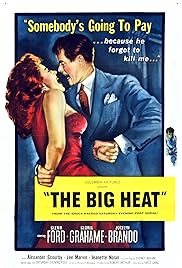
ELEPHANT
Mass shootings in the US are awful and dumb on many levels, but this difficult-to-fathom complexity has provoked great art – Elephant (2003) was inspired by the Columbine school shootings, and it is an extraordinary film that deservedly won the Palme d’Or at Cannes – there have been naysayers, but they have been reacting to the subject matter rather than the truth of the vision – ‘existential’ is the best description of Elephant, as we follow various victims and the gunmen leading up to the shooting in a very real-istic way – unlike most films set in a school and about youth, this is recognisable as what it is like; with the constant interaction and noise of teenagers creating an ordered chaos in school, and the characters (amateur youth actors, brilliantly managed by the director) behaving naturally and part-coherently like youths do, with empty space filled by garbled chat and isolation or solipsism – the camerawork is good looking and absorbingly fluid, constantly moving, following characters and getting in their faces in long flowing shots, with magical edits to maintain the flow, pulling you into the lives of the characters by movement rather than storyline – the sound design is natural, with snatches of conversation, overlapping and improvised dialogue (no script) and the noisy background of school – there are two exceptions to the natural sound, with a couple of Beethoven’s piano pieces large on the soundtrack to create a mournful feel to proceedings and a point at which the noise of the school brilliantly amplifies and penetrates one character’s head in a tortuous way – the second of these deviations in sound is indicative of the approach, as each character encounters the frustrations of everyday life and school, cumulatively adding to an (in)coherent whole that suggest why the shooting happens without providing a solution – to manage the several character strands, time backtracks to follow each character up to the point where the shooting starts, the finale, and this time reversal is done subtly and with alacrity so you easily follow it, with some changes marked by captions – the camera movement, the incoherent dialogue and the captions all coalesce to give the film the sense that you are watching a silent movie, except there are words; and this noisy silence is analogous to the quiet rage of the killers – the central killer has uncertain motives, even to himself, as he is young and his thinking is unclear, with his one comment on the murderous rampage being to ‘have fun’ that he tells his accomplice – there are no easy answers to why and what happens (although the film does show how easy it is for young killers to order guns online and receive them by delivery) – reason is ambiguous, motive is ambiguous, the ending is ambiguous, and even the title is enigmatic (there are readings) – written, directed and edited by Gus Van Sant, whose films are always interesting if not always successful, this is a masterpiece.

THE WHITE RIBBON
Michael Haneke is one of the most significant film-makers of recent times, with meaty subject matter married to well-judged stylistic trappings – The White Ribbon (2009) is a German-Austrian co-production that charts the life of a rural village in the lead-up to WW1, ostensibly as a social analysis of the roots of fascism but it should be applied much wider than that, with the direct nod to the development of fascist Germany in the film a slight red herring that distracts from the larger implications as it digs into skewed family mores, sexism, authority and the puritanical brutality of belief, tearing a new one for the attitudes of the past – the village where it is set is a picture-postcard one, but underneath there lies “malice” – the narrative focuses on a series of vicious incidents for which the culprits are sought, but this leads inexorably to point at children who have inherited their parents’ authoritarianism and moral bankruptcy – key adults are: a preacher who punishes his children for the slightest act but covers-up and shies away from their more dangerous activities, a doctor who sexually abuses his daughter, the lord-of-the-manor who is incompetently arbitrary-yet-powerful in the locality, etc: a portrait of a diseased social infrastructure in the rural areas of Germany (which is most of it) and the selfish men who run it, who thus raise disturbed children – given that the system is corrupt, the film offers no resolution to the mystery of the vicious acts (or shows them) as those with authority do not want to investigate their societal results too closely, preferring social esteem in the hierarchy to the truth (although the culprits are clearly indicated) – as such, the film has narrative drive as a nice teacher tells the tale in flashback about the series of unfortunate assaults, while its focus is really on the (melo)drama of village life and thematically unpicking degraded power – to add to this wealth of meaning, Haneke is a stylist par excellence – the cameraman has been praised, but this ignores the fact it was originally shot in colour then converted to black-and-white to match the photographs of the period in which it is set, various digital adjustment were made to the final images, and the sublime camera movement is consistent with other Haneke films as it moves to mirror the action at the right times and stays still at others: in short, the director has closely controlled the images and editing to produce a beautiful-looking film – one thing Haneke was fussy about was darkness, visually mapping to the themes, and most of it is shot using natural light from lamps etc – and then there is the pacing (which some have criticised as ‘glacial’, an unfair criticism): you are always intrigued by the narrative, but the story unfolds obliquely and subtly so you get a feeling of the real, a truth in its everyday motion, rather than the unreal rapidity of most modern films, i.e. it is not glacial but fascinating, drawing you into a gentle dance (the narrator and his fiancé have a gentle dance at the centre of the film, which symbolises the method at work) – and the acting is top-notch, even the children – a terrific achievement that won awards.

DR STRANGELOVE or: How I Learned To Stop Worrying And Love The Bomb
Dr Strangelove (1964) is the ultimate commentary on the MADness of the atomic bomb and, extrapolating out, the irrationality of war and human nature – MAD is the acronym for Mutually Assured Destruction, the nuclear game theory that was being applied at the time the film was made – it began as a straight story about nuclear armageddon by Peter George, one of the writers, but Stanley Kubrick (co-writer, director and producer) quickly saw it as a black comedy when confronted by the absurdities and paradoxes of the cold war nuclear stand-off – and then Kubrick got the financial backing if he used Peter Sellers in multiple roles, following their previous success with characterisation in Lolita, casting which would naturally lean any film towards comedy – it is often said that satire / comedy does not really affect politics, but the subject matter and tone of the nuclear debate was never the same again after this film – but it goes deeper than nuclear war, exploring the self-interest, misunderstandings and delusions of humanity in a richly comedic way: there is the aggressive ‘hawk’ US general and the spying Soviet ambassador who continues with his antics despite the desperate situation, or the brilliant telephone conversation between the US President and his Soviet counterpart that is like an adult talking to a child (you only hear the President’s part of the conversation, which is a much-used comedic device that creates humour from letting the audience imagine the absurd other side of the conversation), etc – the irrational flaws of human nature eventually become a physical metaphor when Dr Strangelove starts to fight his own hand, literally trying to kill himself (i.e. not in control of his own actions) – and there is a general satire of political and military nonsense; with jokes about a ‘gap’ in the arms race, biological warfare, soldiers fighting their own side, and even riffs on WW2 POW films – it has a great cast, but the star performance is by Sterling Hayden as the mad general Jack Ripper (every character has a comedy name) ranting about his ‘precious bodily fluids’ – the technical side is top-notch too, barring dodgy plane shots that were a result of a limited budget (Kubrick was fighting for independence so had to make do with what he could get): the camerawork makes the most of confined sets, the fight scenes look real even though they were shot on the studio back-lot, the music is by Laurie Johnson (including a lovely take on When Johnny Comes Marching Home) – but the technical star is the design by Ken Adams, who also designed the early Bond movies, with a plane that is exceedingly accurate despite being denied access to the real thing by the military, and an abstract bunker-like War Room that has been frequently imitated in film and real life – if you like black comedy, this is its epitome: purity of essence.

MEMENTO
Christopher Nolan has yet to live up to this film’s early promise, with success bloating his later films to a level of pretension that their content doesn’t merit and a couple being a pitiful mess (irrespective of big budgets and good box office) resorting to guns and explosions to keep the audience happy – but Memento (2000) delivers – “Now, where was I?” says the lead character, a man who cannot create new memories following an attack in his home that damaged his brain (Guy Pearce in a career-making role): he is seeking retribution for the home invasion during which his wife died, and the only clues he has are notes he writes down, some tattooed on his body, and Polaroids he takes along the way as he periodically ‘forgets to remember’ what has happened – the only guide he has are his mementos, literally photo ‘snapshots’ of his life that, extending the metaphor, don’t reveal the big picture outside the frame – orthodox critical comment has focused on the murder mystery, which is satisfying with all the pieces falling into place through a reverse narrative (colour) intercut with glimpses of earlier scenes in his room (black and white) – however, the jumbled-up narrative meant that the major studios wouldn’t back it as it was perceived as too complex, so it was produced independently: it quickly made a shed-load of cash, i.e. it is not a gimmick but makes sense to jumble-up as a reflection of the perception of the lead protagonist’s short-term memory issues, and it’s intellectually entertaining – but what makes the film special is its profundity, something the critics appear to overlook: a post-modern dissection of the self-reflexive reading of existence takes place – the film is fascinated by motifs, his mementos, symbols of something that has and is happening to the lead character beyond his memory, and he (mis)interprets these suggestions of the wider world beyond his knowledge – in other words, he is an amplified version of us all, trying to make sense of things while events are taking place and shaping us outside our knowledge, reading and misreading the meta-language of a greater existence – so the film turns into a commentary on language and meaning, how we comprehend being, its (mis)interpretation, the unreliable and blinkered nature of memory, the solipsism and isolated nature of the individual versus the entirety of existence going on elsewhere – ironically, he tells himself that “You have to have a system to make it work” but it is a fallacious system that misleads him, yet he continues within his limited and incorrect world view as it is all he can do (and is content to do it) – does that remind you of anyone?
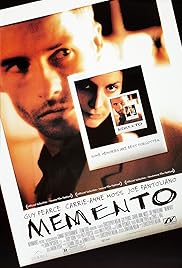
THE IPCRESS FILE
The Ipcress File (1965) is a notable film for numerous reasons, but the narrative is not one of them: an implausible tale of missing scientists and brainwashing, the story is entertaining but nonsense – however, a wash of realism, sardonic humour, historical fascination and technical juices override the Bond-ish narrative (and Len Deighton influence) into making the film special – the best work of its journeyman director, it was more interestingly made under the auspices of Bond producer Harry Saltzman, with several alumni from the Bond films, with the idea to make a more down-to-earth spy movie: the lead protagonist (Michael Caine as Harry Palmer) wears glasses and speaks with a cockney accent, the job of spies means filling in forms and going to staff meetings, locations are normal (everyday London) rather than glamorous, etc – on top of this is a layer of historical interest, with non-swinging 60s London permeating the mise-en-scene, a supermarket (in which a scene takes place) described as new-fangled and American with canned button mushrooms considered ‘gourmet’, etc – even the nonsensical brainwashing element has a historical basis as it was a common idea at the time (e.g. The Manchurian Candidate) and chimes with the contemporary psychedelic-populist current of giving credence to pseudo-psychiatrists like RD Laing and Wilhelm Reich – and then there are the technical aspects, two aspects in particular: firstly, the magnificent camerawork by Otto Heller with everything tilted at an angle and deep focus allowing both foreground and background to be shown with pinpoint clarity so there are constant shots of action through objects (he was using an idiosyncratic widescreen process that allowed for this); secondly there is the iconic score by John Barry which is note perfect – all these elements come together for the highpoint of the film, a scene where Harry Palmer confronts one of the enemy spies: a realistic messy fight ensues, far from highly choreographed, shot at a distance through the window panes of a red telephone box, with the music admirably punctuating the scene: cinematic bliss for that scene alone – the film that took Caine into the stratosphere … nb. only watch in a full-screen ratio as the edges of the screen are used.
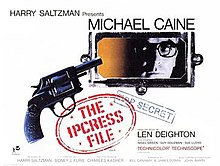
KIND HEARTS & CORONETS
The classic Ealing comedies are generally considered as whimsical slices of fun, but even the lightest ones have a transgressive nature where characters break the law or get one over the powers that be (e.g. Whisky Galore) and this moves into much darker territory in some of their films – Kind Hearts & Coronets (1949) is a pitch black comedy that tells the tale of a mass murderer; yet it somehow retains an air of whimsy despite this very dark subject matter, which is a remarkable sleight of hand – a daring and unique film for its time in its empathy for the killer, which eventually led to detrimental cuts and changes made to meet the sensitivities of the censor in the US (it was fine for Europe) – from its inception people were worried that it crossed a decency threshold: the producer and head of Ealing, Michael Balcon, needed convincing that such a dubious story should be made – so the film needed to soften and disguise its central subject matter to pander to the morals of the day, but it does so with a wickedly sly grin – it mediates in several ways: the killer narrates in voiceover about his murderous campaign in a matter of fact way, justifying his actions in a cleverly skewed rationalism that sucks in the audience to his side; his targets are aristocratic snobs and imbeciles, and there is a whole subtext to be read about the British class system; there is some wonderful ironic humour, slapstick and laugh-out-loud jokes, such as the killer refusing to hunt because it is against his principles; and most of the other characters are duplicitous and self-serving, especially the love of this life, Sibella (the ever-wonderful and plummy Joan Greenwood), who rejects his advances in favour of marrying someone with better prospects and then becomes his lover (another poke in the eye of the censor) when his fortunes advance and her husband’s decline, providing the murderer with a positive reflected light by comparison – it is remarkable that you don’t hate all these characters, but there is something mercurial at work and they merely become fools or entertaining – the cast is full of terrific British character actors that are recognisable to film fans, but Alec Guiness steals the film playing nine members of the aristocratic D’Ascoyne family with believable difference – and it is handsomely shot by cameraman Douglas Slocombe, including special effects with numerous versions of Guiness on screen at the same time – the shape of narratives to come, Kind Hearts & Coronets presents a world of comic moral ambiguity right up to its ending, anticipating modern film sensibilities.
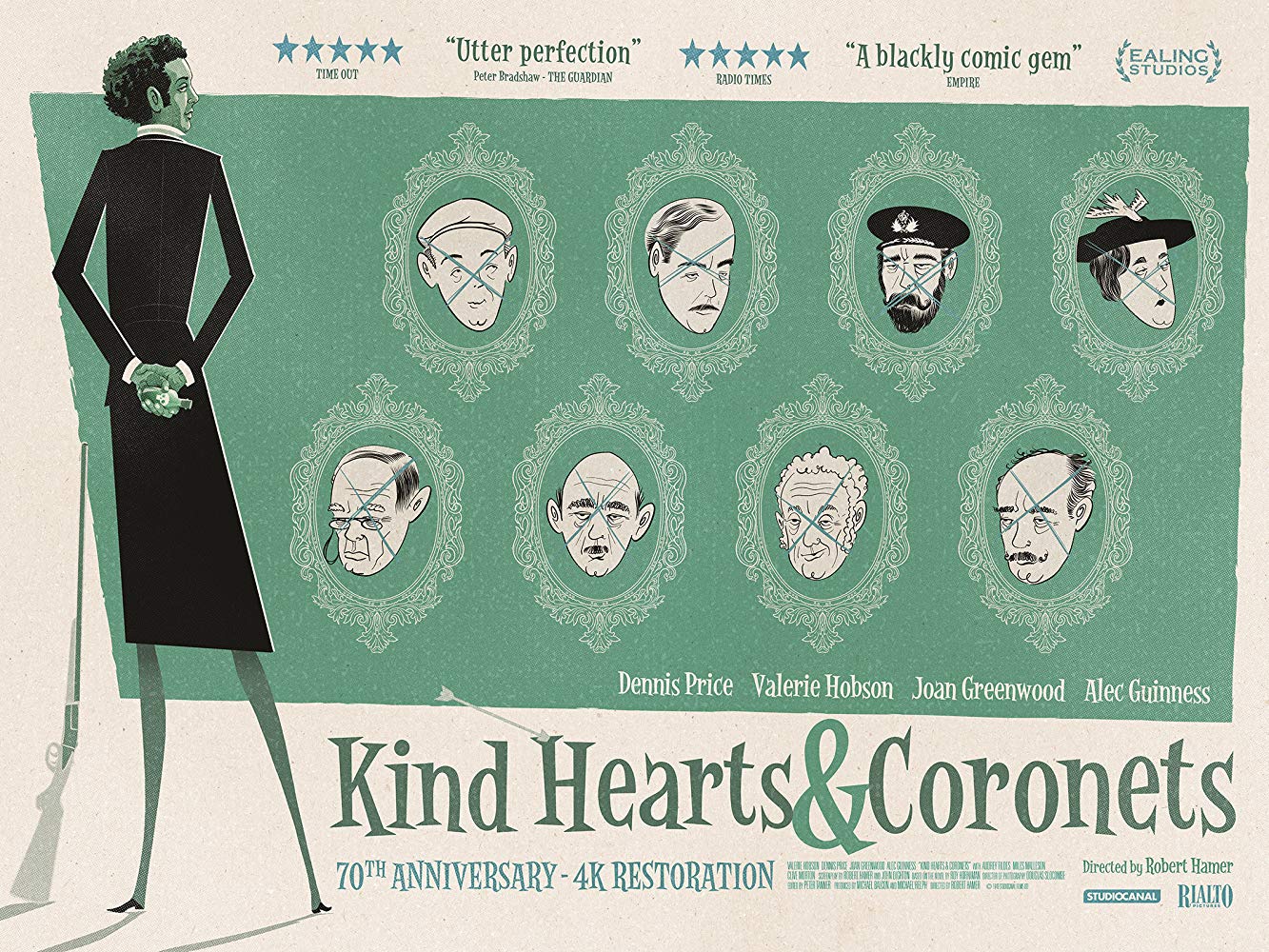
MONOS
Monos (2019) is an extraordinary film, one that keeps you engrossed while eschewing conventional narrative, keeping you engaged by puzzle and puzzling, with a wealth of meaning in the subtext without ever being explicit, and the most beautiful images, often called ‘hallucinatory’ – child soldiers (teenagers) hold a hostage for the ‘Organisation’, a para-military group of vague definition, primarily raising notions of insurrectionary guerrilla forces fighting Government power familiar from many struggles, but also with nods towards drug cartels (e.g. the name: the Organisation): this creates a landscape of images that allows for a general commentary on the subversion of politics that runs through South America – the mise-en-scene of South American struggles is the jumping-off point for a sustained look at the impact on the individuals (Mono[s] = individual or alone) in extraordinary circumstances, and the easy descent to animal of the human – the writer / director / producer, Alejandro Landes (a name to watch), has been open about the fact he took inspiration from Lord of the Flies and Heart of Darkness, with the child soldiers becoming increasingly violent and reverting to a primitive state, moving from being disciplined by the representative of the Organisation to killing the representative and establishing their own Organisation to fighting among themselves painted in primitive paint and caked in mud – the characters do not even have identifiable names, accentuating their alternative, non-civilised nature: they are called Lady, Messenger, Rambo, Wolf, etc – innocent people who arrive in their way are simply grist to their mill and treated as walking targets, with a particular scene of non-threatening adults being shot indicating how the children of the dead will be the next generation of child soldiers of what becomes a kind-of tribe (a new guerrilla force fighting their own war if you are kind, a savage group acting out with violence if not) – but it is more than a picture of brutalised people descending into animalism, the film gets metaphysical: numerous images and moments are reminiscent of Tarkovsky exploring the nature of being in his more adventurous films (e.g. Stalker), and Monos asks questions about what makes us what we are, i.e. what it means to be – the visuals are sublimely beautiful (nod to cinematographer Jasper Wolf) and often draw further comparisons to Tarkovsky at his best (e.g. the water reeds from Solaris make an appearance) – a unique and revealing image is one of bubbles in turbulent water, an image that is on screen for a significant length of time: the chaotic bubbles thrashing around and bouncing off each other, thrown around by the strong currents, are a metaphor for the individuals thrown around by the wider forces of political struggle and nature – and there is even more depth that this little space forbids, e.g. the treatment of gender merits critical analysis – it was made on a tight budget with scraped money (you can identify the ways that the film-makers got around the budget limitations if you think about it, but it feels like a much bigger budget) – ostensibly a Colombian film, the money actually came from several South American countries and has universal relevance, i.e. it is not about Colombia but an abstract country, non-specific, allowing for the general analysis of South America and human nature through the slippage of imagery via abstraction into multiple possible readings – but it is not just a wealth of subtext, it has a narrative that pulls the viewer along, just an open-ended one with digressions – genius.

HALLOWEEN
John Carpenter, the director, has described Halloween (1978) as “crass exploitation … full of cheap tricks like a haunted house at a fair” but he was not belittling it in doing so, he was just being honest about how it was constructed and targeted – it is a masterclass in how to make the audience jump; with numerous nail-biting tricks to shred the nerves, especially a brilliant use of the audience knowing more than the characters and the delayed fulfilment of horrific expectations ratcheting-up the tension – but there is more to Halloween than shocks – it was a low budget film (although not the first slasher movie as is sometimes claimed, it did inspire a slew of inferior low-budget imitators) and the budget restrictions permeated the whole production: actors wore their own clothes, props were bought inexpensively from shops or made from items lying around, the cast and crew were paid peanuts, etc – the most famous example is the mask that Michael Myers wears, which is a slightly altered Captain Kirk mask bought for $1.98 from a costume shop – so it is an outstanding achievement that it feels like substantially more was spent on it – key to its success are the visuals – the first film to use a Steadicam, which was still experimental, Halloween uses the glide a Steadicam gives like it had been around for ages, setting the template for many films to follow – it was common to refer to the ‘mad camerman’ in horror films in the early 80s, which stems from here: the camera prowls as though it is a malign presence, operating as a stalker POV; with Myers emerging alongside the camera on occasion, as though he has materialised from other-worldly creepy voyeur into physical reality – but the visuals are more striking than that, with the use of black shadows and deep blues exceptional, for which the cinematographer, Dean Cundey, deserves great credit – the acting doesn’t feel cut-price, mainly because the low-rent cast don’t have many lines (or none, in the case of Myers) and the big dialogue is given to the ‘name’ actor, Donald Pleasance, who did the film for a small fee because his daughter liked Assault on Precinct 13 – Pleasance is used to make speeches that create a sense of foreboding and mythology around Myers, which the film gleefully takes all the way: Myers is evil incarnate, who comes from a haunted house, wreaking havoc on Halloween when the devils come out – and then the music was done by Carpenter himself, on the cheap, but it’s haunting and spot-on for the film – of course, there are things that are uncomfortable but these are embedded in the horror genre, e.g. you die if you have sex in Halloween (traditionally, chastity = virtue in the world of gothic horror) – and then there are the anorak references, such as casting Jamie Lee Curtis with its echoes of Psycho, or the kids watching The Thing on television (a film Carpenter would go on to remake), etc – but what makes the film really special is the greatest double-take in film history: blink and you miss it, but once you know it’s there you smile every time you see it – the character Annie goes to her car in the garage, but the door is locked so she has to go back into the house to get the keys; when she returns she opens the car door without the keys, so it has mysteriously opened itself, and she gets in; realising the door has opened itself, she briefly double-takes by looking directly at camera, then Michael Myers kills her from the back seat – such sublime black humour runs through the film – on release, some critics thought it poor but others were impressed, and the latter were proven right as it created a franchise, earned a fistful of money and made careers – dark magic.
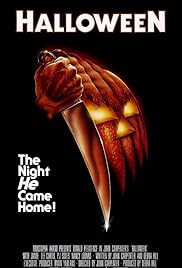
IN THE HEAT OF THE NIGHT
Four years after Martin Luther King said that he had a dream, a film emerged that did much for race relations as well as winning numerous awards and spawning sequels – In the Heat of the Night (1967) works because it is not a polemic, with three major strands running through it – there is the murder mystery, there are the equalities issues, and there is gentle comedy underneath that keeps the audience smiling as they get the civics lesson – the murder mystery works by the well-worn numbers and is satisfying in its comforting familiarity, delivering on genre expectations: various suspects, sex and money as motives, the culprit appearing as a non-suspect character early on, etc – the racial elements are striking with the Southern US still in Jim Crow mode, quasi-slavery: not readily apparent to the modern viewer (or perhaps it is, as things persist), it is a contemporary picture of 1967 with racism rife in the South – Sidney Poitier was nervous about filming below the Mason-Dixon line, and much of the film was shot in quiet areas or substitute locations elsewhere – most notably, America was shocked by the famous incident of Poitier hitting a rich plantation owner, naturally as the plantation owner hits him first, but black men didn’t hit white men then – and there is a rapprochement happening throughout between the on-the-surface racist sheriff (Rod Steiger) and Poitier, as they recognise each other as lawmen and people, with a warmth by the end – however, what makes it work is the underpinning comedy techniques that mellow the tough message – Poitier is forever going to catch his train but doesn’t, rednecks pursue him like the comedy Nazis from The Blues Brothers, Warren Oates (in one of his iconic second-fiddle roles) is constantly uncomfortable and a figure of fun, etc – it was directed by Norman Jewison; but a scan down the credits reveals a hidden hand at work, with the great Hal Ashby editing and assisting the producer, and it bears traits that are familiar from his films: smirky humour, naturalistic set-ups, misfit characters, etc – it is also notable for the music by Quincy Jones (with the title track sung by Ray Charles); and the camerawork by Haskell Wexler, which tips towards tropes that would become prevalent in the 70s, with some rapid zooms (done well, unlike many 70s films) and visuals that sometimes focus on foreground and background at the same time without properly framing either – most notably, Wexler used lighting that was considerate for the black skin tone, which had not happened before – in the end, however, the film is just a pleasure to watch.
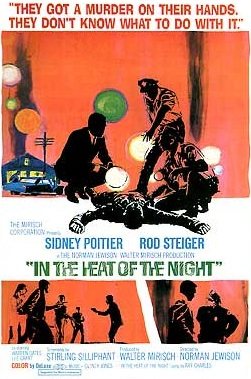
MY DARLING CLEMENTINE
A central film in the Western genre and the modern American self-myth, My Darling Clementine (1946) is one of the very finest in a career of fine films from director John Ford – for those not versed in Westerns, this introduced us to the myth of Wyatt Earp and the gunfight at the OK Corral on film, a legend that has been remade several times – but the influence extends beyond remakes, with the set-piece gunfight becoming a staple of future Westerns (e.g. Leone borrows heavily for his gunfights, or Peckinpah openly called it his favourite Western and copied it) and the values on show represent the apotheosis of man-in-the-white-hat Western frontier pseudo-morality – of course, there are dubious attitudes on display, e.g. ‘How can you let an Indian in town?’ is not said with any irony or pathos, but these concerns are subsumed by the sheer gusto and pleasure of the rest – there has also been much comment on how the story plays fast and loose with historical fact, based on a book by Stuart Lake that is a fictionalised biography of Wyatt Earp, with numerous ‘lies’ told (e.g. Doc Holliday did not die in reality); but this ignores the fact that it is a film, fiction (plus the Earp family interfered to protect his legend) – Ford would try to revisit Westerns later in his career and address the prejudice and inaccuracy of his earlier films, which were criticised as politically unenlightened; but his earlier films were made in a different time so must be given latitude, and My Darling Clementine is not bad on this front – in particular, the film evokes a truthful reality even if not factually accurate: the characters are funnily dressed and dishevelled, the town of Tombstone is full of random people cluttering it up and not organised into groups to make a neat picture image, there is a dance to celebrate a new church that is awkwardly folksy and touching, etc: you get pulled into the world that Ford creates – and then there is a lightness of touch, with a couple of moments providing laugh-out-loud comic relief – there is a fine cast, with Henry Fonda at his laconic best, and special mention going to Victor Mature, never better than as Doc Holliday, and Walter Brennan as the vicious father of the Clantons – the camerawork, by Joseph MacDonald, is exquisite, merging sets with Monument Valley locations seamlessly in high contrast black and white, with unusual and striking shots throughout – interestingly, Ford did not want to make it and did it to complete his contract with 20th Century Fox, and the studio boss, Darryl F. Zanuck, insisted on cuts of up to 30 minutes to arrive at its release form, yet it ended as one of Ford’s best films and an influence on not only the Western but broader filmmaking and the US popular psyche in general.

FAMILY LIFE
Ken Loach is a film-maker that makes one reluctant to watch his films because of his dour reputation; but, despite the occasional mis-fire, once engaged in viewing his films are more-often-than-not engrossing – the essence of the Loach style is realism: natural light, recognisably truthful acting and dialogue, real world settings, etc – however, realism is just the appearance of reality technically, and he can overstep the mark into unreality to make a point (e.g. the Jobcentre in I, Daniel Blake is highly inaccurate); but the fiction merging with reality usually works and the non-truths slip by submerged by the bigger picture of his polemical truth (he is always making a point) – Family Life (1971) was the film he made directly after Kes and based on his and writer David Mercer’s TV play, In Two Minds – in essence, it has a narrative not dissimilar to various exploitation Hollywood films of the 50s and 60s in which people are committed to an asylum; but this is the early 70s and Loach, so electro-shock therapy replaces lobotomy and there is no sense of exploitation just a sad tale – the lead female protagonist is, to be sure, not quite there, but in no way deserves the treatment she gets – thus we get the polemic: the system and social norms grind her down because she is different, and her family and the mental ‘health’ establishment make things worse, creating the trademark anti-establishment subtext of Loach – plus, there is a generational conflict at its heart (hence, ‘Family Life’) relevant to the late 60s / early 70s, with the parents immersed in old values and the children being more free, to parental horror – yet what makes this special is the mise-en-scene: for anyone who lived through the 70s this is evocative beyond belief, for those who didn’t it is a historical artefact – the décor, the people, the smoking, etc, are all so spot-on that it is worth watching for that ambience alone (assuming your memories of that period in the UK are not tainted) – the film it bears a strikingly askew relationship to is A Clockwork Orange, with the same subject matter except done realistically

RASHOMON
Akira Kurosawa is best known for his Samurai films, esp. those that were converted into Hollywood Westerns, e.g. Seven Samurai (The Magnificent Seven) and Yojimbo (A Fistful Of Dollars), but he had a far wider range to his film-making than this suggests and even his Samurai films have a depth that the Western remakes belie – a prime example of his artistic complexity and a genuine masterpiece is Rashomon (1950) which it would not be hyperbolic to call one of the greatest works of art of the 20th Century: a seminal influence on film-making, non-cinema art, and philosophical and social thought – some may find this an extraordinary claim for a film, but Rashomon is a post-modern film made when the philosophy of post-modernism was in its infancy (in case some may misunderstand or be ignorant, we now live in a post-modern world not a modern one) and it is one of the earliest examples of post-modern art – what makes it post-modern? primarily, a view of life as complex and plural (as opposed to the binary good/bad / black/white / yes/no of modernism): it tells the tale of a rape and murder by a notorious bandit as presented to a court of justice in flashback, with various witnesses telling conflicting and different stories of the same event (which is a staple tenet of post-modernism, i.e. it is a matter of perspective), and even within the individual stories there is confusion and multiplicity of motive as each character becomes both the wronged and the wrong-doer, their tales an excuse but in the end each blaming and focused on themselves, blinded by solipsism as they look straight at the bigger picture – the court of justice is distanced by a more traditional distancing device of those who attended the court recounting the story, but even the characters of the framing device are complex and untrustworthy, creating a second tenet of post-modernism: the unreliable narrator, i.e. whose story can be believed? which reaches its apotheosis in the murdered man giving witness via a spiritual medium in a most extraordinary visual and narrative coup (the images foreshadowing later Japanese ghost stories and horror like Kwaidan or The Ring) – and so, typically post-modern, there is no right and wrong and ‘facts’ may not be true from a different angle, creating a chaotic and complicated world view that is echoed in some of the characters talking of how brutal and mixed-up everything is – and it is more than just theoretically interesting, it is technically innovative too, with the camerawork by Kazuo Miyagawa and editing by Kurasawa combining to create a dance of shadow and light and striking imagery in adventurous and novel ways to conjure the feeling of a forest and reinforce narrative and character, inspiring other film-makers to emulate them – it is hard to imagine it was made as far back as 1950 – and then there is the characterisation, particularly the bandit played by Toshiro Mifune who acts like an animal, always on his haunches, laughing randomly and picking insects off his half-naked torso – the role of the female is sexist, it must be admitted, but this is old order Japan and it needs to be viewed through that lens – made on a shoe-string budget, it introduced Japanese cinema to the world and won various awards – a deeply profound meditation on human existence, not a murder plot, i.e. existence is complex and unknowable, and a technical masterclass, it is one of the greatest films made.

THE KILLING / RESERVOIR DOGS
A double bill of career-making heist movies that sheds light on the two (in)famous directors – after a couple of early minor films and despite it making a loss, The Killing (1955) by Stanley Kubrick was critically well-received and drew the attention of the studios and proper funding for future films – it was a classic independently assembled project, with some money provided by United Artists (they would have stumped-up more but Sterling Hayden wasn’t a big enough star for them) – following a meeting over outdoors chess, having just sold his distribution company and looking for something to do, James B Harris produced and gave Kubrick a free-hand to direct – a cast was assembled from the best of lowish-rent actors, and an innovative script was created with the help of hard-boiled detective fiction writer Jim Thompson – it is an extremely influential film, e.g. Soderburgh’s Oceans films owe it a bow of reverence: heist films had been done before, but this one was focused on the mechanical detail, the nitty-gritty of small detail that builds into the bigger picture of the overall job – but more than that, to string all the pieces together it is put together out of chronological order, so the same incident can be re-played with extra pieces added to make sense of something that has gone before – the shape of the technically outstanding Kubrick to come, as you are never unclear (a voiceover telling the viewer that it is ‘earlier’ helps) – and there are great visual touches too, like the clown mask the lead robber wears – Quentin Tarrantino’s debut film Reservoir Dogs (1992) was a similar low-budget independent heist movie, which would not have been made without the interest and assistance of Harvey Keitel and the shadowy hand of the great Monte Hellman as executive producer – it made some profit upon release but not much, yet it has become a modern classic – Tarrantino is less interested in the mechanics of the heist and more in the interpersonal to-and-fro of the gang and the spectacle of gunfights, everything going wrong rather than like clockwork – it is a flashy and entertaining feature: there is lots of technical skill in evidence, with nice camerawork and editing, a terrific marriage of music and image, and some great acting by a cast that had their careers turbo-charged by the film – there is also the funny and clever dialogue that Tarrantino brings, with the argument about why Buscemi has to be called Mr Pink the highlight – and there is a lot that is pure plagiarism about it, something Tarrantino has always been open about (calling it ‘homage’), e.g. the gun in both hands rip-off from John Woo (whose US career took off after Tarrantino said it was where he got the idea) or the use of ear-torture taken from The Big Combo – the film Tarrantino has said he got most from, however, was The Killing by Stanley Kubrick – the overarching structure (rather than tone or narrative) is essentially the same: both films are about a heist that goes wrong, both are shot out of chronological sequence, both have the gang in a bloody stand-off at the end, etc – the main difference being that Tarrantino focuses on the aftermath while Kubrick focuses on the heist itself – two films that made the careers of their respective directors and enlighten the mechanics of the other, bringing insight and deeper pleasure when seen together (if you’re a bit nerdy, or just enjoy what are wonderful films).
RUMBLEFISH
Francis Ford Coppola was lost in his own visions when Rumblefish (1983) was made – his attempt at setting up a modern studio, Zeotrope, was failing, his ‘new’ musical, One From The Heart, had not been much of a success, and The Outsiders, which immediately preceded this film, struggled to gain a release – but he ploughed-on regardless, and came up with a gem of cinema – The Outsiders was based on a novel by SE Hinton and Coppola had his sights set on another of her novels, but the funding was not readily forthcoming given the ropiness of the aforementioned film: but he continued and wrote the script of Rumblefish with Hinton and shot initially on video – eventually, he got the funding and upped the visuals (which are stunningly shot by Stephen H Burum, but still technically innovative, using video) but the finished film still received a mixed reception, from effusive praise to derision, and failed to make its budget in box office takings – however, it is one of the most intriguing films in cinema history – “It’s like black and white TV with the sound turned low” says the Motorcycle Boy (Mickey Rourke) of how he perceives the world, his senses being damaged through gang rumbles and/or a life of deprivation and/or because he sees the world differently (references to Hamlet abound) – and the film mirrors this description of the Motorcycle Boy’s unusual perspective, taking its style from German expressionist films and Cocteau, shot in black and white at odd angles (Coppola felt it was the only window of opportunity to make a film in black and white (everything was in colour at the time) so he did: an example of his bloody-minded artistic intelligence), with overdubbed dialogue that reflects the unreal sound of the Motorcycle Boy’s hearing: Rumblefish is thus a semi-perspectival piece, of how an outsider street kid sees the world filtered through hyperrealism – it is a film that has been looked-down-the-nose-upon as ‘Camus for kids’ or obviously themed, but it’s more complex than these simple criticisms make out (is a clear theme a liability anyway?) – it has resonance for anyone who has ever been hanging around street corners in gangs, capturing the feel of that loitering existence, with minimal fighting: character rather than action – there are surreal-ish splashes in its design and sets, like a big clock on the side of a van or unseen trees creaking in a wind-blown soundtrack or time-lapse photography to represent the passing of hanging-around time, all taking place in a timeless mist that blows through the piece; but this can mislead the viewer to ignore the substantial strain of realism in the film – the milieu is very accurate in its depiction of small town life, its characterisation of dysfunctional families, and, what makes this special, its view of kids running wild: anyone who has ever walked the streets will feel its truth (despite the unreal setting) … and, oh, the view of violence – a film that dares to say why a lot of people commit violence: “It was fun” says the Motorcycle Boy of the rumbles – and the cops / the system are complicit in the violence – the main theme is of the rumblefish not fighting if released from their confined fish tanks into the open waters of the ocean as a metaphor for giving people freedom and space to get more fulfilment and stop them fighting, but it is the essence of mood capturing the lifestyle of kids that makes this special – it has a fantastic cast, mostly in early roles before they became set in their acting ways: Matt Dillon, Dennis Hopper, Diane Lane, Tom Waites, Nicolas Cage, Laurence Fishburne, Chris Penn – and a top technical team of Francis Ford Coppola’s Zoetrope period worked on it, given reign to experiment and make ‘art’, plus Stewart Copeland provides an atmospheric percussion-based soundtrack – a superb film.

MASQUE OF THE RED DEATH
American International Pictures (AIP) made cheap films quickly for the drive-in and grindhouse market, and were established and run by Samuel Z Arkoff and James H Nicholson whose ethic was to make money rather than quality, with films often being set in motion on a provocative title to draw in punters before the script had been written – the most famous and commercially successful director at AIP was Roger Corman, with his film credits being legion given the speed at which he worked, always making some money (easily, due to micro production costs) and occasionally hitting the jackpot – Corman’s most famous and respected works are the eight films of his ‘Poe cycle’ which are adaptations of Edgar Allen Poe horror stories, very loose adaptations that became very tenuously attributed at times – of the Poe cycle, The Masque of the Red Death (1964) is the best and a highly enjoyable film, roughly hewn from more than one short story – satanist Prince Prospero (cycle regular Vincent Price) gathers his lackeys behind the walls of his castle as the plague of the red death ravages the countryside outside, tormenting his guests and three people from a nearby village for entertainment (which his guests find amusing even when they are the butt of the joke, although the villagers are properly afraid) – we thus get a bacchanalian view of an evil ruling class using commoners and each other for their vile sport, confined with each other in a mentally oppressive way – Price is terrific as Prospero, exuding smarm and sinister with such gusto that you overlook the sometimes clunky exposition of his satanic ways, and Jane Asher is just right as the villager girl caught in his claws like a bird; then you throw in horror staples like a dwarf, death in a hooded cloak and an evil sidekick for good measure – but what makes the film special is its look, which is sumptuous despite the budget limitations – shot in five days, it re-used exquisite sets from the film Beckett (nominated for Oscars etc, but not the better film) with the main hall featuring a floor that looks like a satanic chessboard when turned to these hands; and a series of rooms that are exactly the same but painted in different colours, leading to a dark room with a satanic altar; shot by (later to be director) Nic Roeg as cameraman in a beautifully fluid way, fighting the jolts of the handheld camera of the time and framing within the limited sets in a precise and opulent way, such that the financial constrictions and small set of the film disappear – it would be good to cite the production designer and art designer (high in the credits) but it is difficult to judge whether it is the film’s designers or the designers of the films they borrowed the sets and costumes from that should be praised, so it is Corman and Roeg and the mercurial use they have made of the bric-a-brac that should be praised – at time of release, critics opined that it showed what Corman could be and Corman has reflected that he got carried away to make something a bit different, but it wasn’t as commercially successful as his other films (and that was that for Corman and arty) – if you watch one Corman film, it should be this: not always perfect but a miracle of film-making considering the constraints of a five day shoot on borrowed sets, and ravishing to look at.
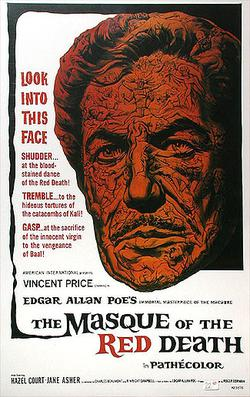
ORPHÉE
Jean Cocteau oversold himself, and his achievements have been exaggerated, i.e. given the small quantity of his famed works, it is surprising that he is considered a “poet, playwright, novelist, designer, film-maker, visual artist and critic” – nonetheless, he was a key figure in twentieth century art with many of his associates also significant names in the artistic movements of the time, and, occasionally, he produced something exceptional – key to understanding the works of Cocteau are three elements: firstly, he primarily identified as a poet, calling his films visual poems; secondly, in terms of film-making, his Orphic trilogy of films is central to his work (it is a strange trilogy as the films do not narratively flow into each other but rather comment on each other via themes centred around the nature of poetry and creativity); and, thirdly, he makes few clear statements on what his art is, even though the Orphic films are about creativity and himself, as much of what he does is for pleasing effect rather than meaning (his final film and epitaph aged 70, Testament d’Orphée, is alternatively titled ‘Don’t Ask Me Why’) – at the centre of his Orphic trilogy and the heart of his film-making is Orphée (1950) which is a highly influential classic that has inspired imitation by diverse people in various strands of the arts and has been heralded by other great film-makers – it is an easy watch (which cannot always be said of Cocteau’s films) full of imagination – it re-tells the Orpheus story of Greek myth, and Cocteau gives reign to the full scope of allusions to the classical qualities of Orpheus but manages (somehow) to avoid feeling pretentious by setting the story in 1950s France – the musical skill of Orpheus in myth is here converted into poetry, making Orphée a famous poet, like Cocteau, who frequents the Café of Poets, giving a flavour of the artistic milieu of the time; but he is detached from the other artists by his fame and pursued by the public – while at the café, he witnesses the death of an up-and-coming poet by two motorcycle riders (the wonderful image of outriders of death, mimicked in other films) who speed off, leaving the dead man to be picked-up by a strange woman in a car who invites Orphée to accompany her to get medical help: the woman does not go for medical help, but transports the dead man to a shadowy mansion where she summons the body to life and walks through a mirror with it, and Orphée surreptitiously sees and wonders – he is sent back to his own home with the woman’s driver, who stays to watch over him: the woman’s car stays in Orphée’s garage, and he becomes obsessed by the enigmatic phrases that are broadcast over its radio, spewing cod poetry that sometimes make sense but more often are just gibberish that sound important (another conceit that has been much imitated) – meanwhile, his long-suffering wife, Eurydice, is dying; and every night the strange woman, who is a harbinger of death, stands over Orphée as he sleeps while the driver keeps a close eye on Eurydice – the film thus tweaks the Orpheus myth into a ménage-à-quatre, with Orphée and the female death-bringer (not a personification of death but a being from the underworld who ministers it under the direction of a bureaucracy) falling for each other, and the death-bringer’s assistant falling for Eurydice – when his wife dies, Orphée is pitied and given the opportunity to descend into the underworld, through a mirror, to reclaim his recently deceased wife, on a strange trip (a word used advisedly) – the underworld Cocteau creates, with simple-but-effective effects (again, imitated) and distorted swipes at everyday life, is masterful; until Orphée retrieves Eurydice, but at what cost? the beings from the underworld must eventually sacrifice themselves for Orphée and Eurydice in an expression of eternal and fatalistic love – the key to reading Cocteau’s take on the Orpheus myth is the mirrors, which are a recurring image in Cocteau’s films: he said, “We watch ourselves grow old in mirrors, they bring us closer to death”: the underworld is accessed by passing through mirrors but there is more to the image, i.e. the death-bringers from the other side are reflections of Orphée and Eurydice; that is, they are refractions and reflections of the living beings looking into the mirror, symbolically one and the same, distorted by the poetic imagination (but never effacing their endless love) and, metaphorically, the artist, Jean Cocteau, looking at himself – the film thus thematically plays with eternity, of the poet, love and death: but, specifically, it is about artistic metamorphosis and deathlessness, Cocteau trumpeting his lasting presence in his art (forever about the self with Cocteau), with Orphée renewed in a stronger love for Eurydice by conclusion – and other things are of note, particularly the lead actor (Jean Marais) was Cocteau’s lover, enhancing the biographical nature of his Orphic films, and it is all beautifully shot by Nicolas Hayer.

STRICTLY BALLROOM
A group of Australian drama students (ref. credits for the original company) created a short play, which gained success over various iterations and performances in different countries, lengthening it – then an Australian music industry boss decided to invest in making it into a film after seeing it onstage, but they still needed to scrabble around for more cash (spot the blatant product placement in one dance sequence, which mercurially works as though intended) – the music boss died before it was finished, but not before sourcing a decent soundtrack using his connections – the cast and crew were unknowns – on completion, they took it to Cannes where it was shown in a graveyard slot – it was a big, surprise hit – thus resides the indie cred behind Strictly Ballroom (1992) – the director, the unfortunately named ‘Baz’ Luhrmann (yes, Barry), has not lived up to this initial promise and, in fact, seems to get worse – however, his debut is wonderful – you don’t have to like ballroom dancing to enjoy this slice of mischievous fun, as the film cleverly takes the piss and celebrates ballroom dancing at the same time – a film that is purely good-hearted and good-natured, so that even the standard plot of a Cinderella story with nasty or frustrated people trying to stop the heroes does not irk – there is a clever move from the stage to screen, with unusual locations, gaudy costumes or a flashback visual montage spicing up the dance sequences – there is no pretence at realism either, with actors directly addressing the camera to break the fourth wall or heightened visuals, so the gaps in credibility of the action are easily ignored – it is so camp you could pitch a tent on it, in a good way, and you find yourself smiling throughout, not at jokes but at the fevered and knowingly inappropriate pitch the film gives to competitive ballroom dancing (a comic strip sensibility was infecting films at the time this was made, such as the Coens’ more zany products) – if you need cheering up, there are few better ports of call.

THE BIRDS
A film that split critical opinion on its release but has proved a popular favourite, The Birds (1963) shows Alfred Hitchcock at his best and worst at the same time; but any negative aspects are swamped by the enormous fun of the film – visually stimulating, there are exquisite long-shots to show characters and action in progress, point-of-view shots, montage and odd angles to escalate the tension; but, at the same time, a Hitchcock trope of dodgy back-projection as characters drive cars etc reveals a casual approach to visual fidelity, with the story and assumed audience reaction taking precedence (although the back-projections also stem from Hitchcock’s background in expressionism with the heightened backgrounds sometimes representing a state of mind) – the special effects are also mix-and-match, using some live and some animated birds, and different sequences are created by different people, to greater or lesser competence: so you get a fantastic aerial sfx shot of the town with a burning petrol station as the birds slowly mass above alongside the dubious animatronics and slap-dash animation of an attack on school children – the themes are not that deep: although people have tried to read into it, the film’s subtexts are merely the grounds for magnificent action set-pieces that are full of visual coups, even those with ropey sfx, especially the use of the familiar, the small birds flapping and swarming and deadly – the build-ups to the set-pieces are cleverly put together to maximise thrills: the poor effects on the attack on school children are more-than compensated for by the build-up when crows gather slowly on a climbing frame behind one of the lead characters, or the aerial shot of a burning petrol station is preceded by a scene in a café where doubt is thrown on the bird attacks before the shock of experiencing one (a bit post-truth as the expert is proven wrong) – the start of the film is also merely a McGuffin to lead the viewer to the action, with a meet-cute between the female and male leads creating expectations of comedic romance that spirals into dark territory as the film progresses, unhinging expectations – in terms of Hitchcock’s development, it nestles (pun) into his move from thrillers into horror territory in his later films – although the horror is fairly tame by modern standards, it was considered in bad taste by some at the time, e.g. a body with eyes pecked out – the bird attacks are unexplainable, a trait which is at the heart of the horror genre: there are ‘more things on heaven and earth’ than can be explained being the unsettling notion, allowing for the creation of impossible monsters while philosophically placing humanity in its narrow perspective of unknowing in the universe, at the whim of events beyond their control – but there is an explanation: the premise allows for the magnificent action set-pieces that Hitchcock excels at, and the unexplained lulls between attacks allow for (limited) character development and a discussion of what is going on, during which ‘unexplained’ features as a word often, cranking-up the tension – it has been called a visionary eco-horror, but that ignores a strand of literature pre-dating it that deals with similar themes, inc. the Daphne du Maurier story it is based on (a favourite authorial source for Hitchcock) – and the soundtrack is extra-special, with Bernard Hermann, a regular collaborator with Hitchcock, only listed as a consultant because there is no music, just the bird sounds created with an early synthetic keyboard, innovatively, so the screech of the birds becomes a whirl of artificial noise at times – it has since become famous for the Tippi Hedren negative account of how she was treated by Hitchcock, but she puts in a remarkable performance given she was a novice; and the rest of the cast do well too, despite being second-string actors – and the whole ends with a satisfyingly ambiguous ending: we are left with uncomfortable irresolution, as befits the horror genre, the fear continuing after the film’s end.

LETTER FROM AN UNKNOWN WOMAN
it must be said that most Hollywood romances are prone to excesses of schmaltz: of course, a similar criticism can be levelled at other genres (e.g. action films are prone to big explosions) but the romance is the worst offender, with the genre’s effectiveness measured in handkerchiefs needed for crying into by critics (which is a cynical joke taken seriously by fans of the genre) – but, like any artistic form, the best of the genre can be astounding – Letter From An Unknown Woman (1948) is a case in point: anyone who does not shed a tear at the end has a problem with contacting their emotions, but it is so much more than a cumulative toll on the tear ducts – it tells the tale of a woman (Joan Fontaine) who loves a famous pianist (Louis Jourdan) from afar, having his child after one magic night when they meet, but he doesn’t even know who she is (and therein lies the yearning pathos) until he receives a letter on her death – directed by the great Max Ophüls (credited as Opuls for some reason) who marshals lovely set design, fluid camerawork, acting and pacing (a mere 86 minutes) with his usual beautiful precision – with the screenwriter, Howard Koch, Ophüls turns a novel where the woman is promiscuous and can be given little sympathy for her plight into a film where it is the man who is so treated, cleverly reversing the misogyny of the time and playing to a female audience’s sensibilities – love is the major theme, with the woman suffering from unrequited love but also a fantasy of desire that cannot be fulfilled (Freud would have a field-day), she loves the son she bears from their night together, she marries another man who loves her despite the shadow of her obsessive love of the man he is aware of, and there is primal sexual love (with hints at prostitution) – in sum, and slightly aside from love, it is about lust and obsession and the lengths people will go to in order to satisfy them – yet it is more: the film deals with perspective, how people see the same things differently (and, by extension, lovers can be on different pages entirely) and even the same person can be divided into seeing the same thing in different ways, creating conflicting drives – innovative and daring stuff for the time it was made, pushing at the boundaries of artistic theory as well as moral standards, wrapped in a veneer of genre standardisation – a work of genius.

CAT PEOPLE
Cat People (1942) is a film that divides opinion on whether it is ‘tepid’ or ‘atmospheric’, with the debate ongoing in-house during film production through to critical and audience reception – however, the final judge is time: it has made lots of money, been remade, imitated (a highly influential ‘horror’ film), etc – in short, it is a masterclass in low-budget film-making – critics have focused on the producer, Val Lewton, and the low-budget techniques that are usually credited to him – Lewton had worked on films before, mainly as writer or producer, but his major breakthrough was in 1942 when he was hired by the cash-strapped Hollywood studio RKO to make horror films to rival the Universal franchises (Frankenstein etc) – Cat People was Lewton’s first production for RKO and it made a lot of money, the first of his many cheap horror films that kept RKO afloat financially – the Lewton films used suggestion and shadows rather than make-up and monsters to keep the costs down (and because the creators felt that monster action-chases were being done to death by the other studios), and the most well-known of the low-budget techniques is known as the ‘Lewton bus’, credited with being invented in Cat People: the ‘other’ woman, the woman that sparks the cat woman’s jealousy, is increasingly scared as she walks at night, feeling she is being followed (by the cat, the audience thinks), and then … a bus pulls into frame with its brakes squealing loudly, making the audience jump: thus is invented the false jump scare – however, the real genius of the film is the director, Jacques Tourneur, who organises the limited resources at his disposal and puts them together deftly, creating a moody and creepy style, added to by noises-off and reactive acting, that would become the RKO trademark accredited to Lewton, as well as creating moments that have become copied ad infinitum (e.g. the swimming pool scene has become a cliché via imitation) – a man who never really advanced beyond b-movies masquerading as the main feature, Tourneur nonetheless directed a couple of landmark and influential films, with his films usually worth a look and good fun – In terms of themes, almost overtly, it daringly (for its day) addresses sexual desire and its frustrations: a woman from overseas, one of those mythical European lands that Hollywood has always been fond of, marries a straight-up American guy, but is afraid to consummate the marriage (several months of married life without sex! chaste were the cinematic times, as opposed to the WW2 birth rate) for fear of turning into the big cat that the curse of jealousy for her ‘people’ means for her; and so the husband turns to his female colleague, arousing jealousy and unleashing the cat within – Simone Simon plays the cat woman, Irena, with many an on-set tale about her lack of acting skill and fiery temperament, but in the finished product she is ideal with her odd accent and skewed delivery enhancing the strangeness: thus the film also plays with foreignness, which would have been meat and drink to the audience of 1942 – and then there is the other contemporary undercurrent of cod psychiatry, with Irena visiting a therapist and subtextually the film feeding off the old idea of hysteria being rooted in female sexuality, mangling Freud along the way (as many other films did at the time) – and so it is also an interesting historical document that reflects the time it was made – although Lewton had a hand in writing etc, and Tourneur was the master hand at work, it was a team effort with the writer, DeWitt Bodeen, doing most of the research and development of the idea, and the editor, Mark Robson, chipping in ideas and creatively putting it together – and there should also be much credit given to the cameraman, Nicholas Musuraca, whose work helped define the look of many films, especially in the film noir genre, and does sterling work here – shot in one month, it is a remarkable shoe-string achievement that has influenced the horror genre ever since, i.e. horror is about mood, the feeling of terror, rather than monsters.
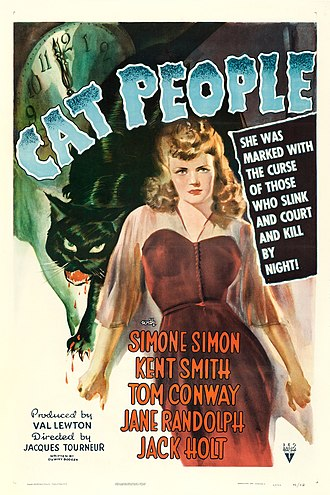
HAROLD AND MAUDE
On its initial release, Harold and Maude (1971) was a commercial and critical failure; but it became a genuine cult movie over the subsequent years such that those critics who were negative at first changed their tune and apologised, and it is now deemed ‘culturally, historically or aesthetically significant’ by the US Library of Congress – it is easy to see where the original reluctance to see its virtues came from: made during a period of student revolts and the Vietnam war, it has an unorthodox approach to life that would make the establishment feel uneasy; there is a love story with an age gap of sixty years at its heart, which is still something that will make most a touch unsettled; and it treats death as comedy, which would be the blackest of comedy except for the lightness of touch that puts a smile on your face – it tells the tale of Harold (Bud Cort), who is an only child with a self-obsessed single mother, resorting to faking his suicide on numerous occasions in order to get attention and/or his own way; until he meets Maude (the marvellous Ruth Gordon) at a couple of funerals (he fake-attends several), whose view of life is positive and affirming – they go on adventures together, find each other, and he changes – it is a perverse coming-of-age story, in other words, with Harold not entering the adult world but rejecting it in favour of a more freewheeling attitude to life, inspired by Maude (who is fun despite the darkness in her past, e.g. the holocaust survivor tattoo she has on her arm) – written as a Masters thesis originally, it shows the youthful pre-occupations of its author, but it is made adult by the skilled hand of the great Hal Ashby directing – before his early death, Ashby only directed a few films and was assistant director on a few others (on which his hand can be felt) but each film is marvellous: of the ones he directed, they are all black comedies about people on the fringes of society, with a low-key realist feel to production that counteracts the more outré elements of the stories and a genial smirky atmosphere (as opposed to gags, although there are always a few laugh-out-loud moments) – Harold and Maude is all over Ashby: provocative, knowing and surprisingly deft given its outlandish premise – in terms of themes, there is the generational exploration (is Maude younger than his mother? despite her age), free spirits versus established authority, and, majoring, what is life (and death)? – add to that a surprisingly appropriate soundtrack by Cat Stevens, and you have a lovely way to spend your time.

SICARIO
A growing directorial force on the block, Denis Villeneuve uses techniques that hark back to the 1970s, updating them to be a bit more showy – Sicario (2015) is his best film to date – it has visuals that are naturalistic, with time taken to look at the landscape unlike the hurry most modern films are in; but there is always a more up-to-date visual interest to spice it up, such as fx shots to mimic night-vision equipment; and the camerawork of Roger Deakins is superb, with carefully composed and picturesque images – there is also the impressive use of sound design: there is an atmospheric score, rather than big strings etc, but the real interest lies in the use of noises, helicopter blades or walky-talky calls imposed over visuals, with sight and sound informing and complementing each other – and there is a complexity and pleasingly digressive nature to the narrative, which is full of incident as the film’s milieu of the drugs trade gifts, for which the writer, Taylor Sheridan, deserves credit – Emily Blunt plays an enforcement officer who is drawn into the morally dubious orbit of the intelligence agencies by Josh Brolin, who is accompanied by the quiet-yet-menacing Benicio del Toro, as they work a plan to tackle the drug lords, a plan they are deliberately vague about, the ‘need to know’ activity of the intelligence forces creating a sense of uncertainty and danger – a believable and fragmented world of cartels and the US war on drugs unfolds, with a murky conclusion where the covert US operatives establish the lesser of two evils (the war on drugs being unwinnable) thus presenting a cynical view of life – it is an absorbing watch, with a strong cast whose acting and dialogue is realistic but not mumble-core – its only flaw is the shooting of guns: given the realistic nature of the whole, it is incredible that the ‘good’ guys are incredibly accurate whereas the ‘bad’ guys are not (plus ça change) with the del Toro character unable to miss, shooting with pinpoint accuracy at the flick of a wrist – there are also contentious elements, but that is grist to the mill of the topic under scrutiny: its view of a porous and uncontrollable border speaks equally to different sides of the US’ political debate about immigrants; and the Mexicans were not impressed by the view of Juarez as a crime-infested city, although it was – Sicario had a low-key release in 2015 and greatly surpassed expectations, even spawning a sequel: it is not hard to see why.
THE FLORIDA PROJECT
The Florida Project (2017) is a thought-provoking film, not a joy ride: some may get itchy bum syndrome, but it is brilliantly constructed (and engrossing when you get the feel of it) – it has been described as a ‘slice of life’ but I don’t know many lives that have prostitution, a beaten woman, theft and arson in them – the reason it feels like a slice of life is that the focus of the film is always on the small, feral children living in the motel where it is set (a motel that houses poor people, rather than a stop-off for drivers) – some scenes are adult-led, mainly the lead mother and the manager of the motel, but always in relation to the impact on the children – thus the more extreme elements are seen from the child’s point of view, through glimpses and intimations, and the film feels like a meandering, only slightly dark, drama as a result; unlike other films where the focus would be on the salacious action – by focusing on the children, it becomes a study of childhood: playing, getting into trouble, making friends, etc – the motel is normality for them, and they act like all children – and it is the best portrayal of children I have seen on film, with masterful direction of child actors: their language is often incoherent (rather than smoothly delivering lines of a script), they make and lose friends easily, the way they move and act is excitable and natural, etc – thematically, it delves into poverty as well as childhood: there have been some odd ideas of what the word ‘project’ refers to in the title, but it is likely a reference to poor, crime-ridden estates transposed to a Florida motel – the poverty is nicely contrasted with the image of Walt Disney World that the children run to at the end, fantasising and escaping – and the camerawork and editing are exceptional: visually lovely, the film does not follow the usual conventions, with the camera staying fixed in position as characters dip in and out of shot or there are brutal jump cuts of the same child in the same position – it is a film that stays with you after you have seen it.
PI
π (1998) (or Pi: Faith in Chaos (the long, written-out title)) first introduced the talented director Darren Aronofsky, who also wrote the film – winning at various awards for independent cinema, it has frequently been described as a ‘psychological thriller’ but that is askew: although it does contain thriller elements, these are vague and incoherent to serve the themes rather than a plot as the film does a deep-dive into the workings of the individual mind, the beliefs of mankind, and the nature of being (phew! not weighty then?) – it is the study of someone unable to cope with living, but convinced that he knows the answers and nobody else does, a paranoid and drugged-up schizophrenic; but this sprawls into the society around him and the motives of others, and further into the ‘meaning’ of life that he tries to unravel – an obsessive number theorist, the lead character thinks he can see patterns in existence that will make life mathematically predictable and stumbles across a 216 digit number that bears out his theory; except he is messed-up and any conclusions to be drawn about his findings must be through this prism, i.e. dubious – his room is a cluttered mess with insects constantly emerging to reflect his mind – he understands maths but not social interaction, as he locks himself away and runs from conversations; and then he has hallucinations and paranoid reactions to spare, fuelled by a cocktail of drugs he takes to assuage his headaches, causing black-outs and nose-bleeds – a damaged man but a reputed maths genius whose talent with numbers attracts outside interest: there is a scramble to use his findings, with business interests trying to strong-arm him into manipulating the stock market for money and religious interests believing it is the sign of God, the path to their reclamation of power (comments on the selfish and solipsistic nature of human society) – however, he is just trying to understand life through the medium of maths, and the film uses various images to enhance this exploration of existence (e.g. the game of Go or the Fibonacci sequence) – the film thus resolves into a philosophical inquiry, with misplaced beliefs and obsessions shining light on the nature of mankind and a theoretical conflict between maths and chaos at its heart – the protagonist only finds peace when he stops searching and simply experiences life (via a slighty disturbing method) rather than trying to understand its aspects that cannot be fathomed – the visuals are inventive for a low-budget film, shot on high-contrast black-and-white ‘reversal’ film (look it up) with lots of slightly wobbly hand-held camera, jump cut alternative images, and blurred-running shots that reflect the lead character’s state of mind, edited subtly together – and the soundtrack by Clint Mansell, from the band Pop Will Eat Itself, is wonderfully disturbed and appropriate – Aronofsky would go onto other films that deal with religious and mystical themes, but the nuances of Pi are a strong clue that he is exploring his heritage in these films rather than having a strong faith – if all this sounds heavy, let me assure you: Pi is a fascinating film that will keep you engaged throughout.

WITNESS
Witness (1985) is a deceptive film that allows for various readings, so people tend to focus on the obvious bits or that which chimes with their own world view – key to understanding it is the director, Peter Weir: he didn’t write it and was a gun for hire, but he twists it to his unique style – in particular, over the years he has made a number of films about alternate lifestyles or ways of viewing the world and this aesthetic permeates Witness, which has led some commentators to reductively label it a ‘culture clash’ film – there is the clash of the modern world with retro Amish values, with a clear fascination with the Amish lifestyle; but this serves as the leaping-off point for an inquiry into the commonality of people inextricably separated by their cultural heritage, i.e. we all have similar needs and emotions but our upbringing and milieu makes for an insurmountable separation, even if we wish to come together – to complement the ‘culture clash’ subtext, other aspects reinforce – the narrative is split between the action film of crooked cops, the romance between Harrison Ford and Kelly McGillis, and a community ‘character’ study of the Amish (e.g. Weir expanded the barn-building scene) – the music, by Maurice Jarre, is incongruous in its electronic nature (partly due to the fact it was made when films had just discovered the synthesiser) but it mirrors classical and choral music of the past, making it traditional and alien at the same time, as though the Amish community is from outer space – the camerawork is based on Vermeer when in the Amish community to give it an olde worlde flavour (and it is a beautiful looking film, well-edited) while the police station is shot in a way familiar to anyone who has seen a tv cop show – and so on, with separations and coming-togethers forming a tapestry of alternative perspectives that add-up to a more profound artistic statement on the human condition than a simple ‘culture clash’ – it was the film debut for Viggo Mortensen and made McGillis briefly famous (but her acting ability was boosted by the film’s quality, so her career faded) – and Amish and Mennonites worked on the production, although refusing to be filmed, so there is an authenticity to it – to sum up, if the existential bent of Weir is not your bag, it is one of his most accessible films: it’s a Harrison Ford cop movie too (a different perspective).
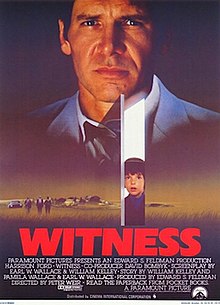
THE MATRIX
The Matrix (1999) goes deeper than the action-based fun of its surface, unlike the ever-increasing nonsense of its sequels (which still retain a biff! bang! pow! about them in a dumb-fun way, but that doesn’t make up for the dreadful haven of mankind as a club rave night (as an example)) – the original was sniffed at by some, but hailed by sci-fi fans – it is easy to see why it was sniffed at: the plot is about the preposterous coming of ‘the One’, and the action is slightly ludicrous with martial arts wire-work allowing characters to walk up walls etc in an obviously artificial way, influencing modern Hollywood blockbuster action films set in the real world in a negative way, as filmmakers seem to have missed the point that the matrix is not reality to make the impossible feasible – however, for sci-fi fans, it feeds off the sci-fi cyberpunk genre with fidelity (The Matrix is a concept lifted from William Gibson, who is a fan of the film), it has marvellous special effects with the groundbreaking ‘bullet time’ much imitated, and it is designed to within an inch of its life, down to specifically commissioned shades – a negative in the design is the green filter that is used to represent the matrix, as it has since become a staple of low-grade sci-fi to adopt a green filter (again showing the film’s influence), but it works in The Matrix – yet what makes The Matrix special is something that struck me on first seeing it and no one seems to comment on, perhaps because they are afraid that someone will accuse them – it is a bad trip – from the early references to Alice in Wonderland when Neo (Keanu Reeves) follows the white rabbit, through the emergence of Neo from his pod (which bears comparison to Altered States, a film directly about LSD), to the hippy philosophies of the Oracle fortune-telling – the film drips with the acid-head nonsense of ‘are we really here?’ in a typically acid-head incoherent way, which many have mistaken for a coherent take on actual philosophy whereas it is a mix-bag of psychedelic ideas to mess with your mind, which it does very successfully – fun and trippy.

DO THE RIGHT THING
Do The Right Thing (1989) is more than a landmark ‘black’ film, it is simply a great film, full stop, and is cited as one of the greatest films of all time in some quarters – it should have won the Oscar for best film (it wasn’t even nominated) but the award went to Driving Miss Daisy, which is a sad reflection on the systemic racism of Hollywood (although, to be fair and rounded, Dead Poets Society won best screenplay the same year and that’s an awful by-the-numbers script, so there’s a general lack of good judgement on display at the Oscars) – the real and metaphorical heat builds on a sweaty day during a heatwave, both from the sun and from the niggling racial content in the banter of the characters, from the latent aggression in actions and atmosphere, until it explodes – it is not because the characters are violent, it is just the mode of living, the poor culture, to be mildly aggressive – various characters intermingle: three older guys shooting the breeze, drinking beer in the same place all day; an older woman at a window interacting with the drunkard ‘Da Mayor’; Radio Raheem carrying a massive boom box around, playing Public Enemy (the only band he likes) at a ridiculous volume; a mentally disabled man who sells pictures, cops cruising the street, etc – there are mainly blacks and latinos, but also some asians and whites – this builds a portrait of a block in Brooklyn, of the local residents and the life of the community – the action revolves around Sal’s pizza place, a white business in this black neighbourhood, which becomes the focus of feelings of racial injustice, where Mookie (Spike Lee, the director) is the black delivery dogsbody – the single block setting, with characters wandering in-and-out and the centre on the pizzeria, gives it a theatrical structure, reflecting Lee’s background (he wrote the script) – often it strays into the territory of the plays of Bertolt Brecht, with alienation techniques and polemical speeches, most notably when different characters address the camera directly to deliver rants of racist language about other ethnic groups – but it does not feel stagey, with naturalistic acting, vibrant colours adding (and added by the production designer) to the sweaty heat, and cleverly expansive camerawork by Ernest Dickerson – it has been criticised for its treatment of women, but this could be said to reflect the macho culture it inhabits and is very forgivable given the broader strokes of the film – it is a meditation on the black experience, on racism in general and its complexity: is doing the right thing to be peaceful or to fight the power, to work for the man or poke him in the eye, etc? there are no easy answers, just a muddled mess – the end is particularly ambiguous, not one of forgiveness and acceptance but one of understanding where the other is coming from without concession – the final words are two contradictory quotes about violence by Malcolm X and Martin Luther King – it has a terrific cast that would go on to bigger things: Samuel L Jackson when his credit was as Sam Jackson, John Turturro at the start of a long line of unlikeable characters, the film debut of Martin Lawrence, etc (ironically, not reflecting the message of the film, John Savage, a famous white man, is high on the credits despite only appearing for a couple of minutes, which has more to do with marketing than creativity) – the last word has to go to Lee, who answered critics that said it could incite black riots by noting that they were failing to see the difference between damage to property and the death of a black man – fight the power!
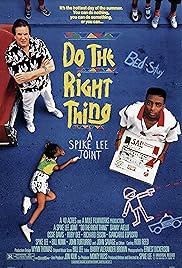
HIGH NOON
High Noon (1952) is a landmark in film, let alone of the western genre – upon release, critics and audiences expected chases, fights and spectacular scenery but were given emotion and morals instead, paving the way for a more psychological approach to action films – it is lazily cited as a civics lesson, which is due to the writer, creator and co-producer, Carl Foreman, being blacklisted for communist activity during its making (not naming names, and ending-up in Britain to continue his career) – really, it is as much a favourite of the right as the left as the hero resorts to individual action in the face of weak community, taking personal responsibility, and several Presidents have named it as a favourite to balance against the antipathy expressed by John Wayne et al: the protagonist has an unwavering commitment to duty in short, which is an admirable trope on both sides of the political coin – it was actually criticised in the Soviet Union as ‘glorification of the individual’; and one character, as he is running away to escape the retribution of the gunmen, actually talks of a ‘civics lesson’ in which the vision is of one of weak communal responsibility – in fact, it is a story about a conflicted conscience, with a sheriff (Gary Cooper) struggling between escaping with his new bride (Grace Kelly) or facing the gunmen coming for him and doing ‘the right thing’ – a film where his fear is acknowledged as much as his heroism – the conflict of conscience theme is also in the Quaker bride’s struggle between pacifism and using a gun to protect her husband – famously, it all happens in ‘real’ time, with the length of the film mirroring the time spent waiting for the noon train to arrive, with clocks regularly appearing to assist the audience with the countdown – but everything in the film also assists with the countdown, ratcheting up the drama as the showdown gets closer – the lack of assistance offered, as the townsfolk rationalise their cowardice or have a grudge to bear, escalates as the film proceeds – the music, by the usually over-emphatic Dmitri Tiomkin, pitches-in with a lovely tune (which was a pop hit, more than once) that features a wobble-board imitating the beat of a clock, reserving the big strings for the big moments – and the sound design is further brilliant, with added chimes and beats to create a sense of time running down – the sound is most brilliant at the start, when the gunmen meet up, as there are no noises of horses etc, just the theme tune and the visuals, creating an unsettling yet beautiful feel to set things off with – the visuals are lovely too (cinematography by Floyd Crosby) with high contrast black and white combined with depth of field allowing for several visual coups, with objects or limbs in the foreground and other action further away, smooth tracking shots running alongside a buggy’s wheels without blurring, and a majestic crane shot pulling from close-up on Cooper to a very elevated shot that shows him small in an empty-street town, showing his isolation – the visuals of the gunmen waiting for the train at the station near a water tower with the tracks disappearing into the horizon, symbolising the stare into the future, are particularly striking, an image imitated by Sergio Leone – it has a great cast: apart from the leads, there is Lloyd Bridges, Lee Van Cleef making his film debut, Lon Chaney, and even Jack Elam cropping up – given the stellar cast list you would be forgiven for thinking that it was a popular production to work on, but you would be mistaken: the names were at the start of their career or fading stars, and numerous people (inc. John Wayne) turned down the lead until Cooper accepted it – despite the controversy surrounding it, the film won numerous awards and has been copied ever since, in narrative and theme (e.g. Outland), or referenced (e.g. The Sopranos) – drop the star of the Walk of Fame in the dust, please.

UNDER THE SKIN
An extraordinary film, Under The Skin (2013) is nominally sci-fi but reaches into a philosophical examination of the human condition on numerous levels, so it’s not a light piece of populist sci-fi yet a fascinating and absorbing film – despite critical acclaim, it was a box office failure: it has Scarlett Johansson in the lead removing her clothes, which could have sold it well, but there was clearly a choice made that to do so would not be a truthful representation of the film (or they promised her that this would not be the selling point) – a complex of meaning and theme, any short synopsis will not do it justice and inevitably leave things out – so, to roughly summarise, the content of the film will be grouped into themes under the same heading, the apt title of the film – under the skin 1: behind the veil of what we know is the unknown, more than we can comprehend – the film starts with a star or black hole, or is it an eye? looking across the distances of space or from another plane, another dimension, as space shortens, folds to arrive at earth and the actual eyeball of Johansson, arriving in our space – from this description, there can be seen ambiguity in the portrayal of the alien(s) relying on the symbolic rather than the empirical (who can describe the unknown?) – hidden in plain sight, under a false skin, Johansson is an alien honey-trap, the bait by which various men are taken to her mysterious dark house where they are first preserved then eaten by the creature(s) from beyond, the lure of the angler fish – she is supported by enigmatic male bikers who, along with the use of radio, are a nod to Cocteau’s Orphée, the aliens coming from the underworld – and they have a hive mind with words not being necessary between them and telepathic connection evidenced: are they insects (an ant early on indicates this)? or extensions of an individual consciousness, like the fingers of our bodies? they are certainly something that is not in our natural world – under the skin 2: what is human life? – as an alien, Johansson drives around looking at life: shops, clubs, people that speak in barely intelligible language (some have said this is the immigrant experience), lights blurring – she identifies the weak and isolated as targets to doom and eat, like a lion picking off the lame at the back of the herd, which is a commentary via her targets on fragmented society and its underbelly, and how killers live amongst us – as the film progresses, she detaches from her primary mission to procure food and goes off on her own: is this emotional awakening? or the finger being detached from the body? or a continuation of her mission, to learn more about the animals they prey on? whichever, it is a thematic exploration of living – under the skin 3: sex and emotional connection: not only does Johansson suck-in males through sex, as her understanding develops she has varied positive and negative experiences of male-female relations, ending with a very negative portrayal of the male to counterbalance the implicit negativity around the female temptress that dominates the film – more thematic content: there is more to it than above, but these are the three major strands – it is nicely shot and edited; and there is an incredible soundtrack by Mica Levi which attempts to sonically answer questions like ‘What does it sound like to be on fire?’ and merges seamlessly into the broader, clever sound design – the career of the director, Jonathan Glazer, who also made Sexy Beast, is one to watch.
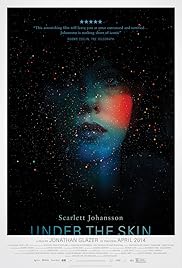
A ROOM WITH A VIEW
Not having a big studio machine like Hollywood (or Bollywood) means that the rest of world cinema thrives on producer / director partnerships – the lines of creative responsibility and duties are often blurred, even in Hollywood where the studios often clamp down on creatives to make a film more commercially viable, but more so with smaller filmmaking countries where an independent producer / director bond is usually necessary to get a product made at all – Merchant / Ivory are a classic example of a close-knit duo, making numerous commercially successful films that have also won numerous awards, with Ivory directing and Merchant producing (ostensibly) – A Room with a View (1985) is one of their best – it marks the start of their affair with the works of EM Forster, so I should nail my flag to the mast and say that he is one of my favourite authors; but his works are difficult to film, not the beautifully judged characters that play well on film, but the absurd coincidences that are often involved in his plots, masked by the mastery of language, skilful words that hide the extreme jumps of logical sense on the page but become apparent when theatrically played out – A Room with a View negotiates these difficulties of coincidence by turning Forster’s poetic book into a comedy of manners, in which everything is hyper-real and therefore nothing is unbelievable – and then Merchant / Ivory chose to make Forster’s lightest book as well, even though first to the trough as Forster’s estate began to allow films to be made of his work (so they could have made A Passage to India, for example) – a gentle smile is never far from your mouth, coaxed by the mildly over-the-top satirical style, even at the emotive ending – thematically, it posits the repressed suitor (Daniel Day-Lewis) against the free-liberal suitor (Julian Sands) of Lucy Honeychurch (Helena Bonham-Carter), an idealised Italy against a stuffy Edwardian England, and intellect versus the heart: Cecil Vyse (Day-Lewis) can only be imagined in a room, whereas George Emerson (Sands) holds the promise of a room with a view and the outdoors of freedom – thus it toys with ideas of social conformity and strictures creating unhappiness and unnecessary traps, being sensible versus being happy – it started a boom in UK costume dramas (not that the UK didn’t do them before) with Merchant / Ivory launched to international success, and is part of a strain of UK light comedy that can be seen in many other films – the visuals are lush, with intertitles humorously keeping things artificial and fun, chopping and changing the scenes to keep it pacey – the screenplay by Ruth Prawer Jhabvala also deserves a mention – and the cast is terrific: Bonham-Carter was in her breakthrough role (just 19 years old) and there is the early Day-Lewis role to muse over (not his best); while further down the cast there is Maggie Smith, Denholm Elliot and Judi Dench – and what can be said about a film that chooses to have male nudity and not female nudity? a light comedy that challenges preconceptions.
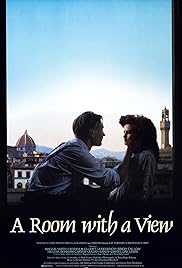
THE DUELLISTS
A fascinating curio, The Duellists (1977) won the Best Debut Film award at Cannes for director Ridley Scott, and it is easy to see why: it is beautifully shot by cameraman Frank Tidy, it has a strong cast, and there is an unconventional narrative structure that would appeal at Cannes – during the French revolution, one soldier (Harvey Keitel) takes offence at another (Keith Carradine) and challenges him to a duel, even though the offence is very slight, if not totally unreal, stemming from Keitel’s bolshy character and fighting nature: there then follows a series of duels that take place over the period of the Napoleonic campaigns as the two occasionally run into each other and become each other’s nemesis; with the more rational Carradine trying to avoid another duel, and the aggressive Keitel bearing a grudge and fictionalising the origins of their dispute, excusing his own culpability – the narrative thus settles into a series of scene-setting / duel / gap in time / and repeat (with different weapons for the duels) which makes it almost random rather than following the standard Act film structure, with the duels being the point of reference: a picaresque, in essence – Scott has been quite open about the fact that he was emulating Kubrick’s Barry Lyndon, with both films sharing an exquisite visual style, duels and a picaresque narrative – however, the ace in the pack is the fact that it is based on a story by Joseph Conrad (who, in turn, based it on a true story) and the technical thematic brilliance of the author shows through: the duellists allegorically represent the uneasy alliance of the French revolution, with involved aristocrats at loggerheads with the ‘coarse’ class, putting aside differences to fight wars for their nation but never comfortable with each other; there are thematics around being a ‘man’ and the strange notion of ‘honour’ that precipitates nonsensical actions; and, overlaid, there is the subtext of the individual not being in control, at the whims of social expectation, the moods of others and events beyond themselves – even at this nascent stage of his career, there are intimations of the flaws that have crept into Scott’s latter films, with hints of a lack of truthful fidelity in favour of making a ‘movie’ (the casting of the American leads was criticised as standing out like a sore thumb) and the editing and visual tricks, particularly the 70s trope of zoom, can be a bit needless; but these are barely noticeable concerns, more than compensated for by Scott’s attention to detail of costume and handsomely messy sets or locations and the grown-up story that resolves in a mature way – made under the aegis of one of the independent production companies that kept the UK film industry afloat in the 70s, Goldcrest, it is an absorbing and unusual film.

BAIT
Bait (2019) is a UK low-budget film of high integrity, not to be confused with the nonsense of the shark-fest of the same name – set in Cornwall, it tells the tale of a former fishing village being slowly taken over by holiday properties and gentrification, the pub now shutting down in the winter which the old landlord ‘would never have done’ (a criticism of the lead native character), fishing traps being messed with by snorkelers, the young of new and old mingling on the beach by a fire after dark, long-time villagers watching out for each other while the interlopers pass through, etc – as a comment on the changing nature of Cornwall, it is relatively accurate and heart-felt … but not totally: e.g. not many would prefer the perils of fishing to ferrying a bunch of tourists around, which is the idea we are meant to simply accept as true: this element of the story is thus used as a device to create tension between ‘authentic’ and ‘newfangled’ (with our sympathies manipulated to the ‘authentic’ as honest) which is the theme of the film – overall, a slight story where the fancy foreigners destroy ‘mother’s pantry’ and kill the future accidentally, strong symbols / metaphors of this abounding – however, what makes it fascinating is the way it is filmed – famously, it was shot on a vintage hand-cranked Bolex camera using 16mm monochrome film and hand-processed, with the sound dubbed-on after: many have been impressed by this fact alone, as though it was the best they had to work with, but in an age when films have been made with mobile phones it actually represents an artistic choice to work with such primitive equipment – so what is the artistic choice? Bait uses non-actors and real settings like a documentary but it is clearly a work of fiction, so it is harking back to docu-drama, ethnofiction and Italian neorealism: these were forms of filmmaking that fictionalised reality or made fiction real, stimulating the documentary form, which were often shot cheaply on dodgy black and white, roughly edited, poorly acted, etc, i.e. Bait is deliberately mirroring the visual and aural style and techniques of these earlier films, not only as a nod to the influence of these films via its blurring of fact / fiction and scrutiny of a disappearing way of life at the fringes of society (the old forms often focused on now-defunct ways of life in extreme places) but also because this ropey technique works and makes it feel ‘authentic’ – a pastiche of early documentary films therefore, when truth was in a tale not fact – and then there are weird moments created by the technology, when the visual blurs and goes psychedelic (even in monochrome) or there are deliberately surreal edits of activity, quickly intercut, that don’t really make sense but create an impression of putting it together on the hoof (not true: funded by the BFI) – it is thus a masterclass in creating mood and using technical elements to suck the viewer into believing something other than the factually accurate, which nonetheless hits upon truth; and is, further, a meta-commentary on the documentary or fiction form and visual language itself (although the director and writer, Mark Jenkin, was probably just copying the style of earlier films without this insight into its meta-implications) – fascinating.

HELLRAISER
Hellraiser (1987) is not a film for everyone, with artistic snobs and the faint-hearted equally bound to be less-than-impressed, but it is a significant film in the horror genre and has a magnificence of vision that is impossible to ignore – in spite of the video nasty stories of the early 80s and subsequent condescension towards horror, Hellraiser doesn’t hold back – it is proper horror: unlike many films of the genre, it does not rely on sudden shocks, like a thriller, but has a pervading sense of queasy transgression and unease, with plenty of gore, turning many a stomach – it was subject to numerous cuts yet still retains a pitch darkness, which reveals how you need to overdo things to get stuff through the censors by allowing them to feel they are doing their jobs by making cuts while still pushing the envelope with the remainder – to further show how it is at the extreme, various remakes have been mooted but have all fallen through because the studios wanted to lower the certificate and broaden the audience but the creatives have each time rejected making it milder, as this would be a stark betrayal of the idea and what makes it so memorable (i.e. its extremity) – there are traditional horror elements in it, but these conventions are subtly skewed and played with mercilessly, so it feels fresh and unusual – a puzzle box (metaphorically Pandora’s box) opens a gateway to the ‘hell’ of another dimension, through which the truly disturbing Cenobites emerge like rats from the walls (to give the appropriate Lovecraftian reference) who glory in being able to make pleasure and pain indistinguishable, thus creating the central theme and symbolism about sado-masochism and the psychological tenet that the two are barely distinguishable except in how our brains and inclinations treat them – the blurring of pleasure and pain is also highlighted in the central sexual relationship, between an evil man escaping the realm of the Cenobites and the bad wife of his brother, with a flick-knife or a smear of blood on lips giving sexual frissons – and this leads onto a metatextual commentary of the horror genre itself, as we derive pleasure from being scared – made on a low budget, there are fx that have dated (nothing dates as quickly as sci-fi and horror fx) but the film still retains its gut-wrenching power and depth of meaning – the acting leaves a little to be desired, given the low budget and the first-time director (Clive Barker, filming his own book and happy to admit he didn’t have a clue), but it is paced quite beautifully and the camerawork is top notch – dare we open the box out of curiosity?

THE LOCKET
The Locket (1946) has been criticised and praised for the same things, and both responses miss the mark – it is remarkable because of its absurdity, wrapping you in its over-the-top world and allowing you to ride with the moments of nonsense without a second thought – it is intelligent and stupid in equal measure, which makes for a fun cocktail of entertainment, eliciting inappropriate laughs while still engaging the viewer – most interesting are the technical aspects, especially its famous flashback within a flashback within a flashback, which may sound absurd (because it is) but it is done with a subtle touch – the flashback structure is psychologically analogous to numerous topographical adventure stories where the changes in country represent a going-back in time (e.g. Conrad’s Heart of Darkness or Walter Scott’s Waverley) to a more primitive mankind: in The Locket the going-back is in the mind not the landscape, to a more working class / primitive existence (neither type of going-back is particularly right-on, with prejudices high in the structural conceit, it must be said) – the flashbacks unpick the mind of the female protagonist (Laraine Day) to shed light on her kleptomania and lies, and murder, portraying her as sympathetically sociopathic (yep, get your head round that) and going-back to her Freudian childhood to open her ‘locket’ of personality (there is also an actual locket, a physical symbol) – over-simplistic but dramatically fun Freudian notions, i.e. not accurate, as Freud was entering the popular consciousness at the time and sneaking into film in a butchered way – add to this Robert Mitchum whose demise is priceless, both shocking and unintentionally funny, and you have a fascinating curio, a mish-mash of half-baked ideas that gel into a magical tale of nefarious behaviour – it is hard to give it a genre: it is part-noir, with the femme fatale at its core, it is part-psychological thriller, it is part-war film (yes, WW2 intervenes), etc – the whole thing is held together on the flimsiest of string by one of the great second-line directors, John Brahm, and the wonderful Nicholas Musuraca on camera duties, making fantastic use of black and white as usual, for poverty row film studio RKO, with jump cuts from the same angle done with finesse so that they are barely noticed but revealing the low budget involved (i.e. they couldn’t afford to re-shoot) – it is a film that is highly enjoyable on both a serious and a ridiculous level, which is a clever trick.

CAPE FEAR
J. Lee-Thompson is a difficult director to assess as his films often have distasteful aspects, sometimes just plain nasty, that cater to the worst in the audience, with upright right-wing heroes as the counterpoint (sending messages to the gun-toters); but his films are also, usually, very entertaining, and he has a terrific flair for visuals and staging – Cape Fear (1962) is a case in point – although starring the liberal-ish Gregory Peck and developed by his production company, the film is quite sleazy and ran into lots of censorship troubles: five minutes were cut before its release, the word ‘rape’ was removed from the script, they weren’t allowed to make the villain a soldier (how un-American to do so) etc – primarily, though, the main moral disturbance comes from the hints of paedophilia as the bad guy preys on the hero’s young daughter; but that’s what makes it work and is so sinister, with much predatory behaviour surviving in the film to raise the tension despite the censor’s fears – Max Cady (Robert Mitchum) is released from prison after eight years and sets out to take revenge on the man whose testimony led to his incarceration (Peck) and his family: there follows a dangerous game of cat-and-mouse with some dubious actions on both sides, including abuse of police power and violent assault – Mitchum is incredible as Cady, cleverly playing on his reputation as a bad boy, handsomely ugly, barrel-chested and physically imposing, oozing evil without using the range of tics and mannerisms that lesser actors would use, he smoothly emits the nastiness of a violent sex-offender, magnetically – thematically, it deals with legality, natural justice, and the limits of both, with rules bent all over the place – in terms of style, Lee-Thompson was open about his imitation of Hitchcock: the horror of it all is portrayed by hints and subtle suggestion rather than explicit, making the audience imagine far worse than could ever be displayed on screen; the full range of Hitchcockian visual tricks of cluttered angles and close-ups etc is used, handsomely shot by Sam Leavitt; and Bernard Herrmann provides one of those memorable sub-orchestral soundtracks of sharp strings, which could easily be taken from one of Hitch’s films – and there are other influences too, with the film starting as a film noir and ending in the Southern gothic genre, sister genres that complement each other and go together seamlessly – and a scene where Mitchum slips into water to emerge just with his head must have been copied in Apocalypse Now – it was remade by Scorsese, but the remake drops the ball by using colour instead of black and white and expanding on the hints so that the dark intimations become obvious, while the ‘great actor’ de Niro is not a patch on Mitchum: watch the original, which is a far superior product – upon release, it received a tentative but positive critical reception, with critics unsure whether the enjoyment of the film could be reconciled with its unpalatable content: we live in times now with violence more common on screen, but it still retains that transgressive feeling, which is both recommendation and caution.

THE MANCHURIAN CANDIDATE
John Frankenheimer is a very interesting director whose films are always worth seeking out, if not always totally successful, and The Manchurian Candidate (1962) is one of his finest – do NOT confuse it with the inferior remake – there was a radical something in the water at the start of the 60s, in society as well as in filmmaking, i.e. there are comparisons to Dr Strangelove (two years later) to be made in the subversion of the military-industrial complex orthodoxy of the day, with a pseudo-military voiceover at the start and its cold war paranoia, except The Manchurian Candidate takes the cold war seriously, and the director / writer production teams reflects the collapse of the hidebound golden-age Hollywood studio system – a big chunk of credit must go to the screenwriter, George Axelrod (from a novel by Richard Condon), as the occasionally implausible characterisation and gaps in narrative are skimmed past and easily ignored due to a kinetic pace, with moments that make you gasp – and the themes are deep, about the ‘enemy within’ the nation, the family and yourself: it flips morality into a murky place and has similarities to film noir, so that you are left wondering if McCarthyism was a communist plot, and it burrows into the blurred edges of who we are and personal ‘morality’ (the lead spy confesses to it being about personal power and screw the communist nations, with a hint at incest) and whether we are our own worst enemy (metonymically, from nation to individual, it reads thus: our own imperfect human-animal nature is deeply flawed and we are often the self-cause of issues and aggressions, but we assert that we know what we’re doing with a delusional certainty) – there are striking visuals with brainwashing scenes stealing the honours, but also extreme close-ups with action taking place in the background or a cinema verité feel to a press conference and political party conference, plus a slightly wobbly camera and some cluttered design to add – the cast is good (Frank Sinatra, Laurence Harvey, Janet Leigh (in a demeaning ‘female’ role)) but Angela Lansbury steals the film with a monster performance, despite not being a headliner, and got the Oscar nomination – and then there is Henry Silva! for film anoraks – a veritable smorgasbord of cinematic delights.

INSIDE LLEWYN DAVIS
Inside Llewyn Davis (2013) is a masterwork that will slip by most without a second blink, and they may wonder why I say this and why it is critically acclaimed (not always for the right reasons) – let me explain – it is the Coen Bros second foray into the text of The Odyssey, and some history of The Odyssey will help the less well-informed – Homer’s The Odyssey is considered the first narrative tale, and its primary not-quite satisfying brush strokes are mirrored in the Coen’s first film based on it, the overrated O! Brother Where Art Thou; the first person to take liberties with the tale was Virgil in the Aeneid, Roman culture tending to prey on Greek culture, and thus we arrive at Ulysses, which is a Latin version of the name Odysseus, as Virgil slots it into a more epic narrative; fast forward, and we arrive at James Joyce, who made fun of the epic journey by having his epic as that of a day of people wandering about Dublin in his Ulysses or, more accurately, made the artistic point that every day was an epic adventure even when mundane and going nowhere – Llewyn Davis follows in the footsteps of Joyce, so it could be seen as meandering and pointless; but that is the point, i.e. life is a series of low-level incidents and the ‘heroic’ or meaningful narrative is untrue to reality – the character Llewyn arrives at the end exactly where he started (couch-surfing), with the struggle to find money and various frustrations in-between, reflecting normal experience – this is a high-level artistic statement, to which the credit goes to Joyce but the Coen’s do it more-than justice – it helps that it was financed by French money, without a US distributor lined-up during production, which allows for a free-hand – set in the early 60s folk scene (Bob Dylan plays us out, making an appearance at the end in the small New York folk club that much of the action revolves around), some musicians have been unflattering about the accuracy of that scene’s portrayal, but they miss the point as it is not about the music (although a strong soundtrack by T Bone Burnett, who also did O! Brother, and good on-screen performances that feel right) but about everyday life – Llewyn is destined never to be famous, and his musical travails are the experience of the majority of musicians: missed opportunities, poverty, on the road, getting a proper job, etc – read into that a metaphor: our dreams are that, dreams, and the truth is a daily circular grind that often leads nowhere for the vast majority of us – this may be making it sound heavy, but it’s not – there are a few laughs along the way, a strong cast (inc. the usual John Goodman grandstanding appearance as a lotus eater), the visuals look great, and there us a pull to the narrative even though it doesn’t go anywhere – a sublime film that deservedly won the Grand Prix at Cannes.

RIO BRAVO
One of the most influential films made, Rio Bravo (1959) is a pleasure, no matter how many times you see it – admittedly, it is a film that most have seen on tv and been excited by in childhood, and there is a nostalgia to watching it, very Freudian; but there is more to it than fond recollections – supposedly made as a response to High Noon, which director/producer Howard Hawkes and star John Wayne are said to have viewed as ‘commie’, it ironically acts as advocate to social being with a group coming together and helping each other (supportive groups being a strong tendency in all Hawkes’ films) – a cynical killing of an unarmed man takes place in an opening without dialogue, giving it an impersonal and despicable feeling, and the killer is arrested; but he is the brother of a rich landholder with an armed force of hired hands at his disposal, and a siege of the jail begins – it is a simple but terrifically effective set-up that allows for bursts of action and the humour of claustrophobic group dynamics, and it has been imitated endlessly as a way of creating tension: John Carpenter freely admits to using it as an inspiration for Assault On Precinct 13 and Ghosts Of Mars, while other filmmakers have not been so open but it is evident the debt that innumerable films owe whenever a building is under siege in an action or horror film with a limited budget (one set, one location), and even Hawkes remade it twice-with-variations as it just works (El Dorado and Rio Lobo) – but the imitation does not end there, with the haunting Mexican trumpet that the bad guys have played as a taunt to the heroes being the inspiration for those popular fanfares of Ennio Morricone soundtracks on spaghetti westerns: normally I am not a fan of the composer, Dimitri Tiomkin, who is often over-emphatic, but he creates a haunting faux-Mexican sound and even manages to easily slot-in palatable songs for Dean Martin and Ricky Nelson (co-star and pop star at the time (a canny move by Hawkes to boost the box office)) – primarily, however, in the final analysis, it is just great fun, the narrative romping along to bursts of movie comic-strip action (i.e. there is no focus on gore or the cost of violence, as per from a John Wayne film at his peak of fame); and there is always a firm tongue in cheek, with the secondary romantic narrative and the un-PC sidekick ‘Stumpy’ particularly providing light relief (any film with Angie Dickinson and Walter Brennan as ‘also starring’ is worth watching, as well as Dean Martin playing drunk) – there are some films that are just trashy pleasure – a nod must go to screenwriters Jules Furthman and Leigh Brackett who do much of the heavy lifting, making it such a breezy experience – it was not universally welcomed by critics when it was released, as some found it lacking in depth, but it has become acknowledged now as a classic, without exception, as well as a fan-favourite – there are some films that just rise above intellectual analysis and sweep you up, and this is one of them.

APOCALYPSE NOW
At the beginning there is The End. It is probable that few have not seen Apocalypse Now (1979) but it is a masterpiece of the New Hollywood era and the best Vietnam film, so it would be remiss not to cover it – there are numerous back-stories to the film that span its messy ten-year gestation, with the documentary Hearts of Darkness: A Filmmaker’s Apocalypse wonderfully collecting the shenanigans of the shoot (but not the legion of broader anecdotes); however, my purpose here is to analyse the film itself, not the legends it has created – directed, produced and co-written (John Milius developing and lead writer, plus Michael Herr scribing the narration) by Francis Ford Coppola, it is the jewel in the crown of Coppola’s 70s and early-80s filmmaking brilliance; and an exemplar of the risks he was prepared to take during this peak period, not least in choosing to make a film based on Heart of Darkness by Joseph Conrad, a novella with a long line of failed adaptations behind it – to use Conrad was also brave in that the film thus equates colonialism with US interventionism, neo-colonialism, when Vietnam was still live in the mind and had not faded into history (Milius actually began writing it in 1969, while the war was ongoing) and was thus a topic that could spark strong feelings in the US – it is odd that Conrad’s tale has not been successfully adapted otherwise, as the three ‘stations’ of the novella form the perfect hooks to hang the conventional five act structure of Hollywood films off, but it is likely because Conrad’s text is impressionistic and internal: in the successful transposition to Vietnam it becomes expressionistic with the internal still strong in the narration but with the external world exploding in a psychedelic whirl of visuals that reflects the state of mind (war on LSD as has often been noted, one of the characters taking LSD to enjoy the war better) – there is a slightly unsettling smack of racism, e.g. Ride of the Valkyries that soundtracks a famous scene of helicopter attack was the music used for the notoriously racist 1915 film, The Birth of a Nation, with the same aim of making violence against other races inspirational (a racism that stems from Milius’ jingoism primarily) – but Coppola follows the lead of the racism in Conrad chiefly and makes it ambiguous: is portrayal of racism actually racist when there are strong opposing tendencies too, even if there are stereotypes? a debate that continues to rage – the ambiguity extends to war and the film has been called both anti-war and pro-war, cleverly satisfying the prejudices of the viewer whichever angle they come from (while subtly undermining their beliefs at the same time) and so side-stepping US controversy in the same way that Conrad side-stepped his criticism of colonialism at the height of empire: war involves ‘extreme prejudice’ – the film also mirrors the Conradian themes of a voyage into the darkness inside man, with Sheen half in shadow and half in light by the end, a co-mingling of base animal and intelligent man, the river symbolically taking him to his primordial self and superstitious reverence (another difficult element of debatable racism) – e.g. the tiger that jumps out at one point represents the primal animal (in Conrad he talks about the sound of dinosaurs coming from the jungle, i.e. the primordial, primitive beast and man; where Africa is portrayed as a state of mind that represents ‘backward’ in time humans, primitive animals (problematic)) while the boat represents the fragile sense of civilisation in the jungle, that protects you from your inner beast: ‘never get off the boat’ shouts Chef, the loud voice of someone who is scared and uses the thin veneer of civilisation / the boat as psychological armour – and the film digs into ‘the horror, the horror’ of animal man in subtle ways, not just the decapitated heads on poles when Kurtz is found, but also the casual attitude to the killing of Duval’s character, or the spooky CIA agent who says nothing when he gets his mission, etc – but, a trick of Coppola rather than Conrad, the horror is only apparent when it’s close to home, represented by the frantic and frightened reaction of Willard / Sheen when Chef’s severed head is deposited in his lap, an interesting reaction given he is a stone-cold killer: war in a foreign country is distant, but your mate’s head cut off isn’t – the cast went through various proposed iterations, but can anyone imagine Steve McQueen or Harvey Keitel in the now-iconic role that Martin Sheen performs so well? ending with an extraordinary cast, including an overweight and under-rehearsed Brando who they needed to film around to make it work, the irrepressible chatterbox of (set drug-dealer) Dennis Hopper, and Laurence Fishburne still called Larry and 15 years old when filming started; with real Playboy bunnies, Harrison Ford and the director himself popping up in cameos – Vittorio Storaro’s cinematography was widely acclaimed and Walter Murch’s soundtrack used revolutionary techniques; but, as with much Coppola, there is the hidden genius of the production designer, Dean Tavoularis, that takes the prize – Apocalypse Now won the Palme d’Or at Cannes, even though it premiered unfinished; it won various other awards too and did well at the box office (although receiving mixed reviews); and has since grown and grown in reputation, always in the top reaches of ‘best of’ lists – there are numerous versions, mainly because Coppola wanted to get it released or it would continue being a problem and never really finished tinkering, but all are worth watching (bar the redux / final cut, where there is an extra diversion among French colonials that upsets the pull of the slow spiral away from civilisation represented by the river journey: these scenes are an attempt to contextualise the war historically, but lose the general thread of Conradian investigation into the dark heart of man by diverting into the familiar – without these scenes, the film has an inexorable pull upstream, with the blank-eyed alienation of a crew on a small isolated craft looking out at the war and slowly becoming desensitized and detached; while the French scenes add a family meal and bedroom scene, which has the effect of fracturing the carefully built up tension and growing weird-out by introducing something normal, getting them off the narrow intensity of the boat, thus breaking the back of the film’s mood to its major detriment overall) – what a magnificent film he made despite the problems: how many films have a thematic strain around TS Eliot and address the impact of American society on the rest of the world, yet are still considered populist?

RAGING BULL
The best film about boxing and one of director Martin Scorsese’s finest, Raging Bull (1980) is about the brutal boxer not the sport, more a family drama than a sports flick, a portrayal of Jake LaMotta – based on his memoires and a consultant on the film, LaMotta must have been content with the warts-and-all negative view of himself as his aggressive, self-destructive and jealously obsessive behaviour turns success into failure and hurts those around him – LaMotta is a sado-masochist who wants to hurt himself as well as others – it follows his life from a bolshy young man, to boxing champion, to the malaise of post-fighting; with the focus cannily on the private life of the person rather than the fights, leaving him a pathetic figure by the end – it can be read as a classical tragedy, with the hero taking on the world but eventually brought low by his hubris – Robert De Niro gives an immense central performance, one of the roles that gave him the ‘best actor in the world’ tag (although his best roles are always the same, aggressive Italians): he even risked his health by putting on large amounts of weight for the post-fighting scenes, visibly fat, contrasting hugely with his muscly boxer physique – De Niro dominates, naturally as it is a bio-pic, but there is a fine supporting cast too, mainly ‘unknowns’ – and it is technically brilliant – shot luxuriously in well-framed black and white by Michael Chapman, it bursts into low resolution colour at one point to show home movies – the editing is exceptional, particularly during the fights which feel painful and realistic due to clever in-ring photography dextrously put together – the sound is realistic, sometimes murky, with overlapping dialogue and natural speech patterns (something Heaven’s Gate was criticised for, wrongly) – and the adaptation / script has the master hand of Paul Schrader on it – it made enough profit when released, but was not a hit; and Scorsese was concerned that it could spell the end of his directorial career, making a big budget art film as he did; but it won numerous awards and was critically well-received – it is now considered a great of the genre, if not the best film about sport made.
THE NEON DEMON
Nicolas Winding Refn is a divisive filmmaker, splitting opinion from the extremes of brilliant-to-awful with all points in-between – the key to understanding this wide difference in opinion is that he does not follow the usual rules despite working in mainstream cinema, creating mood and tone rather than narrative, and any filmmaker that creates something unusual and different to relieve the identikit nature of most films is worth the price of admission – The Neon Demon (2016) is a case in point, a fascinating film despite a lack of coherent narrative control – a young girl is new to the city, arriving with dreams of becoming a model, and is soon attracting the attention of leading photographers etc to the chagrin of her fellow, competitive models – a set-up that in other hands would be a tale of back-biting and camp as a tent, but Refn makes it into what has been called a ‘psychological horror’ – the un-familiars of a new city, the uncomfortable introduction to modelling, the unknown people etc combine to create a creepy atmosphere that is enhanced by long, still camera takes and design that places the characters and viewers into unreality, making familiar sights like a catwalk show otherworldly and unsettling – some critics have been negative about a scene containing necrophilia, and there is a disturbing instance of rape / violent assault (only heard, so not sure which) by a surprisingly cast and well-performing Keanu Reeves: however, even if not relevant to the narrative, these scenes add to the sinister mood Refn creates as the film spirals into darker territory towards its climax – and there is the imagery of pagan worship that speckles the film, adding to the mood, with everything moving inexorably to sacrifice to the moon-god (Lovecraft springs to mind) – underneath, on a subtextual level, it is a critique of the lure of bright lights, the city and the modelling industry, the ‘neon demon’ of the title: even the ingenue and apparently innocent lead turns out to be a nasty piece of work who is only after glory and the self, her vision of her name in bright lights – they are all destroyed or self-absorbed – it ends with the eye being consumed by the body, not the body being consumed by the eye as the fashion industry people would have us believe – a negative view of life, admittedly, but not inaccurate; and totally entrancing (in both a viewing and a witchcraft way).

ROSEMARY’S BABY
This was Polanski’s first US film, before tragedy and scandal engulfed him – it is an exceptional film for so many reasons, and a classic example of why you shouldn’t confuse the art with the artist (the director is a shit, but this film is magnificent) – produced by the schlock-meister William Castle: he worked up the project but wasn’t allowed to direct by the studio, which was a good call as it is so much more than a horror film in Polanski’s hands – it has a dream-like atmosphere permeating the whole film, most represented by a rape scene (by Satan, while on drugs) and the wistful tune that runs throughout – it looks fantastic, mingling the baroque gloom of an old building with the soft pastel shades in the apartment that Mia Farrow and John Cassevetes (the lead actors) take there, merging a horror atmosphere with the colours associated with babies from the opening titles when an unsettling maze of buildings is overlaid with pink credits – it plays with the paranoias of pregnancy, relationships and social interaction (with a strong supporting cast of notables for film anoraks) to subtly unsettling effect, becoming a deeper commentary on everyday life beyond the horror context – and there are fabulous anecdotes that go with it, e.g. did you know? that Sinatra served a divorce notice on Farrow during filming as he didn’t want her acting anymore (the controlling monster he was) but she did it anyway, or that the voice of Tony Curtis is the blinded actor she phones at one point, or that the Satan worshippers next door whose name is an anagram have a name which is more-or-less an anagram of Cassavetes – on repeated viewing, there are numerous signals to clue the viewer into what is going on that become obvious, but it remains mesmeric without any element of surprise – under-exaggerated horror and all the better for it, working on the nerve ends rather than wanting you to jump out of your seat, Rosemary’s Baby is a brilliant work of art as well as horror.

HIS GIRL FRIDAY
The great director/producer, Howard Hawkes is a seminal figure in the creation of the ‘screwball comedy’, a form that is particularly identified with the 1930s/40s but is still an influence on many comedies today – His Girl Friday (1940) is the apotheosis of the form – in particular, Hawkes-the-auteur was obsessed with the speed of delivery, with lines rattled-out at an unbelievable pace, like a machine gun: he was aiming to beat the wpm of the record-holder, interestingly The Front Page (1931) which is based on the same play as His Girl Friday (remade several more times too), and the velocity propels the viewer along – the play is opened out well: the ace reporter (Rosalind Russell) is changed from male to female so a menage-a-trois dynamic is introduced as her ex-husband and newspaper boss (Cary Grant) ties her fiancé (Ralph Bellamy) in knots; the dialogue is substantially rewritten (despite Hawkes intending to use the original), with the uncredited hand of one of the original playwrights helping out and much of it improvised, with notable references to Bellamy looking like the film star Bellamy and Grant talking about Archie Leach (his real name); and it is well and fluently shot, hiding its stage origins – beyond the ‘romance’ (you could hardly call it romantic), there are two other threads around a murderer about to be hanged with its press reporting and corruption in high office, creating a complex narrative: several elements of the narrative are left hanging at the end of the film, but that is part of its genius as you don’t notice or care as it is such a fun ride, with much sniggering to be had, that closure doesn’t enter your thoughts – technically, it is ground-breaking in the use of overlapping dialogue as the characters speak at pace, creating a crescendo of dialogue at points – and it is censor-baiting: made during the Hays code era of Hollywood, they needed to tone down the foul language of the play but got away with kidnapping, theft and a sympathetic murderer, taboo-breaking being a staple of humour (so the censors were probably laughing too much to realise the implications of making these things fun) – at times, the film is on dodgy ground: there is a moment of racially dubious dialogue and the star reporter needs to choose between her profession and ‘being a woman’, but these are attitudes of their time and easily overlooked in the sheer adrenalin rush of the film.

LOCAL HERO
A mercurial film, Local Hero (1983) has received acclaim but frustrated critical analysis in its subtlety, hiding depths that I have not seen written about – on the surface it is a gentle comedy, ‘whimsy’ as one critic has said, and it delivers on this in spades with a fine cast of character actors and Burt Lancaster striding through the middle like a behemoth – a US oil executive is sent to a remote Scottish village to buy it up to make way for an oil terminal and a culture clash comedy ensues, which could be compared to a history of comedies (e.g. Whisky Galore): the locals gather round, someone drives a motorbike through the coastal village that you need to jump out of the way from, etc – and there is mildly surreal comedy elsewhere, with the head of the oil company plagued by a charlatan psychiatrist and obsessed with astronomy – the whole leaves an amiable smile on your face – but there is more to it: the film constantly nudges at compromise and partial measures – it has been described as ‘pro-environmental’ but this is an over-simplistic reading and the subtext is more ambiguous and complicated: all the villagers want to sell, to become rich, except one who owns a key beach and can find everything he needs there, while the US executive sent there wants to swap his life for theirs in a drunken chat, so both want the other’s life (the grass is greener) – there are no simple answers and the film explores the fudges of morality – at the time it was made, North Sea Oil was flooding into Scotland and it reflects the decisions to be made in reality around the money this could bring and the potential changes to the Scottish way of life: a bit of both is wanted, neither one nor the other and thus no definitive ‘pro’ message – in the end, the village will be the site of a marine conservation area and an observatory, but the oil company will simply build their site elsewhere (unsaid but implicit) – it has also been called a ‘small’ film, incorrectly as it is actually quite long (not that you notice) and the feeling of smallness comes from its leisurely pace – the fact is that little actually happens, yet it’s never boring with characters and place gradually unfolding, which is a magical trick – further, there is plenty to be had nowadays by way of nostalgia for those who were alive back then, as the church hall dance, a coin-opertated telephone box, etc, bring back memories of how we used to live – it is beautifully shot in an early film by the great cinematographer Chris Menges (and he did the lighting!), there is an evocative soundtrack by Mark Knopfler, and it was produced by David Puttnam/Goldcrest when taking risks – the director, Bill Forsyth has made numerous understated films of which this is the peak of his oeuvre, weaving a spell that mesmerises the viewer – so, given that titles usually sum up the work in general, who is the ‘local hero’? the beach owner who refuses to sell? the oil executive who doesn’t build? the Scottish landscape itself? the local who holds down several jobs and acts as de facto leader for the community? a title as ambiguous as the subtext, perhaps ironic: as the film delves into the compromises we all face so it questions what is heroic.
THE WIND THAT SHAKES THE BARLEY
The Wind That Shakes The Barley (2006) is a film about the Irish revolution against British rule in 1919-1921, with a nod to the Irish civil war that followed in 1922-1923 as former allies disagreed about the way forward – it does this in microcosm, focusing on a small group of insurgents in a rural part of Ireland with the wider conflict represented by report and message notes: this focus on local lives affected by the storm gives it a realism that a broader historical drama would fail to have – a family is torn apart, their home is burnt, friends are shot (inc. by themselves) etc – this is consistent with the long-term working patterns of the director, Ken Loach, who has two abiding traits: realism and political polemic – his polemical attitudes can be irritating in some films, but here it nestles neatly into the revolutionary action and he manages to slip the factual political landscape into the narrative without too much of a bump (credit to Paul Laverty, the writer) making it an enjoyable ‘war’ film on one level, as a fun cinematic action experience with nice visuals – and it is a film that had a real-world impact too: it was very popular in Ireland, as you would expect, but only had a limited release in the UK until it won the Palme d’Or at Cannes, enabling a wider release and educating many in the UK about a part of their history that is generally not taught – however, it is primarily interesting for anoraks to analyse its ‘realism’ – realism is, technically, the appearance of reality, not actual reality; and the film sweeps you along too fast to make you ponder on the lack of reality in fact – all British are violent and bad guys with no nuance, the romance that takes place is flimsy, there are no scenes of everyday life, of the harsh poverty that is talked about, just the rebellion and talk of arms, etc – the way Loach gets around this (post-considered, after viewing) lack of depth and colour is by an elliptical narrative, loosely connecting scenes, and naturalistic dialogue and acting – it ‘feels’ real even though it is coming from a polemical perspective, subtly enough done to pull the wool over the eyes of audience and critics alike, with many critics extolling its truth – a masterclass in getting your point across, almost propaganda, while still entertaining.

POINT BLANK
Released in a fulcrum year, when society and film was moving from the traditional form to something freer, Point Blank (1967) re-invents the film noir and heavily influenced future hardboiled films (e.g. it is hard to imagine Eastwood films post-Leone without it) – it did not make much at the box office, but became a cult classic in time – it was only the second film of John Boorman, the director, who was given carte blanche by the star-power of Lee Marvin who insisted on the novice director when presented with the script by the studio, then let him alone to do his thing – Boorman is not always a successful film-maker, but he is always interesting with a couple of greats in his catalogue, with Point Blank being the film that made his career – Marvin plays the criminal Walker, who is shot by his accomplice during a heist (using the then-novel location of Alcatraz) and then goes on a revenge hunt to get his money back – spicing this up is the way it is presented: longer, cool scenes are punctuated by bursts of realistic violence; instead of the traditional film noir techniques of angles and lenses, there are mildly psychedelic settings, colours and shots; the Organisation (organised crime in symbol) that Walker tears apart is corporate, with hired gunmen peripheral; there are fractured visuals and flashbacks that recall the Nouvelle Vague (made the same year as Bonnie and Clyde, which is conventionally said to be the first film so influenced); and there is open sexual activity, in tune with swinging 60s attitudes – a different crime movie (for its day) – but it is deeper than the surface revenge thriller and technical virtuosity – Walker has no first name, at one point answering a question about it with a return question: this is because he is a ‘walker’, a word used for ghosts and spirits, i.e. he is dead already, at the start of the film when he is shot: at the beginning he struggles into the waters around Alcatraz with a couple of bullets in him, then the next scene is on a boat sailing by the island when he is recovered with the Tannoy telling the audience that no one has ever escaped Alcatraz because the waters are so dangerous; at the end he fades into shadows without taking the money he is after, like a ghost; and throughout he has an impenetrable and quiet mastery of everything and everyone (e.g. for influence, High Plains Drifter lifts the character into a Western) – also, to get to the bottom of any book or film, the title is a key indicator (assuming it has been crafted well) and Point Blank is a classic example of this: it can refer to the discharge of guns at close range, which happens often, but it can also be synonymously transposed to mean ‘no point’ – through the film, Walker says he is after his money but leaves it at the end, yet kills those who refuse to pay him: money has no point – romantic attachments fall away: love has no point (even the gorgeous Angie Dickinson) – people are killed: life has no point – his friend turns on him: friendship has no point – his revenge is, in itself, pointless – as such, it is quite a nihilistic film, with an overriding theme of existential pointlessness; emptiness or blankness: Walker is nothing, metaphorically and literally – life has no point and what happens is meaningless – so we get entertaining action wrapped over a bleak message, which accounts for its mixed reception yet abiding cult popularity.
DEAD RINGERS
David Cronenberg has one of the most unusual career trajectories of any film-maker, starting with ropey ‘video nasty’ films and ending with his later cerebral character studies: the films in the middle of this arc are his most popular, retaining his famous ‘body horror’ but toning it down to a more subtle level and upping the technical polish and putting more depth into the writing – Dead Ringers (1988) is the film that marks the fulcrum point of the two Cronenbergs, a film that retains its power and class today – Jeremy Irons plays gynecologist twins, Beverly and Eliot Mantle, who find their inseparable relationship challenged by events until they go off the deep end – in a finely delineated performance, Irons manages to capture the difference between the twins without being obvious about it, at times making it hard to tell the difference between them (which is the point), as the technical crew work wonders to have him believably play opposite himself – Beverly is the sensitive researcher, and Eliot is the liberal public voice: they need each other to create the whole package of both knowledge and presentation to the wider world – what starts as an analysis of the difference between people inside despite looking the same outside turns into a fraught psychological investigation into social need, as the symbiosis of the two leads one and then the other to fall apart as their twin goes off alone, with the film taking a much darker tone about half-way through as they descend into self-prescribed drugs and obsessive behaviour as their relationship fractures – the spark to their falling apart is that Beverly falls in love with one of the women they share (Geneviève Bujold) – Eliot is the dominant one, who smooths women into bed then passes them onto Beverly, who is too shy to do the chatting-up himself, pretending it is the same person; but the matter of love creates an issue, and Beverly cannot cope – as the film goes on, Eliot cannot cope with the fact that Beverly cannot cope, and they both slide into worse and worse behaviour: thus the film is primarily psychological, the need the twins feel for each other, despite the physical and ghoulish anecdotes that are told, which are window-dressing for the mind-state – the twins have dubious ethics from the outset, so the slide into mania is not implausible in the least; and the film subtextually explores the boundaries between ethics and morals, medical malfeasance being a key symbol – the other key symbol is that the Bujold character has a rare cervix, and Beverly, who loves her, becomes obsessed with the idea that people look good outside but are ‘all wrong inside’ (also reflecting the problem with the twins and symbolising his lack of faith in his ‘love’) and sets about creating bizarre and horrific surgical instruments that have no practical use but pain – eventually, he uses the bizarre instruments to ‘separate’ the twins – this all sounds quite violent, but it is as much a melodrama as horror, and the horror is mainly done by suggestion, e.g. a woman complains that she is being hurt during a gynecological examination (a fear of most women) or a vivid red is used in the colour palate (they dress in red rather than white in the operating theatre) – add to this that the camera is still or very slowly moving, watching and apprehensive, in nicely framed images; and the music is subtly dramatic and full of foreboding – so, it is a masterpiece of feeling the (body) horror rather than seeing it, with juicy subtext around sex, social being and morals.
BUILD MY GALLOWS HIGH (aka Out Of The Past)
Now considered one of the great film noirs, Build My Gallows High (1947) was not always viewed as great, hence the fact it had a change in title and made a modest amount of profit – the narrative moves at pace and the performances are top notch, making it an entertaining watch that never bores – do not expect deep thematic meaning beyond the stereotypical noir elements, such as the dubious-sexist symbol of the femme fatale or bad deeds catching up with someone, but revel in the flair and style of it – the narrative is convoluted and winding, including the mandatory flashback that consumes the first half of the film and some leaps which cleverly leave the viewer to mentally fill in the gaps themselves, leaving some early reviewers critical and confused by its lack of dot-to-dot idiot-boarded storyline; but the twisting story is half the fun as the protagonists cover distances in what is essentially, but not obviously, a criminal chase – it tells a typical noir tale but it feels fresh, slightly off-kilter from the usual fare but generically the same, both familiar and different: a special trick (discussion of the narrative ends here though, as that would be a spoiler) – the cast is also special: the laconic Robert Mitchum plays the grizzled private eye, Kirk Douglas in his second film plays the main criminal, Jane Greer plays the femme fatale to the hilt (and was subsequently sexually harassed by Howard Hughes, who owned the studio, RKO, at the time, with Hughes essentially ending her career in the process), and the minor roles are filled with quality character actors, ably directed – the director, Jacques Tourneur, is one of the lesser-known greats of Hollywood, mainly because he specialised in b-movies; but his b-movies are still very popular (e.g. Cat People) and he brought a lightness of touch and artistry to all the films he made – regularly working with Tourneur at RKO was the cameraman Nicholas Musuraca, and a large amount of the pleasure derived from Build My Gallows High is via the photography and lighting, e.g. the scene at night where the light shows two bodies but the heads are blacked-out leaving just the disembodied voices of the characters talking, or the blinds on windows create barred shadows on walls, etc: it takes real skill to shoot such highly defined lighting – and then there is the smoking: in no other film do people smoke so many cigarettes, the fags expressing mood – a pleasure.
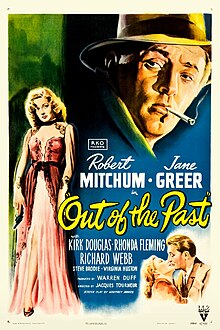
BEING JOHN MALKOVICH
Being John Malkovich (1999) is brimming with surreal incident and detail, but it manages the trick of avoiding being pretentious and mystifying like many films with the same bent (inc. by the same writer) – it is grounded by a strong narrative drive combined with humour that keeps the viewer engaged, allowing for a conceit so far-out that you accept even the weirdest notions and action – an out-of-work puppeteer (John Cusack) accepts his failings and takes a job as a file clerk at a firm that is on the 71⁄2 floor, i.e. between 7 and 8, so the space is cramped down and everyone has to stoop, which is just treated as normal (we have already been introduced to his home-life, with various pets inc. a chimpanzee, so floor 71⁄2 just adds to the oddness rather than comes as a surprise) – while at work, he discovers a portal into John Malkovich in the office that allows him to inhabit the famous actor for fifteen minutes, then he is deposited (from the sky and out of nowhere) at the side of a road – he decides to use this to woo his co-worker (Catherine Keener) that he is crushing-on, but she is more attracted to his wife (an almost unrecognisable Cameron Diaz) – and then it becomes a menage-a-trois situation combined with a chase movie with huge dollops of surrealism and just continues getting stranger while pulling you along with it – beneath the narrative there is a subtext full of resonance: in particular, there is a satire of fame and a meditation on the nature of being (as a human) – top marks to Malkovich for agreeing to do it, esp. as when he enters his own mind all he sees are versions of himself (a comment on the self-absorption of celebrity) or the ease with which he is prepared to have sex with a groupie (etc), and kudos to the other famous faces that appear briefly throughout, sending-up themselves – but the real thematic heart of the film is not about celebrity but about how human beings are looking out from a bodily shell and are not in control of anything beyond really, hence the possession of Malkovich, the imagery of the puppeteer, the unrequited love, the end (which shall remain undescribed for those who have not seen the film), etc – hidden behind the film is the hand of the great Francis Ford Coppola, who enabled Spike Jonze to get it made and direct (Jonze was only a maker of pop videos at the time (Michael Stipe co-produced) but he was dating Coppola’s daughter) and facilitated the involvement of Malkovich – however, once enabled, Jonze makes a fine director, ably assisted by a good technical crew, with particular note given to Carter Burwell who does the music (one of the great soundtrack creators, with many other notches on his belt) – it was nominated or won numerous awards, which is remarkable for such an odd-ball film.

TAKE SHELTER
Much lauded with numerous awards in his back pocket, Jeff Nichols is an interesting writer/director but often seems to leave something missing, not quite achieving the delight of transport in his films (while still a decent watch) – however, Take Shelter (2011) is the exception (of his short career at time of writing, with more to come potentially) – a tells of a man (Michael Shannon) with an apparently idyll of family life, with a wife (Jessica Chastain), a nice house, and a good job that will provide medical insurance to allow his (happy) deaf child to regain her hearing – but then he starts having apocalyptic dreams (spicing-up the more mundane real world action) and waking with the pain of them staying with him: are they dreams? are they visions of things to come (ironically, he is asked why he hasn’t been to church by a friend early on)? or is his mental health deteriorating, like his mother’s? – should he protect his family from the storm he has seen coming or from his increasingly unstable paranoia, neither of which may be the truth? – there follows a growing dread throughout the film, as he becomes slowly unhinged, starts behaving oddly, and alienates the community around him – there is a remarkable central performance by Shannon, whose demeanour is ambiguous: is he concerned? over-emotional? disturbed? – and a finely modulated turn by Chastain in the tricky role of his wife, suffering with his breakdown – and in the family lies the key theme: fidelity, in family, in friendship, in work – there are also themes of reality and unreality, communication, climate change, etc – all this is beautifully shot by Adam Stone, with a static camera reflecting the stillness of the man physically as he fights his impending dread inside (and the budget limitations: it was an independent film) – and there is a very modern soundtrack of subtle sound by David Wingo, again reflecting the subtle disturbances of a mind slowly unravelling – the ending has become the subject of much critical and fan debate, which is best left alone so people can discover it themselves; besides, the meat of the film is the portrait of someone grappling with themselves and things beyond their control, despite the outcome – an understated masterful film, which one can only hope will be emulated by Nichols in future.

THE LONG GOOD FRIDAY
The Long Good Friday (1980) is usually voted high-up on the list of greatest British films, and it is not hard to see why: it looks good, moves at a kinetic pace with little flab, and features a host of early performances from actors who would have long careers (Helen Mirren, Pierce Brosnan, etc) – Bob Hoskins plays Harold Shand, a London gangster returning from the US where he has done a deal with the Mafia, expecting their delegates shortly in England; but people have been messing with the IRA while he was away and things unravel fast, with bombs and guns, on Good Friday – it was a career-defining turn for Hoskins, with acting awards and his aggressively blunt character here being re-used in other films – but what makes it work is the detective story at its heart: what is happening? why is it happening? who is responsible? – this whodunit element is woven seamlessly into the gangland milieu (crooks always have something to hide) with hints and red herrings, keeping the viewer engaged throughout; while not overdoing the mystery in favour of highlighting the blag and violence of the criminal fraternity – of course, in this, it owes a debt to Get Carter – for those familiar with Britain at the time, it will come as no surprise that it was initially commissioned for TV by Euston films, who made The Sweeney, a show that was often criticised for its violent conduct, but then it went through various incarnations until Lew Grade, the big-cheese producer, said he would not release something that portrayed the IRA in such a way; so it was sold below production cost to George Harrison’s Handmade Films (which had been set up to finance Monty Python, which he found fun and profitable so continued to fund low budget British films) – it was critically successful, to Grade’s chagrin I would guess, but its real success lies in timing: it came out during the video explosion of the early 80s and became a must-see in that format – it is also fun for anyone who knew London then, seeing how it has changed (apparently, the deal with the Mafia is to develop riverside property for the ‘88 Olympic Games, and that happened!) – so, a gangland mystery with to-be-notable actors chewing up the scenery, what’s not to love?

THE FRENCH DISPATCH
A film that sticks in the mind’s eye, The French Dispatch (2021) continues director Wes Anderson’s attempts to revision what constitutes film-making to the nth degree, much further than he has gone before or since (possibly because it emerged after the Covid pandemic, so he had had time and solitude to overdo it) – technically adventurous and thematically deep, with a fast-paced bombardment of information and image, it is an overwhelming experience that is lightened and made highly enjoyable by the usual Anderson comic-strip sensibilities (he must be a fan of Frank Tashlin) and wry humour – some may find the constant speed of action too much, but the depth will make it worth re-watching several times, and if you watch at home you can pause to read the meticulously ridiculous signs, name badges etc and savour the intense detail – set in the fictional French town of Ennui-sur-Blasé (setting a parodic tone with the name), the film visualises the final issue of a French foreign bureau supplement to the Kansas Evening Sun newspaper, upon the death of the bureau’s founder and inspiration (Bill Murray, an Anderson regular), with articles wheeling-out from the baseline narrative of journalists saying farewell in the office on the founder’s death: so, the first technical interest is the eschewing of traditional linear narrative in favour of the cyclical form of baseline spreading out on a vignette that returns to the baseline then another vignette etc; which could be described as portmanteau or compendium, but has more in common with old African styles of story telling where the narrative constantly returns to home after telling of an adventure from home, theoretically going on forever with the vignettes / cycles, always returning to base – the vignettes are four articles for the final issue of the French supplement, each a parody of how foreign eyes distort the French: first a tourist on a bicycle seeing the ridiculous stereotypes he wants to see, second a piss-take of ‘high’ art as an incarcerated madman becomes famous for his painting, third a take on the student revolts of the late ‘60s (which are all rooted in sex and start and end with access to the girl’s dormitory), fourth is a kidnapping plot but revolving around food and a famous chef (which contains the key: the chef is poisoned and says it was like nothing he has tasted before, which is a metaphor for the entire approach to the film) – each vignette is independently themed too, adding to the overarching themes – and more technical shenanigans, the narrative is distanced by the distorted outsider views of the French, the final issue framing, the reporting (the chef de bureau’s mantra is that he tells his reporters to make it sound like they meant to write it), and other distancing devices: the narrative is so far removed that nothing can be judged as true, so you start hunting for the truth in image and theme (like the stupid view of the French by people from Kansas) and it becomes a dissertation on ascription of meaning and the slippery nature of pinning things down, the truth of fiction and what we say or believe is true – then there are the visual high jinks: most of it is shot in 35mm but occasionally in widescreen, or the frame jumps to the side of the screen, or subtitles appear all over the place (in the frame and out of frame), or it changes into a cartoon, or there are sudden random movements of camera, etc – a visual feast, with Anderson’s usual love of visual symmetry and meticulously framed clutter at their best (nod to cameraman Robert Yeoman) – and the cast is incredible, with big stars in very small roles, so long a list of stars that it feels redundant to list them (it says something about the esteem that Anderson is held in to have so many playing bit parts) – an incredible film that stimulates thought long after it has finished, scratched at above, and a different but entertaining way to make films – top marks.
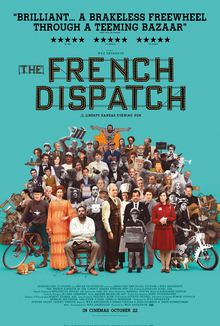
Like
Comment
Share
 grimbleboots